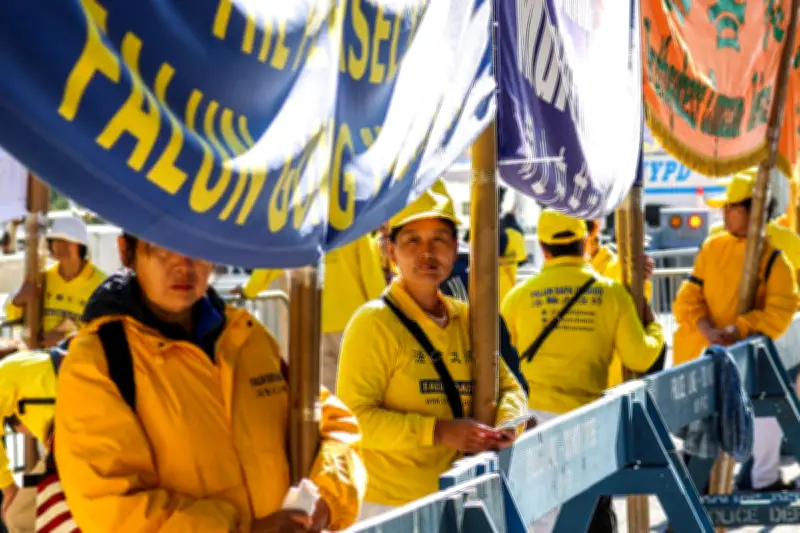
The US Supreme Court has dealt a significant blow to efforts to hold corporations liable for human rights abuses abroad, ruling on Tuesday to end a lawsuit against Cisco Systems brought by members of the Falun Gong spiritual movement. The lawsuit alleged that the California-based technology company knowingly developed surveillance technology that enabled the Chinese government to persecute Falun Gong members.
Lawsuit Dismissed Under Alien Tort Statute
The high court reversed a lower court decision that had revived the 2011 lawsuit, which was filed under the Alien Tort Statute of 1789. This law, dormant for nearly two centuries before being resurrected in the 1980s, allows foreign plaintiffs to sue in US courts for violations of international law. The central question in the Cisco case was whether corporations can be held liable for “aiding and abetting” human rights abuses—a form of accomplice liability.
The plaintiffs, represented by the Human Rights Law Foundation, accused Cisco of designing and implementing the “Golden Shield,” an internet surveillance system used by the Chinese Communist Party to target dissidents. They claimed that China used this system to track and torture Falun Gong members. Cisco has denied the allegations, calling them unfounded and offensive. The Trump administration had sided with Cisco in the case.
Previous Supreme Court Decisions Limited Statute's Reach
A district judge initially dismissed the lawsuit in 2014, ruling that the alleged conduct was not sufficiently connected to the United States. The case languished for years due to a series of Supreme Court decisions since 2013 that narrowed the Alien Tort Statute's scope, making it harder to hold US corporations legally accountable for overseas human rights violations.
In 2023, the San Francisco-based Ninth US Circuit Court of Appeals revived the case, allowing it to proceed to discovery—the evidence-gathering phase before trial. The appeals court found that the plaintiffs had plausibly alleged that Cisco provided essential technical assistance to the crackdown on Falun Gong, knowing that torture, arbitrary detention, disappearance, and extrajudicial killing were substantially likely to occur.
Falun Gong's Background and Political Ties
Falun Gong is a spiritual movement founded in China in 1992. It was banned by the Chinese government in 1999 after thousands of members staged a silent protest outside the central leadership compound in Beijing. The group has called for people to renounce the ruling Chinese Communist Party. Falun Gong members later founded The Epoch Times, a right-leaning US media outlet that has been heavily critical of the Chinese Communist Party and supports former President Donald Trump.
The Supreme Court's decision follows a 2021 ruling in which it threw out a lawsuit against Cargill Inc and a Nestlé SA subsidiary for allegedly aiding slavery on cocoa farms in Côte d'Ivoire. In that case, the court held that the plaintiffs failed to show that any relevant conduct occurred within the United States. These rulings collectively underscore the high bar plaintiffs face when seeking to use the Alien Tort Statute to hold corporations accountable for international human rights abuses.