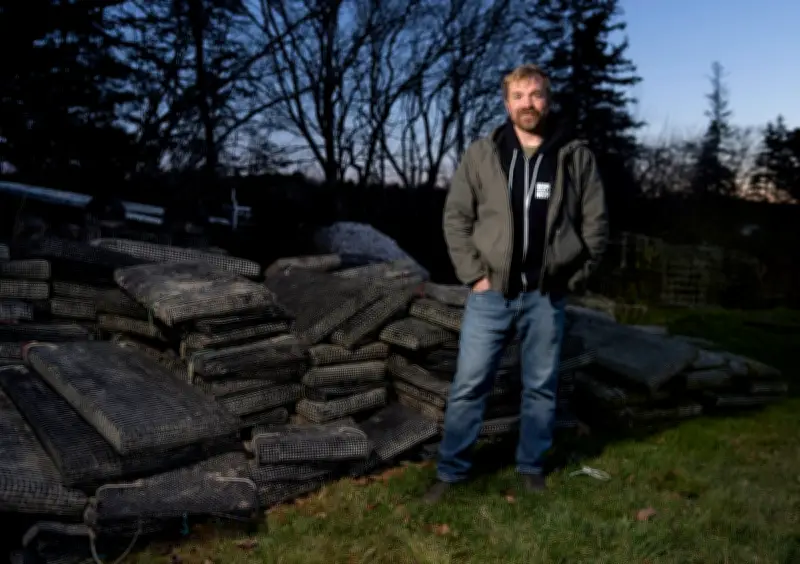
Graham Platner, the Democratic nominee for US Senate in Maine, ended his campaign on Wednesday after a woman accused him of sexual assault, leaving voters and party officials scrambling. The stunning collapse of a candidate once seen as a rising star has raised questions about how a flawed vetting process allowed him to reach the brink of a general election.
The Rise of a Political Outsider
Almost exactly one year ago, Platner, an oyster farmer and Marine veteran with no political experience, was recruited by out-of-state activists Daniel Moraff and Leanne Fan. According to a person familiar with the campaign, Moraff and Fan traveled to Maine and rented a house near Platner's home in Sullivan to convince him to run for the US Senate. Moraff became Platner's "right-hand man" throughout the process, the person said, speaking on condition of anonymity for fear of backlash.
Platner's early campaign saw a surge of grassroots excitement. He crisscrossed Maine for town halls, backed by Senator Bernie Sanders and an ad produced by Morris Katz, a 27-year-old media strategist. Platner's message—that Maine's working class had been hollowed out by unaffordable healthcare and a lack of housing—resonated with voters frustrated by the political establishment.
Vetting Failures and Early Red Flags
The Wall Street Journal reported that Moraff requested an expedited, cheaper background check completed in days. The firm contracted also did not conduct a candidate interview or questionnaire, per the Journal. David Farmer, a Democratic strategist based in Maine, called the vetting process "malpractice." He said, "I've had to have these conversations with candidates in the past—where you sit down and you ask them really tough questions. What drugs have you used? Have you ever had an affair? You ever cheated on your wife? It's really uncomfortable and probing, and a miserable event for everybody involved."
Platner's campaign did not respond to requests for comment on the background check methods.
Scandals Mount
Controversies soon emerged. Reddit posts from 2013 to 2021 showed Platner calling white rural Americans "stupid" and "racist," questioning why "Black people didn't tip," and saying sexual assault survivors should "take some responsibility." He apologized, attributing the posts to severe PTSD from combat. He also revealed a skull-and-crossbones tattoo resembling a Nazi Totenkopf, which he said came from a night drinking with military buddies in Croatia 18 years earlier. "I'm not a secret Nazi," he told the Pod Save America hosts.
Despite these issues, Platner's support held. In the Democratic primary, he won over 70% of the vote, defeating Governor Janet Mills, who had dropped out citing dwindling resources.
The Final Allegation
The breaking point came when Politico published allegations from Jenny Racicot, who said Platner raped her nearly five years ago. In a CNN interview, Racicot said, "By definition, yes, absolutely," when asked if Platner had raped her. Endorsements evaporated, and calls for his withdrawal were immediate. Platner denied the allegations in a video, but two days later, he released an 11-minute video ending his campaign, claiming the allegations were a coordinated political attack.
Andrew Feldman, a national progressive strategist, said, "It feels like some of the first rules of politics may have been broken here. We were seeing rookie mistake after rookie mistake, and now we find ourselves in this situation."
Impact and Aftermath
Platner's collapse has left Democrats scrambling to find a replacement candidate for the race against long-serving Republican Senator Susan Collins. Troy Jackson, who campaigned alongside Platner, told MS Now: "Graham told me point-blank that there was nothing in his past that I had to worry about. And he lied to me. And he lied to a lot of us."
The episode has unnerved some Democrats, who fear the race may now be unwinnable. The person familiar with the campaign said Moraff and Fan "fell in love with an aesthetic without knowing the state," doing a "disservice" to Maine's working-class voters.