Court documents have revealed that the doctor appointed to oversee Christa Pike's botched execution had not placed a central IV line in 13 years and had served as the physician in another failed execution just months earlier.
Dr. Mark Fowler, appointed by the Tennessee Department of Corrections, was the physician in charge of the failed executions this year of death row inmates Tony Carruthers and Pike. The 69-year-old admitted in a deposition last year that he did not hold hospital privileges or privileges to insert a central IV line at any medical facility, according to PEOPLE.
During the deposition, he testified that he last held those privileges in 2013 and had not performed a central line procedure since then.
Medical Expert Criticises Doctor's Qualifications
A declaration filed by Gail A. Van Norman, M.D., Professor Emeritus of Anesthesiology and Pain Medicine at the University of Washington, stated that, based on Dr. Fowler's deposition, "he does not have the current experience or training that would be required to obtain or retain privileges to place central lines at many, if not most, major healthcare institutions today."
In the declaration, a copy of which was obtained by PEOPLE, Van Norman also described the central line insertion technique attributed to Dr. Fowler in DeLiberto's account as a "violation of the current standard of care."
Despite this, Dr. Fowler was appointed by the state to oversee the execution of Carruthers in May, in which he was responsible for "determining if the inmate is deceased" and also "establishing a central line IV if necessary," according to Tennessee's Lethal Injection Execution Protocol.
Failed Execution of Tony Carruthers
Carruthers, convicted of kidnapping and murdering three people in 1994, was due to be executed on May 31. After half an hour, a three-person IV team failed to insert two IV lines, according to a court filing by the inmate's attorney Maria DeLiberto of the American Civil Liberties Union, which was obtained by PEOPLE.
Fowler was called in to assist but was also unable to insert a central line in two locations. Despite the failed execution attempt in May, Fowler was requested to serve in the identical role just four months later at Pike's botched execution.
Pike's Execution and Aftermath
The convicted murderer was given two doses of pentobarbital on September 30. After the second dose did not end Pike's life, and she was heard snoring, she was rushed to hospital.
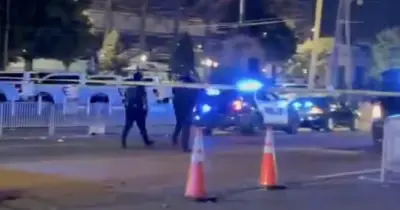
Medical help for Pike was delayed due to confusion among first responders who, initially, did not believe the inmate was still alive, according to 911 dispatch recordings. Pike's lawyer Kelly Gleason had to personally call emergency services after initial reports from the prison were dismissed as a false alarm. It was not until about half an hour after the initial call that prison officials confirmed the call was real and began letting responders through the gate.
Following the botched execution, Pike spent several days unconscious and breathing through a ventilator in intensive care. Her legal team previously said her recovery in hospital was "medically unprecedented" and that her arms were left burned and blistered. Her lawyers added she is the only person known to have survived a completed execution attempt in the US.