The DNA Dilemma: When Scientific Proof Becomes a Barrier to Justice
In the complex landscape of criminal justice, DNA evidence has emerged as a powerful yet problematic tool that can both liberate the innocent and create insurmountable barriers to justice. The case of Jon-Adrian "JJ" Velazquez, a New York man who spent half his life imprisoned for a murder he didn't commit, starkly illustrates this paradox. Despite multiple eyewitness recantations and significant inconsistencies in the original case against him, Velazquez remained incarcerated for years until political intervention and new DNA testing finally secured his freedom in 2021.
The Burden of Proving Innocence
The United States has developed a unique approach to wrongful convictions that places extraordinary emphasis on proven factual innocence, typically requiring DNA evidence that often doesn't exist. Since 1989, America has paid nearly US$4 billion in damages and settlements to 901 exonerated individuals, creating what legal scholar Kent Roach describes in his book Justice for Some as "a warped form of American exceptionalism."
This standard contrasts sharply with approaches used in England, Canada, and continental European nations, where concepts like miscarriages of justice, conviction safety, or judicial error allow for more generous interpretations that respect the fundamental principle of reasonable doubt.

The Velazquez Case: A Study in Systemic Failure
Velazquez's ordeal reveals multiple layers of systemic failure within American justice. Despite two eyewitnesses recanting their identification, physical descriptions that didn't match his appearance, and evidence suggesting the perpetrator was right-handed while Velazquez is left-handed, a New York court in 2016 still ruled he had failed to prove his innocence.
His eventual exoneration came not through judicial channels but through political intervention by then-Governor Andrew Cuomo, followed by a presidential apology from Joe Biden. This sequence, driven by investigative journalism and new DNA testing that excluded Velazquez from a betting slip touched by the killer, reveals troubling aspects about the decline of rule of law in America when politicians seeking re-election move faster than courts to correct injustices.
DNA's Limited Reach and Lasting Impact
Prominent American lawyers Peter Neufeld and Barry Scheck, founders of the Innocence Project, argued 26 years ago that DNA exonerations were largely matters of luck. Their prediction that such exonerations would eventually diminish has proven only partially accurate, as post-conviction DNA-based exonerations continue despite their limitations.
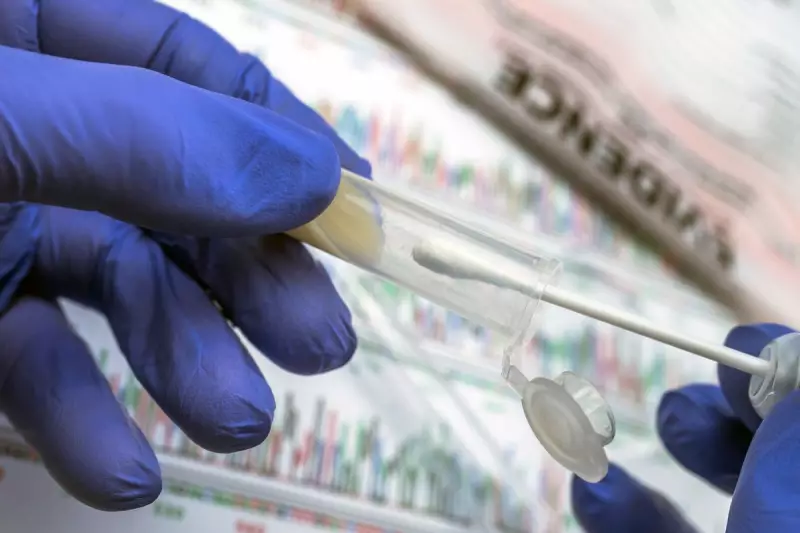
The fundamental problem remains: DNA evidence exists in only a small minority of crimes where perpetrators leave biological evidence at crime scenes. Even when such evidence exists, samples are frequently mishandled, contaminated, or unavailable. This reality means DNA serves only a fraction of wrongfully convicted individuals, creating what legal experts describe as a rationing of justice that benefits the fortunate few while abandoning the many.
International Parallels and Concerning Trends
The United States finds surprising company in its insistence on proof of factual innocence: the People's Republic of China. Both nations typically require multiple court proceedings before addressing miscarriages of justice, and both rely heavily on political intervention for exoneration cases. China has even begun providing more generous compensation to those who can prove factual innocence, mirroring American approaches.
This parallel raises disturbing questions about how generous compensation for the few who can prove innocence risks legitimizing unjust systems that harshly punish the many, including those with wrongful convictions but no meaningful path to justice.
The English Experience: Factual Innocence Spreads
Since 2014, England has adopted proven innocence requirements for compensation that have drastically reduced payments to wrongfully convicted individuals. This standard has even resulted in compensation denial for people like Velazquez who have been exonerated by DNA evidence.

The case of Victor Nealon, who spent 17 years in a British prison for attempted rape before DNA evidence revealed another person's genetic material on undisclosed clothing, reached the European Court of Human Rights. In a divided decision, the court ruled that states can require proven innocence without breaching the presumption of innocence, effectively allowing compensation denial without regard to fundamental legal principles.
Broader Implications for Justice Systems
American legal reformers have proposed adding a right to claim factual innocence to international law, but as Roach argues in Justice for Some, this standard would have regressive implications in many parts of the world that correct miscarriages of justice without such onerous proof requirements.
The populist appeal of factual innocence—its simplicity and emotional resonance—threatens to spread this restrictive standard from compensation claims to conviction appeals, potentially narrowing justice access across liberal democracies. While those who can prove their innocence deserve justice, limiting justice to only this group represents a dangerous contraction of legal protections that could legitimize mass-incarceration systems while abandoning those without biological evidence to support their claims.