World's Longest Underwater Tunnel to Connect Denmark and Germany by 2029
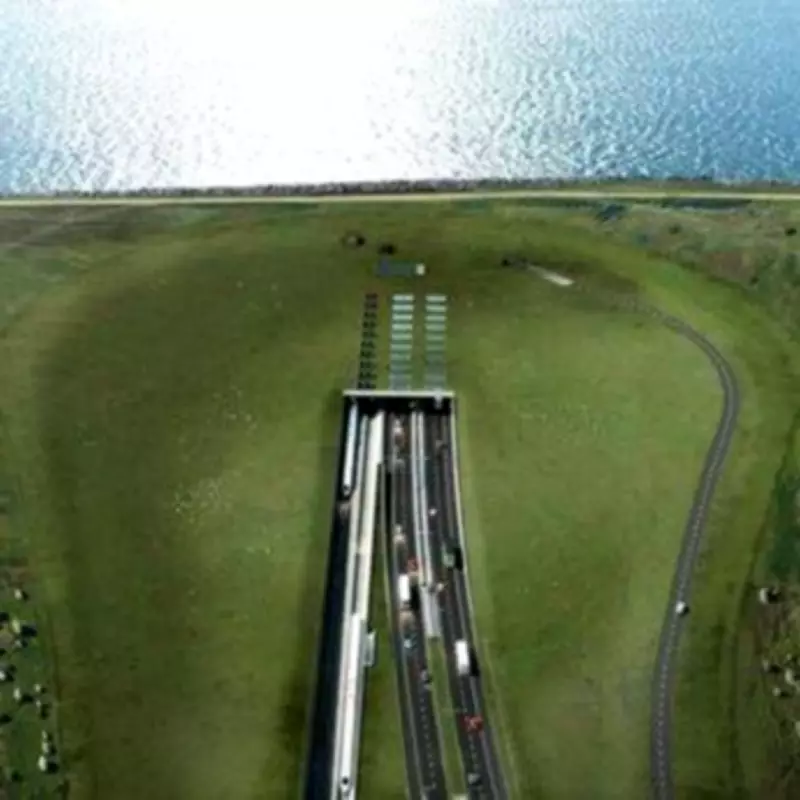
The Fehmarn Belt Fixed Link, a monumental underwater tunnel project, is set to become the world's longest immersed tunnel and rail link upon its anticipated completion in 2029. This colossal engineering endeavour will forge a direct connection between the Danish island of Lolland and Germany's Fehmarn island, dramatically transforming transport links across the Baltic Sea region.
A Colossal Engineering Feat Beneath the Baltic
Spanning an impressive 18 kilometres (11 miles), the tunnel represents Denmark's single largest infrastructure project. Danish planning firm Femern, the entity behind the scheme, has emphasised that the immersed tunnel design is a safe, tested, and efficient method for constructing such an underwater passage. The technology is Danish-developed, building upon prior experience from projects like the Øresund Tunnel.
The construction process involves an innovative approach where 89 massive pre-fabricated elements, each weighing approximately 73,500 tonnes, are meticulously assembled on the seabed. This method has been likened to assembling giant Lego pieces. Once a tunnel element is ready, waterproof bulkheads are installed, and the segment is towed into position by tugboats before being connected sequentially to form the complete structure.

Substantial Investment and EU Backing
The project carries a substantial estimated price tag of DKK 55.1 billion (approximately £6.4 billion). Significant financial backing has been secured from the European Union, which has granted the tunnel project around 1.3 billion euros (roughly £1.1 billion) in funding. This investment underscores the project's strategic importance for European connectivity.
Enhanced Safety and Uninterrupted Maritime Traffic
Safety remains a paramount concern throughout both the construction and operational phases. According to project officials, the Fehmarnbelt tunnel will be just as safe as a corresponding section of motorway above ground. The tunnel will be equipped with continuous hard shoulders and emergency exits along its entire length, ensuring high safety standards for users.
Furthermore, the design ensures that once completed, the tunnel will not pose any obstacle to vessel traffic in the Fehmarnbelt. Marine safety is also a top priority during the construction phase, with careful planning to minimise disruption to the busy shipping lanes above.
Transforming Travel Between Scandinavia and Mainland Europe
The primary benefit of the Fehmarn Belt Fixed Link will be a dramatic reduction in journey times between Scandinavia and mainland Europe. By providing a direct, high-capacity rail and road link, the tunnel will bypass current ferry services and lengthy detours, boosting economic integration and tourism.
The Institution of Civil Engineers has highlighted the tunnel's unique engineering, noting its positioning atop the seabed as a remarkable engineering feat. Upon its scheduled opening in 2029, this underwater link will stand as a testament to modern engineering and a critical piece of transnational infrastructure, reshaping travel and trade across Northern Europe for decades to come.