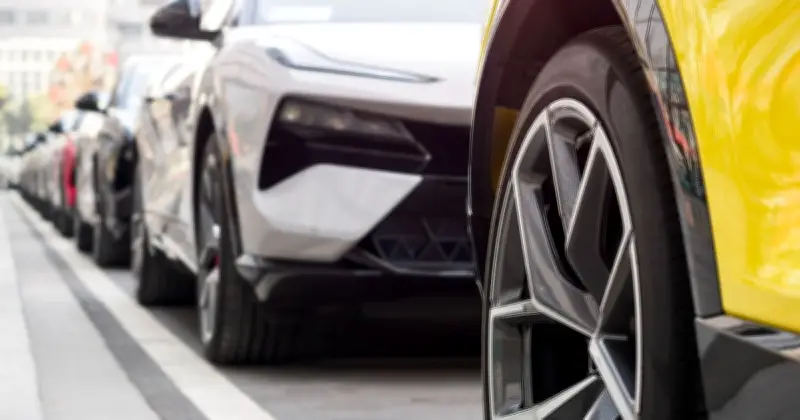
Electric car tyres are generally larger than those fitted to petrol and diesel models, and a leading tyre specialist has explained the main reason behind the difference. The larger rubber is primarily there to support the extra weight of electric vehicles, which are typically 20% to 30% heavier than traditional combustion models due to the battery pack.
The weight factor behind bigger tyres
Previous analysis has shown that electric car tyres average around 18.59 inches, while traditional internal combustion engine (ICE) cars are fitted with slightly smaller rubber at approximately 17.40 inches. Although the difference sounds small, it is visible on roads and in car parks, with EV tyres often looking fatter and more defined.
Craig Sprigmore, Retail Director at tyre specialists Goodyear, said larger tyres are often fitted simply to hold the extra weight of EVs. A typical combustion family hatchback is likely to weigh around 1,300kg, whereas a similar-sized EV can weigh as much as 1,800kg, with the additional 500kg difference usually down to the battery alone.
Speaking exclusively to the Express, Craig explained: “One reason tyres are often larger on electric vehicles is that many battery-powered vehicles are heavier than their petrol or diesel equivalents. Larger tyres are generally capable of carrying greater loads, which can help accommodate the additional weight associated with battery systems.”
Torque and tyre wear considerations
The explanation does not stop at weight. EVs are usually capable of impressive torque, accelerating quickly from a standstill compared with more traditional vehicles. This increased acceleration can place additional strain on the tyres, so a larger surface area reduces heat concentration and prevents the rubber from degrading.
“Electric vehicles can also deliver higher levels of torque and power from a standstill compared with many conventional petrol and diesel vehicles. This places different demands on the tyres and is one of several factors manufacturers consider when specifying tyres for a vehicle,” Craig added.
Motorists should still take precautions, with experts at Motorway previously warning that tyres are more likely to suffer on electric cars. They explained: “Yes, tyres can wear quicker on electric cars due to their higher weight and instant torque, which increases strain on the tyres. Regular maintenance and choosing tyres specifically designed for EVs can help mitigate this issue and ensure longer tyre life.”