
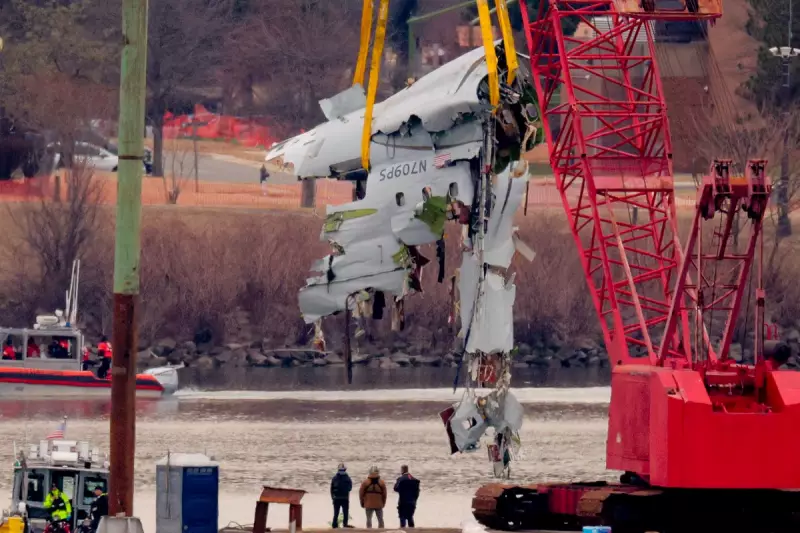
The United States government has formally accepted legal responsibility for its part in a catastrophic mid-air collision near Washington, D.C., which resulted in the deaths of 67 people earlier this year.
Government Concedes Dual Failures Led to Tragedy
In an official court filing responding to the first lawsuit brought by a victim's family, US authorities conceded that both the Federal Aviation Administration (FAA) and the US Army were contributors to the disaster. The admission marks a significant step in the legal proceedings following the crash on Thursday, 18 December 2025.
The government's liability stems from an air traffic controller's failure to adhere to procedures on visual separation, combined with the Army helicopter pilots' "failure to maintain vigilance so as to see and avoid" the approaching commercial jet. The filing did, however, indicate that other parties, including the pilots of the regional jet and the operating airlines, may also share responsibility.
Details of the January Collision Emerge
The incident involved a US Army Black Hawk helicopter flying into the path of an American Airlines regional jet, operated by PSA Airlines, as it was on approach to land at Ronald Reagan National Airport in northern Virginia. The jet was carrying 60 passengers and four crew members, while three soldiers were aboard the helicopter.
Following the impact, salvage operations were launched on the Potomac River, from which 28 bodies were recovered from the icy waters. The total death toll from both aircraft stood at 67.
Investigation Points to Systemic Issues
Attorney Robert Clifford, representing the family of victim Casey Crafton, stated the government had admitted to "the Army’s responsibility for the needless loss of life" and the FAA's procedural failures. He added that the families "remain deeply saddened and anchored in the grief caused by this tragic loss of life."
Although the National Transportation Safety Board's (NTSB) final report is due early next year, investigators have already identified critical factors:
- The helicopter was flying too high on a route that allowed minimal separation from planes using Reagan's secondary runway.
- The FAA failed to recognise persistent dangers around the busy airport, despite 85 near misses being recorded in the three years preceding the crash.
- Air traffic controllers at Reagan had become "overly reliant" on visual separation, a practice now discontinued.
Prior to the collision, the controller twice asked the helicopter pilots if they had the jet in sight. The pilots confirmed they did and requested visual separation clearance. Witnesses at the NTSB hearings raised serious concerns about the crew's ability to spot the plane effectively while using night vision goggles and whether they were looking in the correct direction.
American Airlines and PSA Airlines, also named in the lawsuit, have filed motions to be dismissed from the case. The NTSB's conclusive findings are anticipated to provide a definitive account of the sequence of failures when published in the coming months.




