

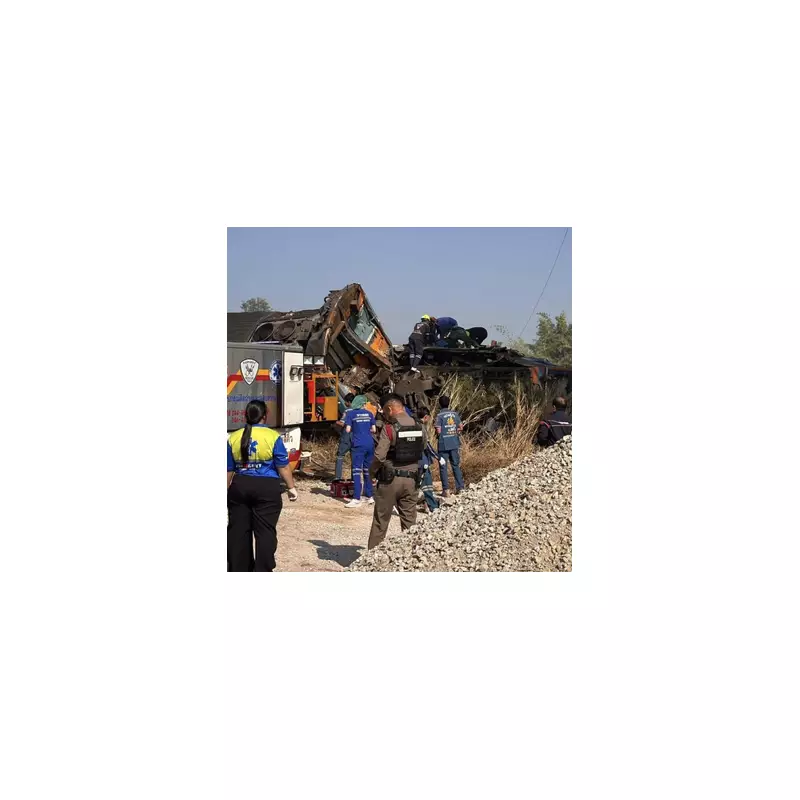
A devastating crane collapse in central Thailand has left at least 22 people dead and dozens more injured, after the structure crashed onto a moving passenger train in a horrific morning accident.
The Scene of the Tragedy
The disaster occurred shortly after 9am local time (2am GMT) in the area of Ban Thanon Khot, within Thailand's populous Nakhon Ratchasima province. This major transport hub is located north of the capital, Bangkok. The crane toppled directly onto railway tracks, striking a train that was carrying approximately 195 passengers at the time.
Local resident Mitr Intrpanya described the terrifying moments to the AFP news agency. He reported hearing a loud noise followed by two explosions. Upon arriving at the scene, he "found the crane sitting on a passenger train with three carriages." He gave a harrowing account of the damage, stating the crane's metal frame had "sliced the carriage 'in half'", appearing to strike the middle of the second carriage.

Rescue Efforts and Mounting Casualties
Emergency services worked swiftly at the site. Authorities confirmed that all passengers had been removed from the wreckage by 11.45am local time (4.45am GMT). The initial casualty figures are severe, with 22 fatalities confirmed and around 80 individuals wounded. Among the injured is a one-year-old child, highlighting the human cost of the catastrophe.
The Governor of the State Railway of Thailand has been called upon to launch a "thorough and comprehensive" investigation into the precise cause of the collapse. The focus will be on determining why the crane failed and who was responsible for its operation and safety.
A History of Safety Failures
Early blame for this incident is being directed at significant safety lapses. This tragedy is not an isolated event in Thailand, where previous construction and industrial disasters have claimed hundreds of lives. Notably, a past tower block collapse in the country resulted in more than 100 deaths.
This pattern raises urgent questions about the enforcement of safety regulations and oversight in construction and infrastructure projects. The repeated nature of such preventable disasters points to systemic issues that require immediate and rigorous governmental action.
The community of Ban Thanon Khot and the nation are now in mourning, as families grapple with the sudden loss and injuries caused by this preventable tragedy. The investigation's findings will be crucial in providing answers and, hopefully, preventing a similar disaster in the future.






