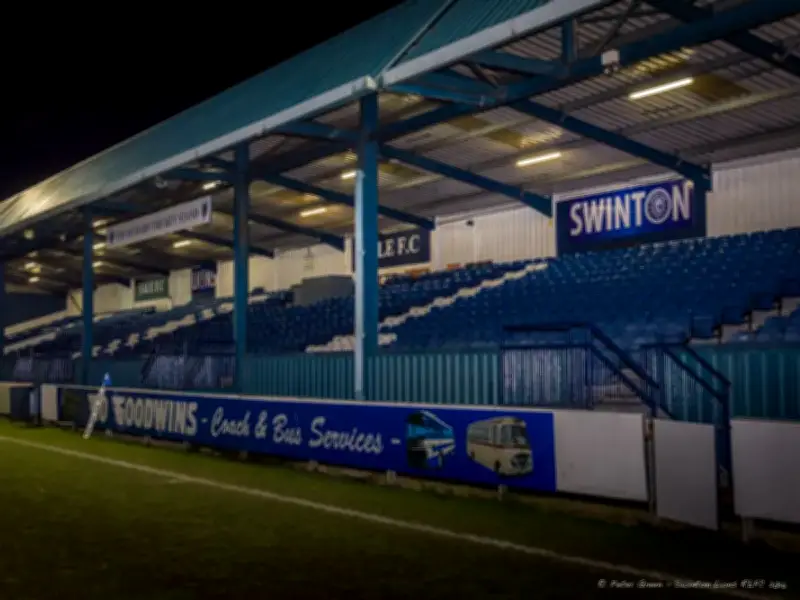
Swinton Lions rugby club, which has been without a home stadium for more than three decades, is hopeful that a new 'lion's den' could be part of plans to redevelop the former Swinton Park Golf Club. The club has not had a stadium on its home turf since the owners sold the old pitch amid financial troubles in 1992.
The former golf club, owned by Wain Estates, is the subject of a public consultation on a scheme to build around 700 homes alongside public green spaces and sports facilities. The club issued a statement last week commenting on the scheme.
Club's vision for a community hub
In the statement, the club said: “As many supporters will know, the Lions have been developing our own vision for The Den – a community sports centre and multi-sport hub that could finally bring Swinton Lions home while creating sporting, health and community facilities for people across Swinton and Salford.”
The club added: “We are therefore particularly interested to see community sport and recreation featuring within the emerging proposals for the site. We believe there is now a real opportunity for Wain Estates, Salford City Council, Swinton Lions and the local community to work together to explore whether our ambitions can be brought together as part of a sustainable long-term future for this important site.”
The Local Democracy Reporting Service understands talks are ongoing between the club and Salford Council about the nature of new sports facilities planned with Wain Estates.
Concerns over infrastructure and traffic
While many fans have greeted the possibility of the development bringing the Lions home enthusiastically, campaigners who opposed the sale of the golf club in 2021 have warned against a 'disgraceful' lack of infrastructure in the area. They fear the new housing development and the stadium could cause huge traffic issues.
Councillor Jim Cammell, who supports the 'Save Swinton Golf Club' campaign, said: “I don’t believe it would be right for me to support Project Den on the former Swinton Park Golf Club site … until the future of the golf course has been properly considered and a conclusion reached.”
Though he opposed the use of the former golf club, now overgrown private land, he supported the idea of a new stadium for the rugby league team. Coun Cammell added he had 'progressed discussions within the council about how to support the club’s long-term ambitions'.
Club's history and commitment to the area
The Swinton Lions, who recently beat Salford RLFC for the first time in 41 years, have a long and chequered history. They faced financial troubles and vandalism at their former home off Station Road, and were left homeless when the site was sold to housing developers David McLean Homes to rescue its finances. Plans to build a new stadium in Agecroft in 2016 also floundered due to 'cash-flow' issues. The team has for the last few years played at Heywood Road in Sale.
While the Swinton Park Golf Club could theoretically present a new space for the club, it is currently unclear how the new stadium would be funded. Responding to the discussion over the 'controversial' site, Swinton Lions’ CEO Stephen Wild said: “At Swinton Lions we recognise that the status and future of the Swinton Park Golf Club site is a sensitive issue. We acknowledge the strength of feeling associated with the site and we therefore welcome the public consultation. We do not wish to speculate on conversations that may be taking place between Salford Council and Wain Estates, and we are mindful that land, planning and consultation processes will need to be followed through diligently in due course.”
Wild added: “However, speaking from a broader Swinton Lions perspective – in this our amazing 160th year – we remain committed to finding a permanent base in the M27 area. More than that, we want to position our club at the heart of the community. We are not just a semi-professional men’s rugby league club. We also operate a hugely successful women’s team, a wheelchair team, and have plans to launch a physical disabilities team. We have a charitable Community Foundation which delivers all manner of worthwhile projects across the region – some related to junior rugby league pathway activities for boys and girls, but many of our programs are non-sport related and concerned with health, well-being and anti-crime initiatives. We want to engage with grass roots sporting and non-sporting partners and create a genuine community hub.”
Wild concluded: “We have been, and will remain, open to dialogue, about this or any alternative sites in the M27 area. We want to deliver real benefits for the town of Swinton and Pendlebury, and to this end we want to work constructively with all potential key partners.”