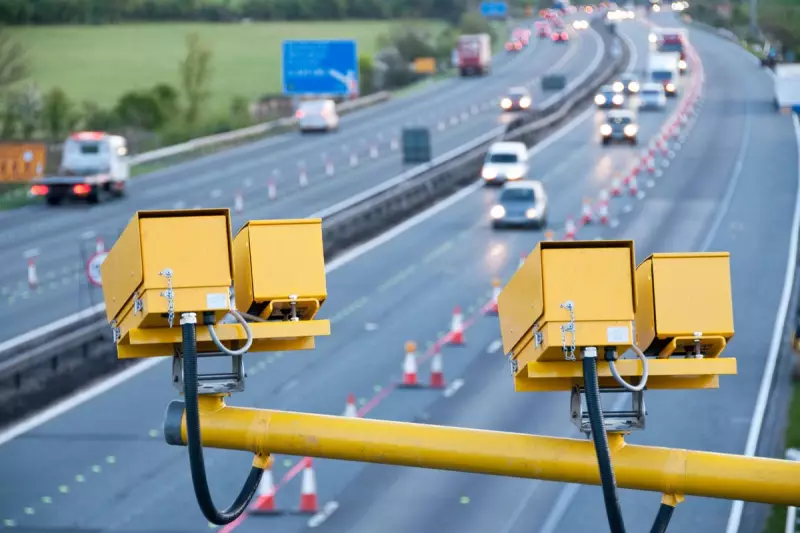
A significant technical fault with variable speed cameras has resulted in thousands of drivers being incorrectly fined for speeding, National Highways has confirmed. The government-owned company announced that a compensation scheme will be established for those wrongly penalised.
The Scale of the Speed Camera Malfunction
National Highways has identified approximately 2,650 cases where a camera erroneously activated due to what it describes as a "technical issue." The problem stemmed from a software update that affected variable speed cameras on sections of motorways and A roads across England.
The glitch caused a critical delay in communication. There was a lag of around ten seconds between the variable speed limit signs updating and the cameras registering the change. This meant drivers who had correctly slowed down or accelerated in line with the new limit could still be flagged as speeding during that brief window.

The issue impacted roughly 10 per cent of England's motorways and A roads. Despite the scale, National Highways emphasises that the total erroneous activations account for less than 0.1 per cent of the 6 million camera activations recorded in the same period. Not all activations result in a fine, as police forces review each case.
Official Response and Safety Assurance
Nick Harris, Chief Executive of National Highways, stated: "Safety is our number one priority and we have developed a fix for this technical anomaly to maintain the highest levels of safety on these roads and make sure no one is wrongly prosecuted."
In response to the discovery, the agency has paused sending data from the affected variable cameras to police forces while a permanent solution is implemented. A spokesperson for the Department for Transport apologised to anyone affected but stressed that safety was never compromised and enforcement for genuine offences continues.
What Drivers Need to Do: The Claim Process
The National Police Chiefs’ Council (NPCC) has advised that the "limited number of motorists" who were incorrectly fined will be contacted directly by the relevant police force. Drivers do not need to take proactive action to query their fine.
If you are affected, you will be notified and your fine will be reimbursed. Any penalty points added to your licence as a result of the error will be removed. The authorities have pledged to contact those impacted about the details of the compensation scheme in due course.
This incident primarily concerns fines issued based on evidence from variable speed cameras on specific A roads and motorways. Drivers who received a fine on these types of roads in recent years, particularly where the limit had just increased, may have been caught by the error.
The NPCC reiterated that other methods of speed enforcement, including mobile cameras and police patrols, remain fully operational and unchanged.