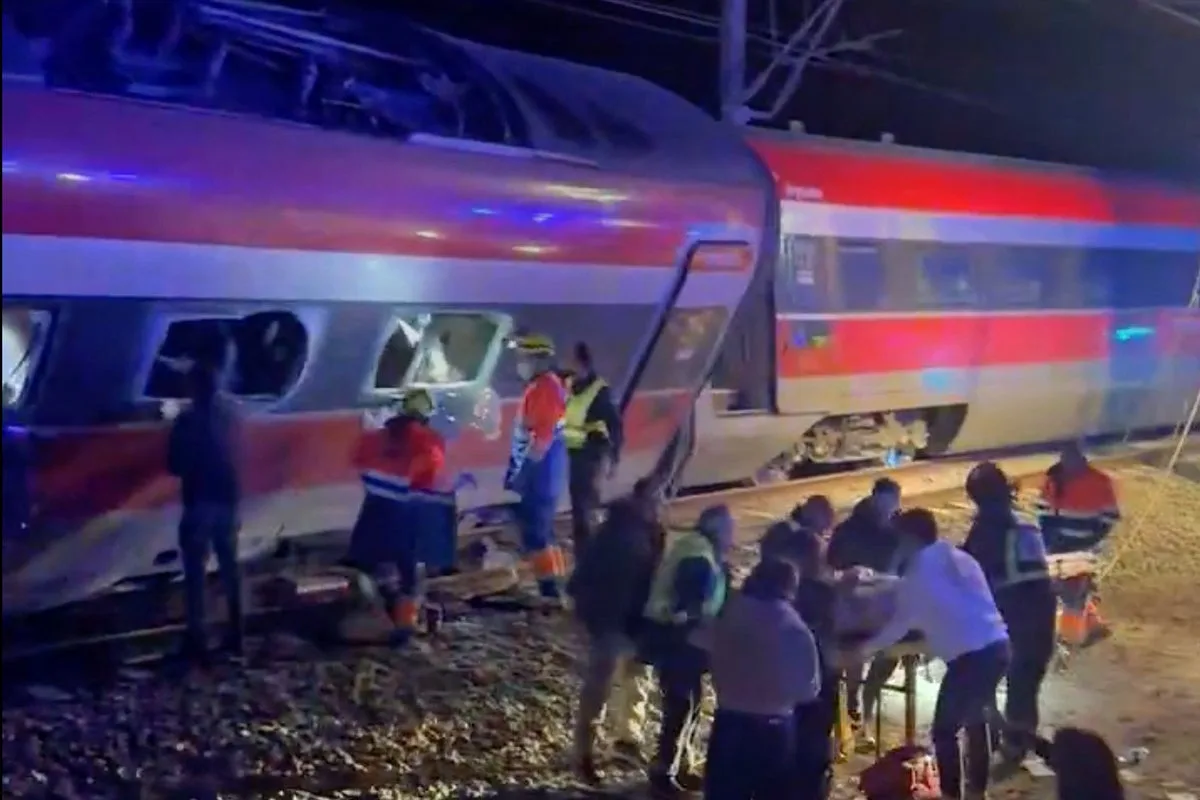
Spain, home to Europe's finest high-speed rail network, was rocked by tragedy on Sunday evening when an Iryo train from Malaga to Madrid derailed and collided with a Renfe express at Adamuz in Andalusia, killing dozens of passengers. The incident has sparked renewed concerns about the safety of high-speed rail travel.
The worst high-speed rail accident of the 21st century occurred in Spain in July 2013, when a Madrid express derailed at Santiago de Compostela after taking a curve at more than twice the permitted speed, killing 79 people. Other notable European rail disasters include the 1998 German ICE derailment near Eschede, which killed 101, and the 2023 Tempi collision in Greece, which claimed 57 lives.
In the UK, rail travel remains extremely safe, with no passenger fatalities in most years. By contrast, around 1,650 people die on British roads annually, and if rail had the same death rate, there would be 215 fatalities each year. Spain's road accident rate is significantly higher than the UK's, but high-speed rail still proves far safer than driving.
Despite the recent tragedy, experts emphasise that trains are designed with passenger protection in mind, operated by highly trained professionals on lines with extensive safety systems. The UK has also seen fatal derailments, such as at Greyrigg in 2007 and Carmont in 2020, but these remain rare.
While Spain has experienced more rail fatalities than other European nations in recent years, the overall safety record of high-speed rail remains strong, with far fewer deaths per passenger-mile than road travel.