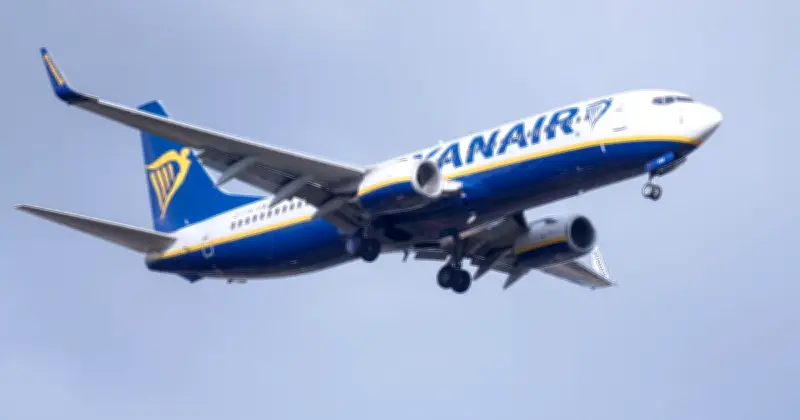
Ryanair CEO Michael O'Leary has warned that European airfares will see their "biggest increase in history" over the next 12 months, as the war in Iran continues to drive up jet fuel costs. Speaking at a news conference in Brussels, O'Leary forecast that fares could rise by up to 20% next year.
"You're going to see airfares rise next year in Europe, I think by 10, 15, maybe 20%," he said. "You're going to see the biggest increase in airfares, I would say, in history in Europe for the next 12 months."
Fuel Hedging to Unwind
O'Leary noted that fuel-hedging has so far protected airlines from the worst of the oil price rises since the Middle Eastern conflict broke out in February. However, he warned that these hedges will unwind from next spring, forcing carriers to buy a larger proportion of their jet fuel at market rates.
Jet fuel prices, which account for a large percentage of carriers' costs, were previously expected to climb 70% across 2026, averaging $152 (£114) a barrel this year, compared with $90 (£67.20) in 2025.
Capacity Reductions and Impact
O'Leary forecast that there will be fewer seats available next year as a result of bankruptcies and takeovers among airlines, potentially causing fares to rise by up to 20%. Ryanair said around 80% of its jet fuel for 2027 is hedged at $67 a barrel, making it well placed to record another profitable year.
However, the airline also said the high cost of unhedged fuel means it is "sensible" to reduce its exposure during the unprofitable winter schedule between November and March. It has reduced its 2027 air traffic target from 216 million to 214 million passengers as a result.
"If high oil prices continue through to 2027, Ryanair believes short-haul airfares in Europe will increase materially to reflect higher oil prices, as some less well-hedged competitors will struggle to maintain capacity or even survive this coming winter season," the company said.
Summer Growth and Calls for Tax Cuts
Ryanair added that it is still on track to grow its summer traffic, representing the period between April and October this year, by more than 5% to 145 million. O'Leary has also called on Prime Minister Andy Burnham to abolish £15 air passenger duty, which is levied on flights departing UK airports and is often passed on to passengers, to cut taxes on travel.
He said that even if the Iran war ended tomorrow, airlines are "facing an enormous cost challenge", with other providers also set to slash thousands of services this winter. EasyJet confirmed it will remove around 3,500 flights from its upcoming schedule earlier this month, in a move it said should come as "no surprise" given the geopolitical climate.