

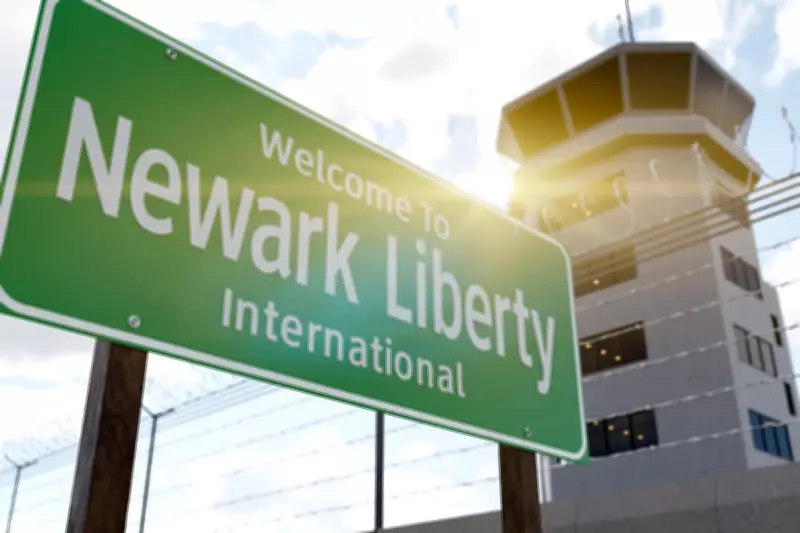
Newark Liberty International Airport in New Jersey experienced a significant operational disruption on Monday morning, with all arrivals and departures temporarily halted following the evacuation of the air traffic control tower. The Federal Aviation Administration (FAA) ordered the evacuation after personnel reported a distinct burning smell emanating from an elevator within the tower structure.
Operational Pause and Swift Response
The exact source of the odor remained undetermined during the incident, though FAA officials quickly confirmed that no actual fire had been detected. The disruption lasted for less than one hour, during which time air traffic control operations were seamlessly transferred to a backup tower facility at the airport. According to the Port Authority of New York and New Jersey, which manages Newark Airport, controllers successfully relocated to this secondary location before returning to the primary tower once the situation was resolved.
Recent Precedents and Safety Protocols
This incident follows a similar occurrence earlier this month when a strong chemical smell disrupted operations at four airports serving Washington, D.C., Baltimore, and Richmond, Virginia. In that case, Federal Transportation Secretary Sean Duffy identified the source as an overheated circuit board that required replacement. The FAA's rapid response at Newark demonstrates established safety protocols for such environmental hazards in critical aviation infrastructure.

Unrelated to LaGuardia Airport Tragedy
Officials emphasized that the temporary operational pause at Newark was completely unrelated to a separate, fatal accident that occurred at New York's LaGuardia Airport on Sunday night. In that incident, a Jazz Aviation flight operating on behalf of a Canadian carrier collided with a Port Authority vehicle on Runway 4 while arriving from Montreal with 76 passengers aboard.
Details of the LaGuardia Runway Collision
According to flight tracking data from FlightRadar24, the aircraft struck the emergency response vehicle at approximately 24 miles per hour. The truck had been dispatched to address a separate incident at the Queens airport when the collision occurred. Air traffic control audio recordings reveal controllers urgently attempting to prevent the accident, with one dispatcher heard shouting "Stop, stop, stop!" before later commenting, "That wasn't good to watch." One controller subsequently admitted fault, stating, "I messed up."
The aftermath of the LaGuardia incident saw forty-one passengers transported to hospital facilities, with nine individuals still receiving treatment at the time of reporting. Two other people, identified as a sergeant and an officer, sustained broken limbs but were listed in stable condition following medical intervention. These developments underscore the complex challenges facing air traffic management systems and airport emergency response protocols across the New York metropolitan area's aviation network.






