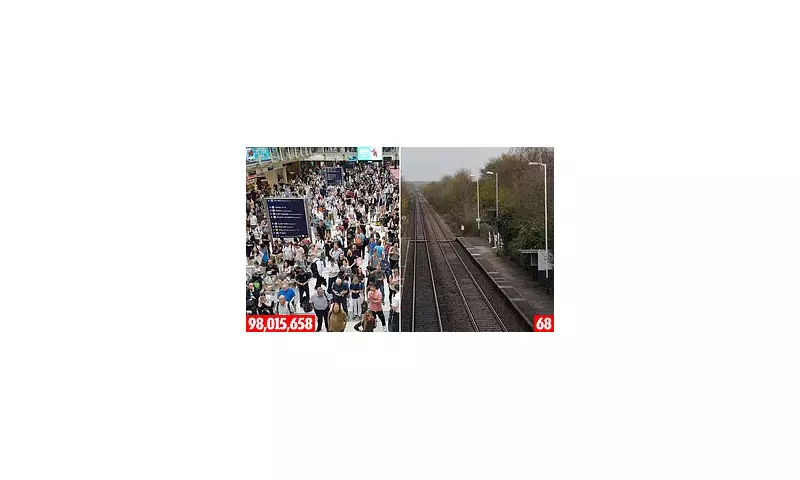
London Liverpool Street has secured its position as the United Kingdom's busiest railway station for a third consecutive year, according to the latest official figures. The station saw an estimated 98.0 million entries and exits in the 2024/25 financial year, solidifying its lead over major London rivals.
The Battle of the Stations: London's Transport Hubs Ranked
The data from the Office of Rail and Road (ORR) reveals a fascinating snapshot of passenger movement across the nation's rail network. Liverpool Street's footfall grew by 3.7 per cent from 94.5 million the previous year. In second place was London Waterloo, with 70.4 million passenger movements, a significant rebound that saw it climb from fourth place the year before.
Waterloo had held the top spot for 17 of the 18 years leading up to 2021/22, only losing its crown with the transformative opening of the Elizabeth line. The impact of that new railway is starkly evident in the rankings. Paddington, also served by the Elizabeth line, took third place with 69.9 million entries and exits, while Tottenham Court Road, another key Elizabeth line interchange, followed closely in fourth with 68.1 million.

The top ten was dominated by London termini and interchange hubs:
- London Bridge (54.7 million)
- Victoria (53.8 million)
- Stratford (51.5 million)
- Farringdon (50.2 million)
- Bond Street (42.8 million)
- Euston (40.2 million)
National Picture: Growth and Quiet Corners
Beyond the capital, the busiest stations in England were Birmingham New Street (36.6 million), Manchester Piccadilly (27.4 million), and Leeds (27.3 million). In Scotland, Glasgow Central led with 25.3 million, ahead of Edinburgh Waverley (22.8 million). Cardiff Central was the leader in Wales with 12.5 million entries and exits.
The ORR reported that total passenger journeys across Britain reached 1.73 billion for the year, a notable 7 per cent increase from 1.61 billion in the previous 12 months. Feras Alshaker, ORR Director of Planning and Performance, stated: "This year's statistics show rail usage continuing to grow around the country, and we're also seeing the sustained impact of major investment, particularly the Elizabeth line."
The Nation's Quietest Stations
In stark contrast to the bustling London hubs, the title of least-used station in 2023/24 went to Elton and Orston in Nottinghamshire, with just 68 recorded entries and exits. The station is served by a single East Midlands Railway train per day in each direction from Monday to Saturday, with no Sunday service. It is unstaffed and lacks basic amenities like seating or a toilet.
Other notably quiet stations included Shippea Hill in Cambridgeshire (76 entries/exits) and Ince and Elton in Cheshire (98). Denton in Greater Manchester, last year's least-used station, saw its footfall nearly double to 100, moving it to fourth quietest. The ORR notes that such stations are often kept open because it is administratively simpler to maintain an infrequent service than to secure formal closure permission.
The regulator also cautioned that methodology improvements, including better ticket data allocation, mean year-on-year comparisons should be made carefully. Nonetheless, the figures clearly illustrate the central role of London's rail infrastructure and the shifting travel patterns shaped by major new lines like the Elizabeth line.