

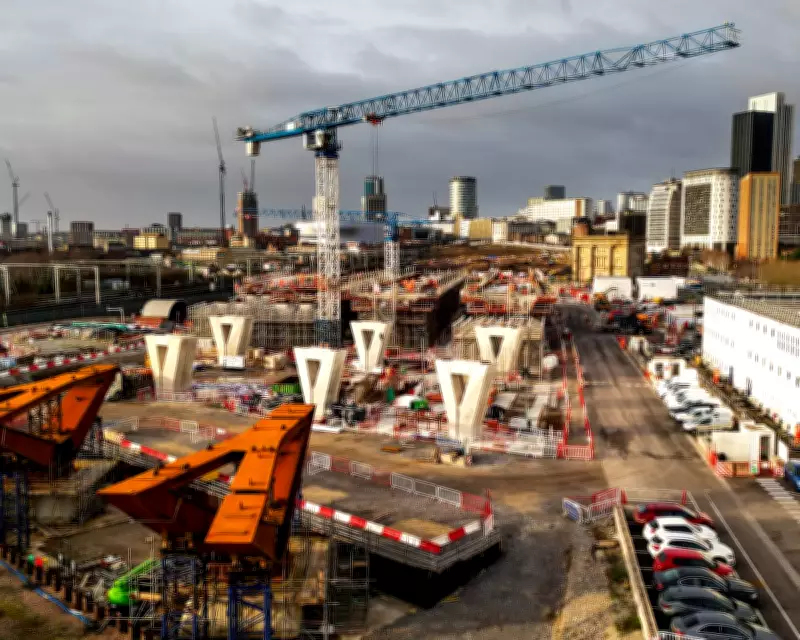
HS2 Contractor Issues Warning Over Steel Tariffs Impact
One of the principal contractors for the HS2 high-speed rail project has issued a stark warning to the government, stating that the recent decision to double tariffs on imported steel will "exacerbate" significant cost pressures already facing the UK construction industry. This alert comes amidst escalating concerns regarding the ballooning budget of the £100 billion railway initiative, which is currently under intense scrutiny for its financial management and projected expenditures.
Government Tariff Decision and Industry Backlash
Ministers announced last week their intention to increase tariffs on foreign steel imports substantially while simultaneously reducing the permissible volume of overseas purchases. This policy shift is designed to provide a lifeline to Britain's struggling domestic steelmakers, who have faced decades of decline and job losses. However, industry leaders argue that the timing is particularly problematic, as the construction sector grapples with an energy shock stemming from the Iran war, which has already driven up prices for essential materials like steel and concrete.
Mark Reynolds, the chair of the construction firm Mace, which is responsible for building stations at London Euston and Birmingham Curzon Street for HS2, described the new tariffs as "ill-timed and unhelpful." He emphasized that these measures would only worsen the existing challenges confronting the UK industry, which is attempting to recover from its most severe downturn since the financial crisis nearly twenty years ago.

HS2 Cost Reset and Operational Adjustments
Transport Secretary Heidi Alexander is scheduled to address the House of Commons on Monday, providing an update on Labour's efforts to "reset" the costs associated with HS2. It is anticipated that she will reveal directives given to HS2's chief executive, Mark Wild, to investigate potential cost-saving measures, including reducing the operational speed of the trains. A government source indicated that Alexander is meticulously evaluating all available options to reclaim time and financial resources for taxpayers, with the overarching goal of opening the railway at the earliest feasible date and the lowest possible expense.
Contractors involved in the project have reportedly procured a significant portion of the steel required for critical infrastructure components such as tunnels, viaducts, bridges, and underground supports. Nevertheless, they are now being instructed to seek opportunities for advance purchasing of materials for other elements, including station constructions, to buffer against anticipated future price escalations.
Tariff Details and Broader Economic Implications
Effective from July, import quotas for numerous overseas steel products will be reduced by 60%, with duties outside these quotas escalating to 50%. These adjustments align the UK with recent protective measures implemented by the United States, the European Union, and Canada, aimed at countering a flood of inexpensive imports from China, the world's largest steel producer.
Milda Manomaityte, chief executive of the Association for Consultancy and Engineering, cautioned that tariffs on imported steel would inevitably deliver a "cost shock" to infrastructure projects, with particularly acute impacts on bridges, railways, and new tram lines. Paul Gandy, former head of Tilbury Douglas and current president of the Chartered Institute of Building, echoed these sentiments, labeling the tariffs as "really unhelpful to the construction market and to the economy at the moment." He noted that a substantial proportion of this steel is destined for public sector projects, many of which are already facing precarious financial situations.
Defense of Tariffs and Industry Perspectives
Proponents of the tariff policy, including sources close to primary steelmakers like Tata and British Steel, defend the measures as essential for preserving a strategically vital industry that employs approximately 10,000 individuals. They argue that without such protection, the sector risks complete collapse, emphasizing that once lost, domestic steel production capabilities cannot be easily reinstated.

In response to the controversy, a spokesperson for HS2 Ltd highlighted that over half of the steel utilized in constructing the new high-speed railway during 2023-24 originated from the UK, with this figure expected to rise to two-thirds in 2024-25. The spokesperson also confirmed that contractors have already secured most of the structural steel necessary for major civil engineering works. Meanwhile, a government spokesperson asserted that the tariffs would reduce construction's dependence on overseas steel but committed to reviewing the policy after one year to ensure its continued appropriateness and effectiveness.





