Freight Train Derails in Connecticut, Sending Hazardous Cars into River
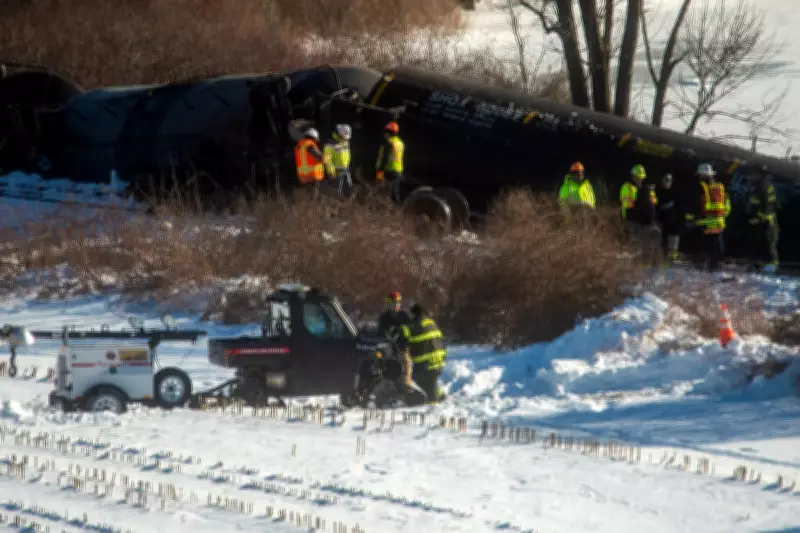
A freight train derailed on Thursday morning in Mansfield, Connecticut, causing several cars to detach, with four carrying liquid propane ending up in the water. The incident occurred near where Eagleville Lake meets the Willimantic River in this rural town, which is home to the University of Connecticut.
Details of the Derailment and Response
According to Mansfield Fire Chief John Roache, the train had 41 cars, and a number of them derailed around 9 a.m. Four of the derailed cars were transporting liquid propane, which tumbled into the river, while two others carrying food grade grease landed on the banks. One of the grease cars sustained damage and leaked approximately 2,000 gallons (7,500 liters) of animal fat, but officials confirmed the leak has been contained with no evidence of it entering the water.
No injuries have been reported, and the cause of the derailment is still under investigation. The train was traveling south from Palmer, Massachusetts, to Willimantic at the time of the accident.

Safety Measures and Environmental Impact
Local and state officials have implemented a shelter-in-place order for residents within half a mile (0.8 kilometers) of the derailment site, which remains in effect. They emphasized that no evacuations have been ordered but urged people to stay indoors due to the odorless nature of liquid propane, which would not be immediately detectable by smell.
The derailment prompted road closures and considerations for alternative bus routes for school dismissals. Mansfield Town Manager Ryan Aylesworth stated that there does not appear to be any serious environmental damage from the incident. Hazardous materials teams are monitoring for leaks and have placed hazmat booms in the water as a precautionary measure.
Recovery Efforts and Timeline
Tom Ciuba, a spokesperson for New England Central Railroad, indicated that specialized equipment is expected to arrive on Thursday evening to assist in rerailing the affected cars. However, Fire Chief Roache noted that the recovery process could take days, given the remote location of the derailment and the challenging, frigid conditions for responders.
He explained that cranes will be required to handle the situation, making it a prolonged operation. "It's not going to be a today operation," Roache said. "They're going to have to get some cranes in there. It's going to take some time."
Officials continue to assess the situation, with ongoing monitoring to ensure public safety and environmental protection.