Empty Emirates Flights Amid Iran Conflict Spark Safety Fears in Dubai
Empty Emirates Flights Amid Iran Conflict Spark Safety Fears

Empty Emirates Flights Amid Iran Conflict Spark Safety Fears in Dubai

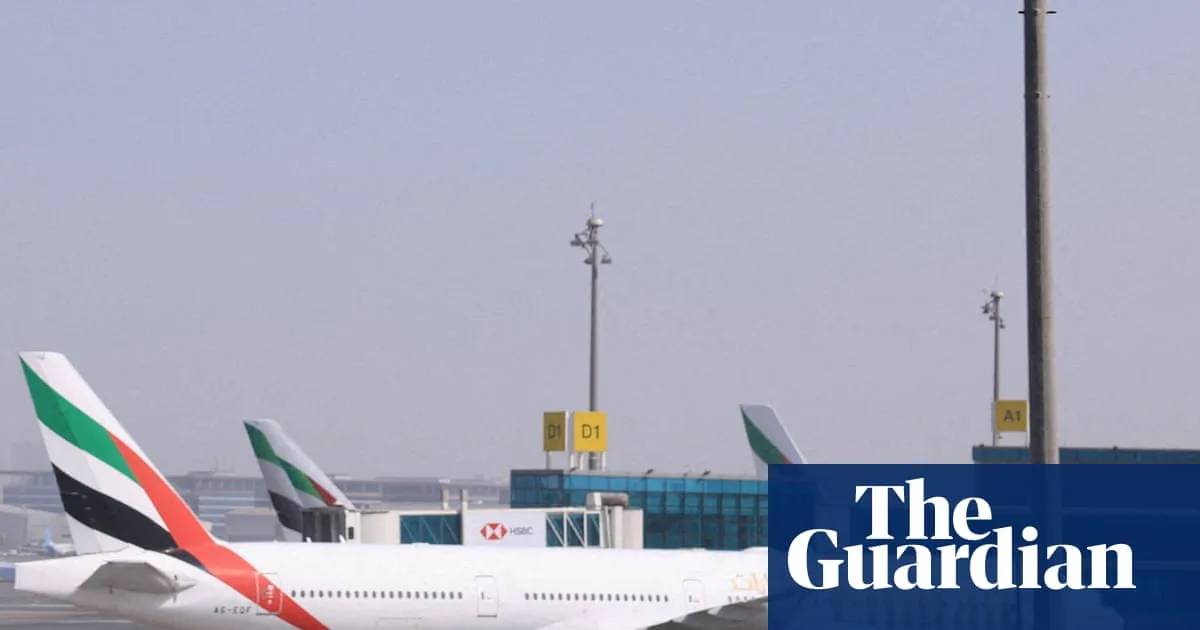
Flights to Dubai have been captured in photographs and videos displaying rows of vacant seats, as escalating fears over airline safety amid the Iran war intensify. According to a report from the Wall Street Journal, at least 39 passenger aircraft at Dubai International Airport landed or departed within a mere five-minute window following warnings of incoming fire during the ongoing conflict. Similarly, six planes at Abu Dhabi's airport and twelve at Sharjah airport faced comparable close calls.

Airport Attacks and Flight Disruptions

At least five aircraft parked at airports across the Middle East have been struck by Iranian attacks, as relentless missile and drone assaults batter the region. Last Monday, Dubai Airport was temporarily shut down after an Iranian drone hit a fuel tank, igniting a massive fire. Flights were diverted, and roads to the airport closed, with a pall of black smoke visible from several miles away.

Emirates flights from distant locations such as Melbourne, Sydney, and Thiruvananthapuram in India were forced to turn back mid-air and return to their departure cities. Services from Heathrow, Edinburgh, Manchester, and Dublin also had to revert to their original points of origin. At least two drones struck the airport, prompting Emirates to advise passengers against travel for several hours, with some flights redirected to the smaller Al Maktoum International Airport in nearby Jebel Ali.

Wide Pickt banner — collaborative shopping lists app for Telegram, phone mockup with grocery list

Safety Measures and Airline Responses

The Dubai Civil Aviation Authority imposed a flight suspension as a precautionary measure to ensure passenger and staff safety following the early morning attack. Authorities quickly took to social media to reassure the public, describing the incident as causing 'minimal damage' and no injuries, and referring to it as a 'drone-related incident'.

Despite the persistent danger from missile and drone strikes, airlines in the Middle East have reinstated hundreds of flights daily. Data from Flightradar24 indicates that Emirates has operated around 300 flights per day over the past two weeks, representing 60% of its pre-conflict capacity. Combined with carriers like Etihad, Flydubai, and AirArabia, Emirati companies have conducted over 11,000 trips since the war began.

To mitigate risks, the UAE has established specific flight corridors for diversions and deployed jet fighters to protect aircraft, according to sources familiar with the strategy. A spokesperson for Etihad stated, 'We do not operate any flight unless it has been fully assessed and approved as safe.' Dubai Airports Chief Executive Paul Griffiths told CNN, 'The ability to detect and respond to threats as they've unfolded has been very, very effective and efficient.'

International Cancellations and Passenger Exodus

Foreign airlines, including British Airways, have cancelled all flights to Dubai until summer, citing 'continued uncertainty' and 'airspace instability'. British Airways also suspended travel to Amman, Bahrain, and Tel Aviv until after May 31, with trips to Doha in Qatar on hold until the end of April and flights to Abu Dhabi cancelled until later this year. Government figures reveal that more than 63,000 Britons have returned home from the UAE since the conflict began.

Crackdown on Social Media and Misinformation

The UAE is attempting to downplay the severity of the situation in the holiday hotspot, with officials aggressively clamping down on videos of the conflict being shared online. Authorities have cracked down on social media posts showing missiles, drones, or interceptions to maintain the country's image as a safe haven. Dubai officials have been telling residents that 'big booms' in the sky are 'the sound of us being safe' as the UAE air defence system engages threats.

On Friday, UAE police announced the arrest of over 100 people in Abu Dhabi for filming and posting misinformation. A social media post confirmed, 'Abu Dhabi Police announced the arrest of 109 individuals of various nationalities who filmed sites and incidents and circulated incorrect information via social media platforms during current events,' adding that some shared 'misleading information'. The post noted, 'Such actions are liable to incite public opinion and spread rumours among members of the community.'

Pickt after-article banner — collaborative shopping lists app with family illustration

The UAE attorney-general has ordered the arrests of 35 people for publishing misinformation, filming or publishing footage of war-related incidents, or glorifying 'a hostile state and its political and military leadership'. In one case, a European tourist was arrested in Dubai for posting a picture of the Fairmont The Palm hotel after an Iranian drone attack; he has reportedly not been seen since his detention. Previously, a 60-year-old British man was among 21 people charged under cybercrime laws for videos and posts related to missile strikes, accused of 'broadcasting, publishing, republishing or circulating rumours or provocative propaganda that could disturb public security'.

Regional Impact and Similar Measures

Similar measures have been implemented across the Gulf as Iran targets US assets and civilian infrastructure, including landmarks, oil and gas facilities, airports, and residential areas. In Qatar, authorities have arrested more than 300 people for sharing images and what they described as 'misleading information' during the war, with Bahrain and Kuwait taking analogous actions.

This past week, debris from three ballistic missiles struck three private jets parked at Israel's Ben Gurion Airport. Two other aircraft hit while parked were an Emirates A380 and a Saudia A321, stationed at Dubai International Airport at the conflict's outset. As the situation evolves, the juxtaposition of empty flights and heightened security measures underscores the profound impact of the Iran conflict on regional travel and safety.




