The Easter 2026 travel rush has brought widespread disruption across the UK, with delays affecting flights, rail services, roads and ferry crossings. Motorists using the Dover to Calais and Dunkirk routes have been advised to arrive only two hours before departure, as roads are expected to be particularly busy on Easter Monday.
Storm Dave, the fourth named storm of the year, caused significant disruption overnight on Saturday into Easter Sunday, particularly in northern and western parts of the UK. Many ferry crossings between Wales and Ireland, as well as between Scotland and Northern Ireland, were cancelled, though services across the Irish Sea have now returned to normal. However, Caledonian MacBrayne sailings remain disrupted due to a large part of its fleet being out of service, with the operator warning of possible short-notice cancellations.
Dozens of flights were affected by Storm Dave, especially those between Great Britain and Dublin. Many inbound flights to airports in northern England were diverted. Passengers on a Ryanair flight from Gatwick to Dublin spent nearly two and a half hours in the air, including two failed landing attempts, before returning to Stansted. Leeds Bradford Airport was worst affected, with at least six Jet2 and Ryanair planes diverted to Manchester, while others were rerouted to Liverpool and Stansted. An easyJet flight from Palma to Birmingham also ended up in Manchester.
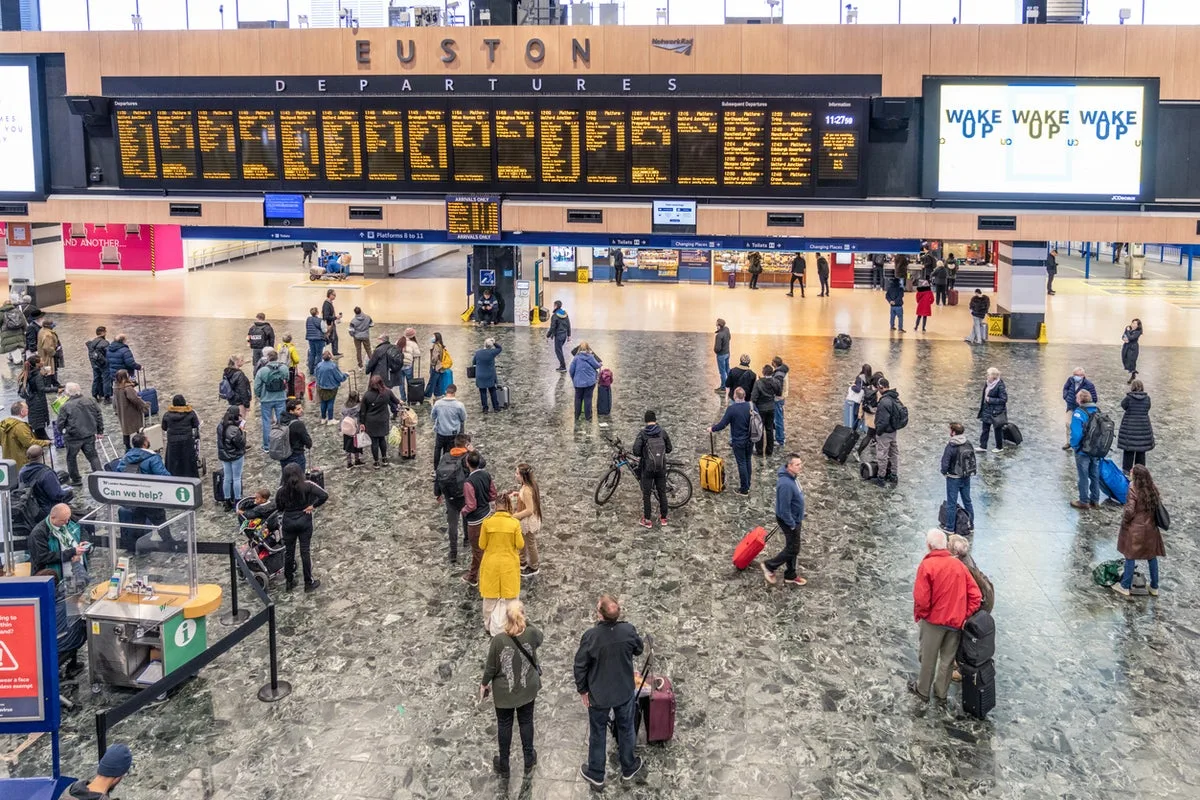
On the railways, widespread engineering work is causing delays, including the closure of one of Britain’s busiest lines for six days from Good Friday. The 50-mile stretch between London Euston and Milton Keynes, which normally carries over 100,000 passengers daily, is shut. Despite the disruptions, some UK airports are experiencing their busiest Easter on record, with easyJet expecting to carry more passengers than ever.
Abroad, travellers face potential delays at EU borders due to the new Entry-Exit System (EES), which began rolling out in October 2025. Evidence suggests the deadline for full implementation by the end of March will not be met due to technical difficulties. Aviation leaders have warned that passengers entering the Schengen area may face longer waiting times, with queues regularly reaching two hours at peak times. They are calling for a suspension of the planned full rollout from Wednesday, urging flexibility to continue through next winter.
A European Commission spokesperson acknowledged the concerns, stating that the system operates well and takes only 70 seconds to register an entry or exit. They noted that most member states are already registering over 75% of border crossings, but a few are encountering technical difficulties.