
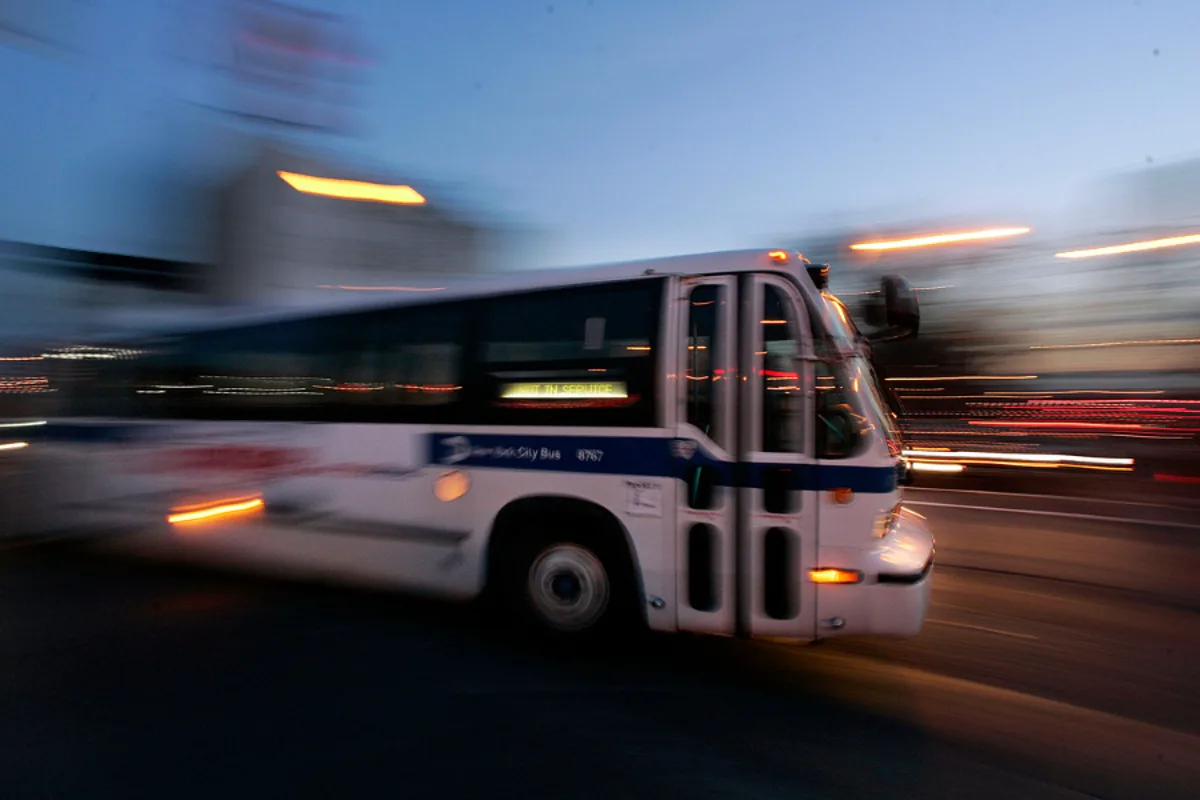
The California Department of Transportation (Caltrans) is investigating the feasibility of high-speed buses capable of travelling up to 140 mph on the state's freeways. The proposal, still in its early research stage, could transform long-distance travel by connecting major cities such as Sacramento, the Bay Area, Los Angeles and San Diego via a dedicated network.
Under the concept, a statewide system would rely on purpose-built transit hubs and exclusive freeway lanes to move passengers more efficiently than conventional bus services. One scenario discussed during a recent Caltrans webinar suggested that buses travelling at around 120 mph could complete the journey between San Francisco and Los Angeles in approximately three hours and 12 minutes.
However, a preliminary assessment found that most US freeways are engineered for speeds of up to about 85 mph, meaning significant infrastructure upgrades would be required. Achieving higher speeds safely would likely depend on dedicated lanes, redesigned vehicles, and advanced safety technologies, including automated driving systems and vehicle-to-everything communication.
Caltrans is examining international models such as Australia's Adelaide O-Bahn busway and the Netherlands' Superbus prototype. Officials have identified potential corridors including Interstates 80 and 5, US 101, and State Route 99, which connects Central Valley cities like Bakersfield, Fresno, and Sacramento.
Mehdi Moeinaddini, senior transportation planner at Caltrans, stated that high-speed buses could offer a speed advantage at lower cost using existing freeway corridors once the technology matures. He emphasised that the proposal is complementary to existing rail options, not a replacement. Station construction is expected to be the costliest element, though costs could be reduced through joint development projects, such as building stations over sections of freeways.




