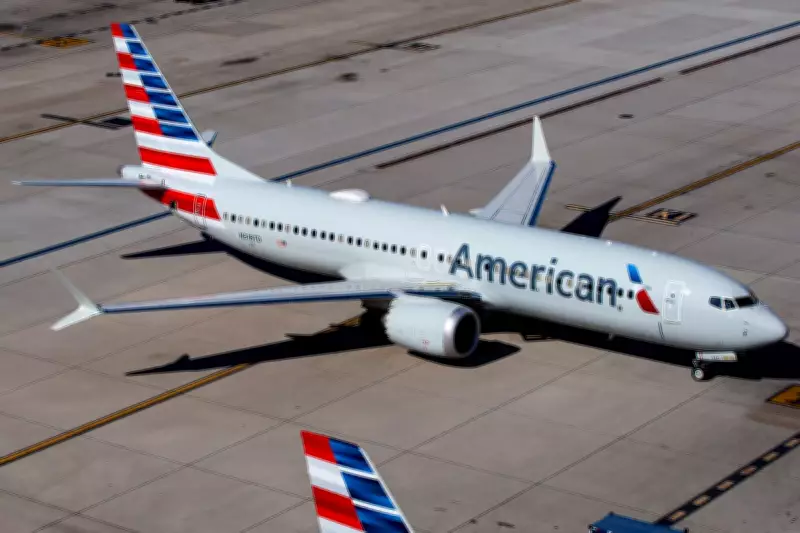
American Airlines Flight Forced to Return to Miami Over Disruptive Passenger Incident
An American Airlines flight bound for Ecuador was compelled to execute an emergency U-turn over Cuban airspace and return to its departure airport in Miami on Saturday evening, following a significant disruption caused by a passenger onboard.
Emergency Alert and Mid-Flight Diversion
Flight AA2259, operating from Miami International Airport (MIA) to Quito, Ecuador (UIO), issued a squawk 7700 alert, the universal code signalling a general in-flight emergency. The incident occurred during the evening of Saturday, 31st January 2026, prompting the crew to declare the emergency and initiate a diversion.
American Airlines confirmed that the diversion was directly attributable to a "disruptive customer" in the aircraft's cabin. The Boeing 737 MAX 8 aircraft, approximately midway through its scheduled four-hour journey to the Ecuadorian capital, performed a dramatic U-turn over Cuba to head back to Miami.

Flight Path and Safe Landing
According to data from flight tracking service Flightradar24, the American Airlines jet had departed Miami 47 minutes behind its scheduled time, taking off at 8:12 PM local time. The aircraft climbed to a cruising altitude of 31,000 feet before initiating its return manoeuvre over the Cuban coastline.
The flight landed safely on runway 27 at Miami International Airport shortly before 10:00 PM, approximately one hour and 40 minutes after its initial departure. No injuries to passengers or crew members have been reported following the incident.
Airline Response and Passenger Rebooking
Upon arrival in Miami, the aircraft was met by local law enforcement officials. A spokesperson for American Airlines stated: "We thank our team members for their professionalism and our customers for their assistance in managing a difficult situation."
Affected passengers were rebooked onto a replacement onward flight from Miami to Quito on Sunday, which subsequently landed at 2:50 PM local time in Ecuador.
Context of Recent Aviation Incidents
This incident represents another example of unscheduled mid-flight returns affecting commercial aviation in early 2026. In January, a Lufthansa flight destined for Germany was forced to return to London after pilots identified a technical issue onboard.
Flight tracking data indicated that Munich-bound aircraft performed a looping manoeuvre over London before diverting back to its departure airport while cruising at approximately 14,000 feet. A Lufthansa representative confirmed the return was due to "technical reasons."
The American Airlines diversion underscores the operational challenges and safety protocols activated when onboard disturbances occur, demonstrating how crew training and established procedures manage such unpredictable situations in modern aviation.