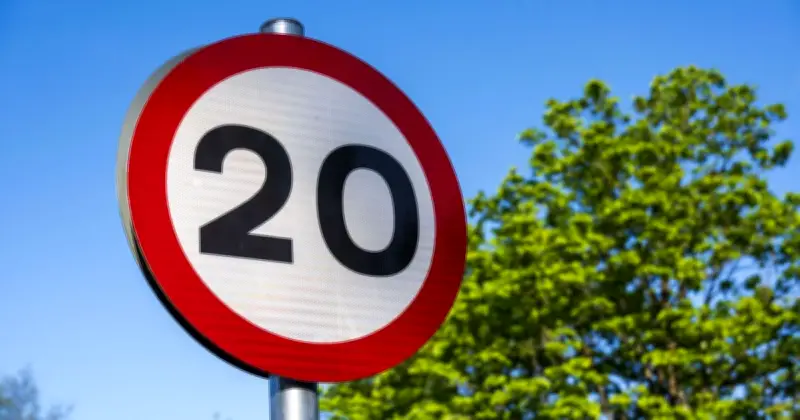
AA President Edmund King has called on UK councils to apply 20mph speed limits in a targeted way rather than as a widespread introduction, as the number of speeding tickets continues to rise.
Speaking exclusively to the Express, King stressed that local authorities should focus restrictions on appropriate locations, such as outside schools, in residential areas, and where there are vulnerable road users.
Growth of 20mph limits
The prevalence of 20mph limits has increased sharply in recent years, with more than 30% of urban roads in Great Britain now affected. In London, over half of roads are now 20mph, while Birmingham has plans to become the UK's first 20mph city, with new limits expected across all non-A-roads.
Last year, the number of tickets issued for 20mph speed offences was recorded at almost half a million.
Rise in motoring offences
Speeding is a serious problem on UK roads, with 2.54 million speed-limit offences recorded in 2024 in England and Wales, excluding the Metropolitan Police. This accounts for 86% of recorded motoring offences and contributes to the highest overall motoring-offence figure since comparable records began in 2011.
King noted that road users "shouldn't automatically blame 20mph limits for the national rise," but suggested councils needed to move away from a widespread approach.
Government guidance
In England and Wales, the national default for built-up areas remains 30mph, but local authorities have the power to consult and implement 20mph limits. The Department for Transport (DfT) already says that traffic authorities should ensure any new 20mph measures are "targeted and not introduced as a blanket measure."
The DfT added that local areas should only introduce 20mph limits and zones in the right places, over time, and with local support in urban areas and built-up village streets that are primarily residential. The department stated: "These national limits are not, however, appropriate for all roads. The speed limit regime enables traffic authorities to set local speed limits in situations where local needs and conditions suggest a speed limit that is different from the respective national speed limit."
King concluded: "The AA has consistently argued that 20mph limits work best where they are targeted at appropriate locations – outside schools, in residential areas and where there are vulnerable road users – and where the road environment makes the limit credible. But whatever you think about an individual speed limit, if it is legally signed, that's the limit. The answer isn't to ignore it."