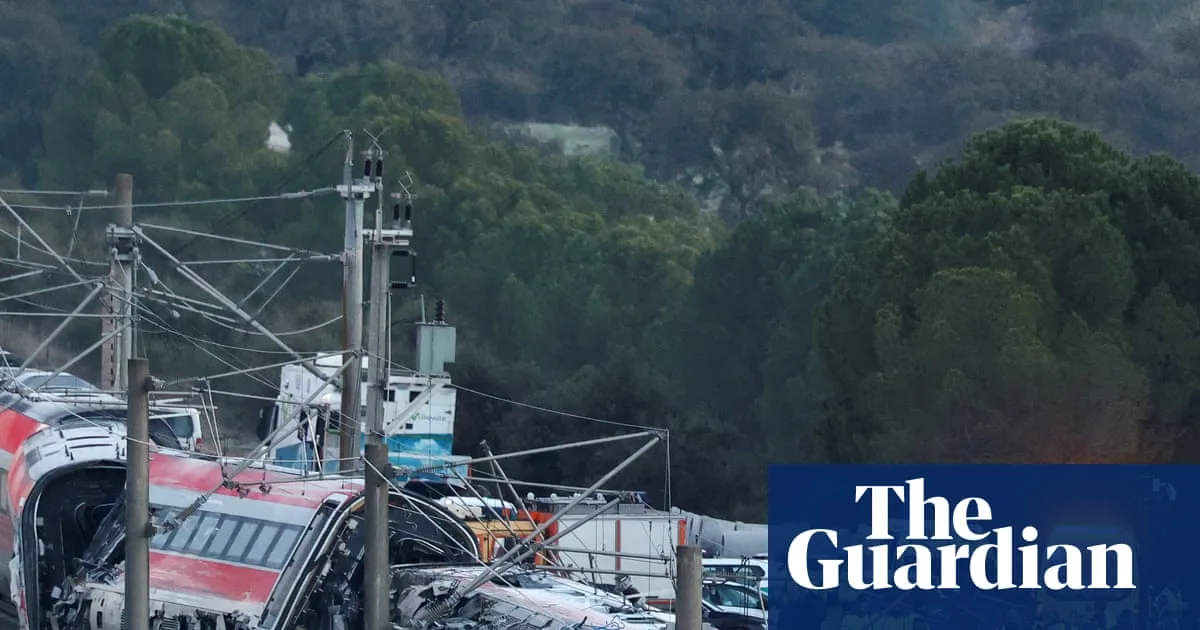
A catastrophic collision between two high-speed passenger trains in southern Spain has left at least 21 people dead and dozens more injured, causing major disruption to a key rail corridor.
Scene of the Derailment and Collision
The deadly incident occurred on Sunday evening, 18 January 2026, near the town of Adamuz in the province of Córdoba, approximately 360 kilometres south of Madrid. Emergency services were alerted at 7:45pm local time.
According to the state rail infrastructure manager Adif, an Iryo service travelling from Málaga to Madrid derailed and crossed onto an adjacent track. There, it collided with a Renfe train heading from Madrid to Huelva. The force of the impact sent the front carriages of the Renfe train down the side of a railway embankment.
The driver of the Madrid-to-Huelva service, a 27-year-old, was among those killed. Spain's transport minister, Óscar Puente, confirmed that the majority of fatalities and serious injuries were concentrated in the first two carriages of the Renfe train, which bore the brunt of the collision. The Renfe train was travelling at about 200 km/h at the moment of impact.
Rescue Operation and Casualty Toll
Andalusia's regional president, Juanma Moreno, stated that 75 people were taken to hospital, with 15 of those in a serious condition. In the early hours of Monday, he warned that the death toll could rise further as emergency crews worked at the scene.
"The forcefulness of the accident has been very strong ... we will likely find (more) corpses," said Mr Moreno, noting that heavy machinery was required to cut through the twisted metal of the wreckage.
Córdoba's fire chief, Paco Carmona, explained that while the Iryo train was evacuated within hours, the Renfe carriages were severely damaged. "There are still people trapped," he said. "We have to remove the bodies to reach anyone who is still alive."
In total, there were around 400 passengers across both trains. More than 300 were aboard the Iryo service, with approximately 100 on the Renfe train. Officials noted that most passengers were Spanish residents travelling to or from Madrid after the weekend, with the number of foreign visitors unclear due to January being a low tourist period.
Investigation and Community Response
The cause of the initial derailment remains unknown. Transport Minister Óscar Puente described the event as "really strange," highlighting that it happened on a straight section of track that had been renewed as recently as May 2025. Investigators are expected to examine potential technical faults, signalling data, and maintenance records to determine if failures in infrastructure, oversight, or operation occurred.
Passengers described scenes of panic inside the carriages. "There are many injured. I am still trembling," said María San José, 33, who was on the Iryo train. Another passenger told TVE: "There were people screaming, their bags fell from the shelves. I was travelling to Huelva in the fourth carriage, the last, luckily."
As overnight temperatures dropped to around 6°C, local residents in Adamuz, a town of about 5,000 people, opened a reception centre and provided food and blankets for survivors and responders.
All rail services between Madrid and Andalusia have been suspended indefinitely while the investigation into one of Spain's most serious rail accidents in recent years continues.