
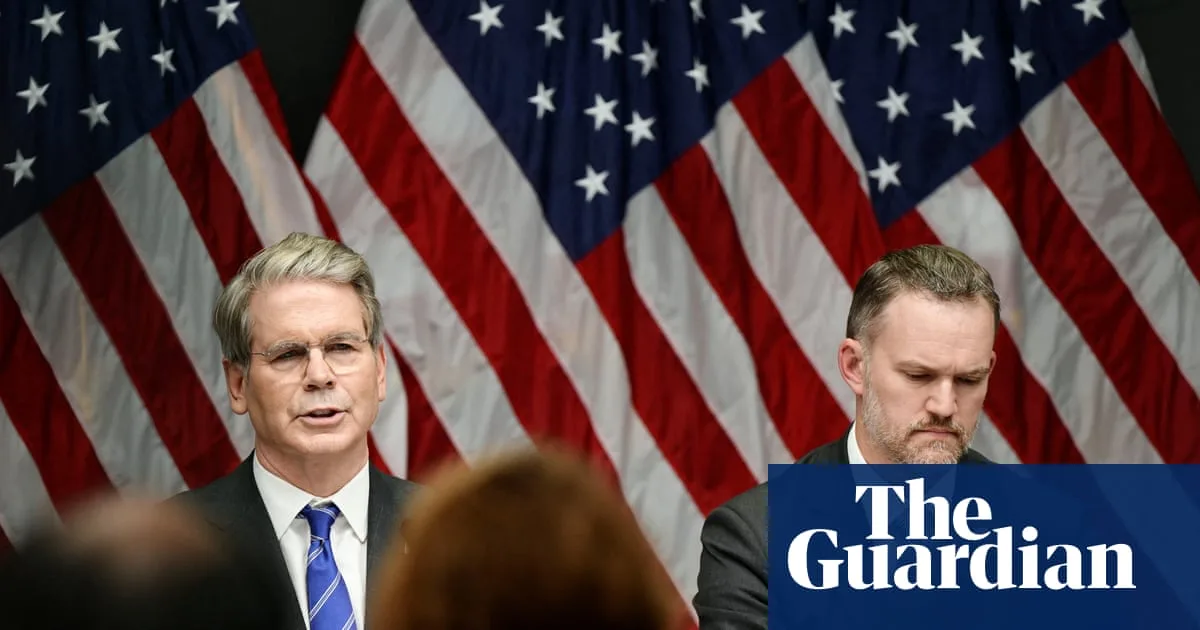
US and Chinese negotiators have agreed in principle to extend the deadline for escalating tariffs, though any extension requires approval from President Donald Trump, according to US representatives. The agreement came after two days of talks in Stockholm failed to resolve disputes across multiple areas of trade.
Beijing's top trade negotiator, Li Chenggang, confirmed the extension of the truce struck in mid-May, which was set to expire on 12 August. He said the pause would allow for further talks but did not specify the duration or timing of the next round. US Trade Representative Jamieson Greer stressed that President Trump would have the final say on any extension.
US Treasury Secretary Scott Bessent joined the talks in an effort to bolster the negotiating team but could not break the deadlock. He warned Chinese officials that continued purchases of Russian oil could lead to high US tariffs under secondary sanctions legislation. China has retaliated against US tariffs by imposing its own duties on American goods and blocking exports of rare earth metals used by US defence and tech firms.
Trump is set to impose additional tariffs on Mexico and Canada from Friday unless last-minute deals are reached. Vietnam, Cambodia, and other Southeast Asian nations are also lobbying for extensions to avoid tariff hikes. Negotiations with US trading partners have often been protracted; the EU's trade commissioner spent over 200 hours negotiating a deal that reduced a planned 30% tariff to 15% on EU exports.
Pascal Lamy, former WTO director general, described the US-EU deal as 'not half-baked, but maybe just two-thirds baked,' leaving much to be discussed. The International Monetary Fund upgraded its global growth forecast to 3% from 2.8% after the scaling back of trade threats but flagged a potential rebound in tariffs as a major risk.




