Ukraine's Economic Resilience Demonstrates Path to Progressive EU Membership
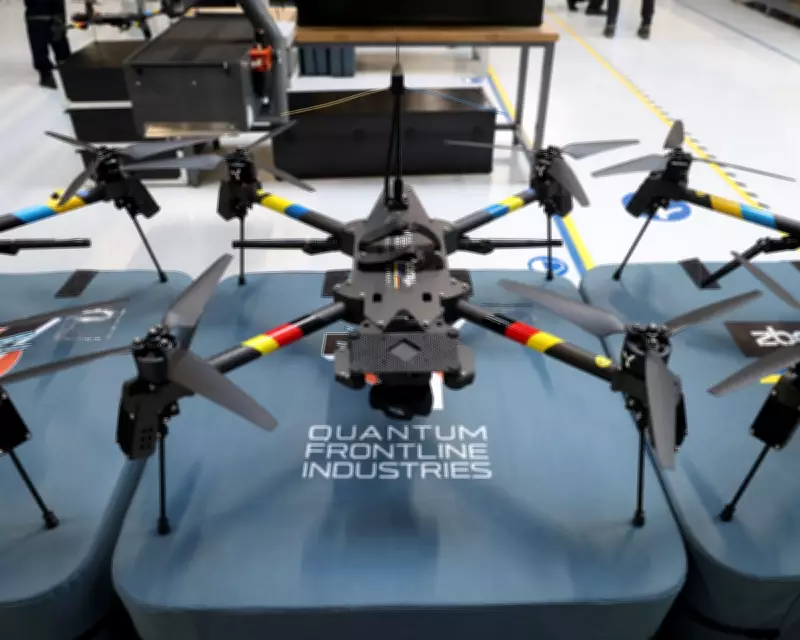
When the first Ukrainian-designed drone manufactured in a German factory rolled off the production line last month, President Volodymyr Zelenskyy recognised it as a pivotal moment for the nation's economy. This milestone at Quantum Frontline Industries, a joint venture between Germany's Quantum Systems and Ukraine's Frontline Robotics, underscores how Ukrainian businesses are adapting and integrating into the European Union's industrial network despite the ongoing conflict.
Economic Growth Amidst Adversity
As the grim four-year anniversary of Russia's full-scale invasion approaches, the Ukrainian economy continues to display remarkable resilience under immense strain. Initially, forecasts predicted growth of 2% to 3% last year, but relentless Russian rocket and drone attacks reduced expansion to 1%. This year, economic growth is expected to improve, though persistent assaults will likely cut expansion from a previously anticipated 2.2% to 1.8%, according to forecasters at Ukraine's central bank.
Natalie Shapoval, chair of the Kyiv School of Economics, notes that all Ukrainian businesses have struggled to recover from constant shelling, yet they face a significant trade gap. Exports at the end of 2025 were worth $45 billion less than imports, a disparity largely offset by aid, primarily from the EU. This aid supports government investment and welfare spending, while taxes fund the war effort.

Deepening EU Integration and Progressive Membership
Kurt Volker, a distinguished fellow at the Centre for European Policy Analysis and former US ambassador to NATO, advocates for a progressive membership model for Ukraine's EU accession. Rather than waiting for Ukraine to meet every requirement before joining, Brussels could establish a minimum compliance level and monitor progress, granting Kyiv greater access to the single market and customs union as benchmarks are achieved.
This approach would bring political benefits sooner while allowing practical reforms to unfold, Volker explains. Recent collaborative steps, such as easing border paperwork for Ukrainian-registered trucks, signal concrete moves toward integration, with accession talks potentially beginning later this year.
Joint Ventures and Defence Collaborations
Ukraine's defence sector, with about 1,000 companies engaged in research, is leveraging wartime knowledge through partnerships with EU and US contractors. Andy Hunder, president of the American Chamber of Commerce in Ukraine, highlights that tie-ups with Ukrainian firms are becoming commonplace, with companies like Boeing employing thousands of workers locally.
Hunder emphasises the commitment of US companies, noting that 90% of members are fully operational despite security challenges. However, half have suffered damage since the war began, with incidents like missile strikes on a Flex-owned coffee machine factory and repeated attacks on a McDonald's in Kyiv underscoring the risks.
Sectoral Challenges and Opportunities
Agricultural production declined by almost 7% last year, exacerbated by trade disputes with Poland, Hungary, and Slovakia over grain imports and recent bombings of Black Sea ports. In contrast, sectors like IT, green energy, and telecoms are growing, benefiting from EU trade liberalisation and cloud-based data storage to mitigate physical losses.
Maria Repko, deputy director at the Centre for Economic Strategy, points out that the construction sector struggles with recruitment after supplying many soldiers, leading to a tight labour market with only two applicants per vacancy and rising salaries. This trend risks increasing inequality, which could impact Zelenskyy's political appeal if elections are held under a potential peace accord.
Future Prospects and Reconstruction
The World Bank estimates reconstruction costs exceeding $400 billion, a figure that continues to rise. This investment, coupled with anticipated private funding, could propel Ukraine into one of Europe's strongest economies. US companies and thinktanks advocate for deeper economic integration with Europe, viewing Ukraine's future as firmly within the EU rather than aligned with Russia.

As Zelenskyy showcased the joint German-Ukrainian drone at the Munich security conference, he highlighted its AI-powered capabilities for combat and protection. This symbolises not only technological advancement but also the strategic value of Ukraine's military experience in ensuring long-term European security.