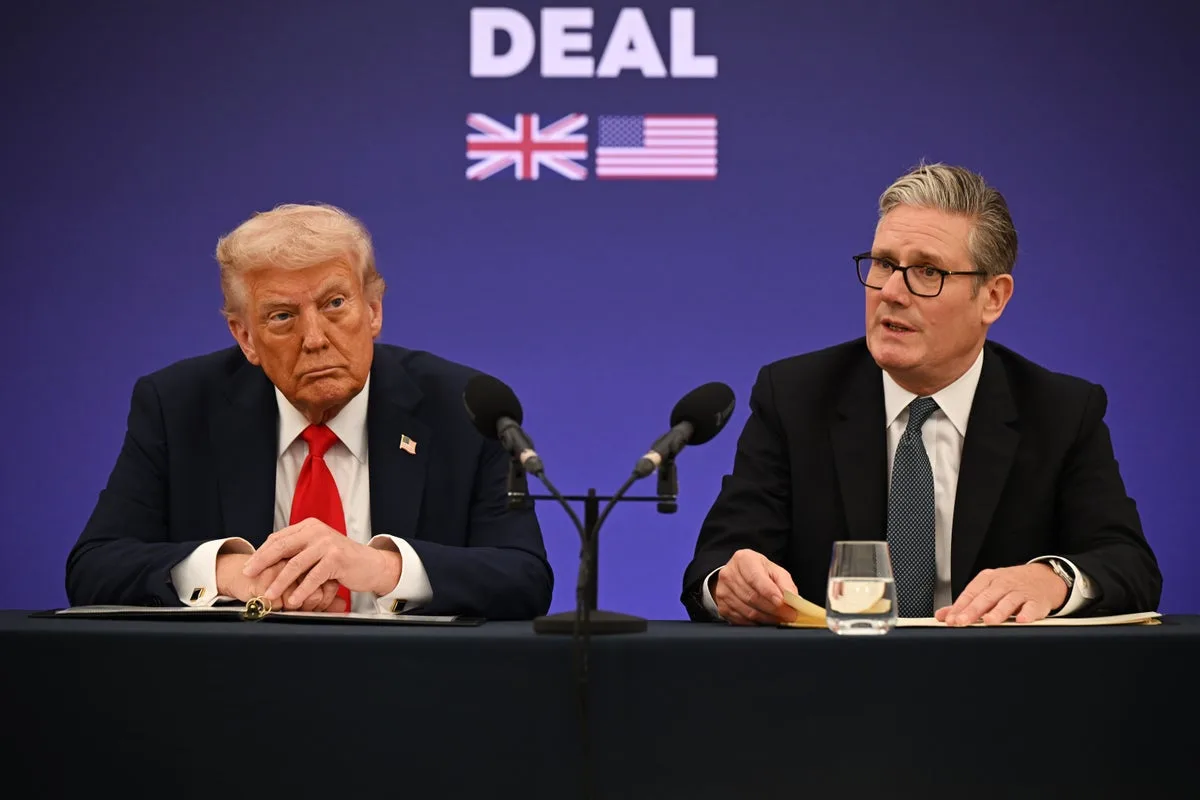
Downing Street has declared that "nothing is off the table" in Britain's response to Donald Trump's renewed threats of imposing increased global tariffs, raising concerns about the future of the UK's preferential trade arrangement with the United States.
Tariff Threats and UK Response
The US president has threatened to implement 15 per cent global tariffs following his defeat in the US Supreme Court, which previously struck down his 10 per cent levies. This move brings into question the special tariff deal negotiated between the UK and US, which had granted Britain the lowest tariff rate of 10 per cent and additional exemptions for key industries.
Government's Stance on Potential Retaliation
When questioned about the government's planned steps, the prime minister's official spokesman emphasized a pragmatic approach while keeping all options open. "Our approach to the US has always been pragmatic," the spokesman stated. "We continue to have productive conversations with them... and those discussions are happening at all levels, but nothing is off the table at this stage."
The spokesman highlighted concerns about escalating tensions, noting that "industry doesn't want to see a trade war where both sides keep escalating the situation." He added that the government's focus remains on "constructive engagement with our US counterparts to retain the UK's competitive advantage."
Business Secretary's Intervention
Business Secretary Peter Kyle has already taken action, speaking directly with his US counterpart Jamieson Greer over the weekend. During their conversation, Kyle "underlined his concerns about further uncertainty for business and reinforced the need to honour the UK-US deal," according to the Downing Street spokesman.
Impact on UK Trade
While officials believe the proposed tariff changes may not significantly affect most of Britain's trade with America, uncertainty persists. The Prime Minister's spokesman could not provide a clear timetable for when the government might obtain clarity on how the new tariffs would apply to British goods and services.
The previous tariff arrangement, negotiated by the prime minister and Trump, included specific carve-outs for Britain's steel industry and car manufacturers. However, the status of these agreements remains uncertain following Trump's latest announcement.
Cross-Government Engagement
UK teams across Whitehall and in Washington are maintaining continuous engagement with the US administration. "Those discussions will continue this week," the spokesman confirmed. "Our priority throughout is to secure the best possible outcome for British businesses."
The spokesman described the situation as "evolving" and declined to provide a "running commentary" on ongoing discussions, but assured that "businesses and the British public can be assured that we're focused on protecting them and the national interest."
Political Reactions
On Sunday, Bridget Phillipson echoed the government's position, stating that authorities would "hope and expect" the preferential tariff deal to be maintained, while refusing to rule out imposing retaliatory tariffs if necessary.
When asked about potential UK retaliation, Phillipson told Sky News: "We always stand up for what's right for Britain. And I think the prime minister demonstrated that with the approach he took around Greenland. But the reality is that if you want to get things done, it's better to do that behind the scenes."
The US president's previous tariffs were imposed on most of the world last April using emergency powers legislation. The current situation creates significant uncertainty for British businesses that rely on transatlantic trade, with the government emphasizing both diplomatic engagement and preparedness for all possible outcomes.






