
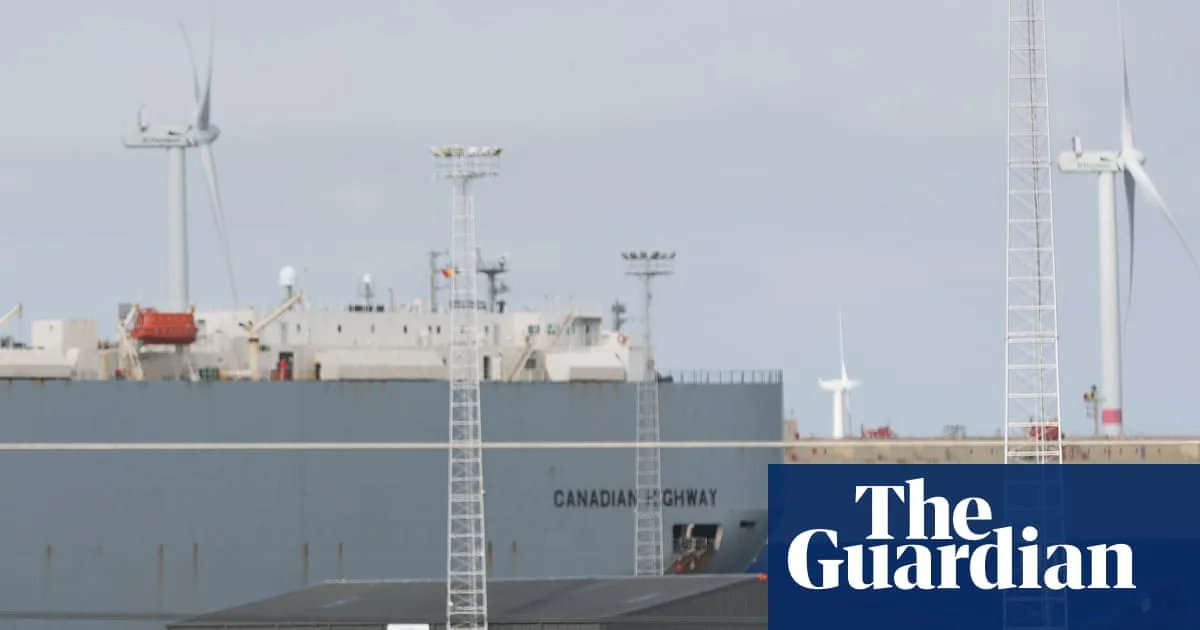
The Port of Antwerp-Bruges has become a giant car park, with thousands of vehicles destined for the US sitting idle as manufacturers try to mitigate the impact of Donald Trump’s tariffs. Figures released by the port show a 15.9% drop in exports of new passenger cars and vans to the US in the first six months of 2025 compared with the same period last year, with a sharp decline emerging in May, one month after Trump announced his “liberation day” tariffs.
Exports of trucks and “high and heavy equipment,” including tractors and construction vehicles, fell by 31.5%. The decline reflects the impact of a 25% tariff on vehicles that can cost more than $100,000 (£74,430). The port, one of the world’s largest car transport hubs, shipped over 3 million vehicles globally in 2024.
“The outlook for the second half of the year remains uncertain. Much will depend on whether a trade agreement between the EU and the US can be reached by 1 August,” the port said in a statement. European carmakers from Volkswagen to Volvo had hoped a deal would have been sealed last week after Trump’s original deadline for a tariff deal with the EU expired.
Before Trump’s presidency, European carmakers paid a 2.5% tariff on exports to the US. Since April, they have been charged an extra 25%, adding tens of thousands of dollars to the price of a family-sized car. Justin Atkin, UK and Ireland port representative for the Port of Antwerp-Bruges, described the tariff impact as “more of an instant shock” compared with Brexit, noting that “people have talked about tariffs in the build up but I don’t think anyone expected the level and the severity of the instantaneous action.”
The port could not provide an exact number of vehicles waiting but said it was in the thousands. Atkin also noted evidence of Chinese cars being stockpiled, possibly reflecting a diversion of trade as Beijing grapples with tariff barriers. Additionally, disruption from Red Sea conflicts and increased ship sizes have extended container dwell times to up to eight days, compared with the usual five.
The US is the port’s second-biggest trading partner after the UK. Inbound cargo from the US increased by 17% in the first half of the year, with higher volumes of liquefied natural gas, as US exporters front-load shipments to avoid potential EU retaliatory tariffs in the event of a trade war.




