Trump Announces Landmark US-India Trade Agreement with Major Tariff Reductions
President Donald Trump has declared that the United States has successfully negotiated a substantial trade deal with India, which will see tariffs on Indian goods significantly reduced from 25 percent to 18 percent. The announcement was made via a post on Trump's Truth Social platform, where he outlined the key components of the agreement.
Key Components of the Bilateral Agreement
According to President Trump, India has committed to removing trade barriers that have previously restricted American products from entering its market. In a significant geopolitical move, India has also pledged to cease purchasing Russian oil as part of this arrangement. This commitment directly addresses previous tensions, as the United States had imposed an additional 25 percent penalty tariff on India due to its purchases of Russian crude oil.
The White House has confirmed that this penalty tariff will now be withdrawn entirely, following India's agreement to halt Russian oil imports. This development comes after Trump warned earlier this month that the levy could increase further if India failed to reduce its reliance on Russian energy sources.

Modi's Enthusiastic Response and Economic Implications
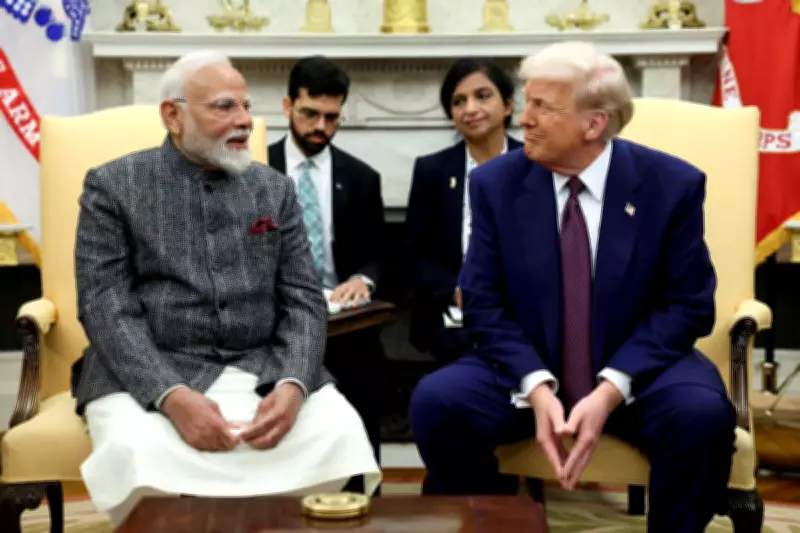
Indian Prime Minister Narendra Modi expressed his delight at the agreement, which follows months of challenging trade negotiations between the two nations. On social media platform X, Modi stated: "Wonderful to speak with my dear friend President Trump today. Delighted that Made in India products will now have a reduced tariff of 18%."
Modi extended his gratitude to President Trump on behalf of India's 1.4 billion citizens and emphasized the importance of Trump's leadership for global peace, stability, and prosperity. He further expressed his eagerness to collaborate closely with the U.S. President to elevate their bilateral partnership to unprecedented levels.
The revised tariff structure means that Indian goods entering the United States will now face an 18 percent duty, bringing it closer to the 15 percent rate applied to imports from the European Union and Japan. Additionally, President Trump revealed that Prime Minister Modi has committed to purchasing over $500 billion worth of American goods across multiple sectors, including energy, technology, and agriculture.
Broader Trade Context and Strategic Considerations
This announcement arrives shortly after India and the European Union revealed their own comprehensive trade agreement, following nearly two decades of negotiations. That deal facilitates free trade on nearly all goods between the EU's 27 member states and India, covering diverse sectors from textiles to pharmaceuticals while reducing import taxes on European products like wine and automobiles.
The timing of these agreements reflects a strategic shift in global trade dynamics, with nations seeking to diversify their economic partnerships and reduce dependence on any single market. Trump's approach to trade policy has consistently emphasized the use of tariffs as both an economic tool and a foreign policy instrument, bypassing traditional congressional processes to implement his vision.
Historically, India's relationship with Russia has centered more on defense cooperation than energy trade, with Russia supplying the majority of India's military hardware. However, when Western sanctions impacted Russian oil exports following the Ukraine conflict, India capitalized on discounted crude prices to substantially increase its energy imports from Russia.
Ongoing Diplomatic Efforts and Economic Realities
The trade deal announcement coincides with planned diplomatic efforts involving Trump's special envoy Steve Witkoff and son-in-law Jared Kushner, who are scheduled to participate in three-way talks with Russian and Ukrainian officials in Abu Dhabi later this week. These discussions aim to find a resolution to the ongoing conflict in Ukraine, with Trump reportedly believing that targeting Russia's oil revenue represents the most effective strategy to encourage Moscow to end the war.

From an economic perspective, the United States recorded a $53.5 billion trade imbalance in goods with India during the first eleven months of last year, importing significantly more than it exported to the South Asian nation. While Trump has championed tariffs as a means to address trade deficits, economists note that the costs of such measures often fall on American businesses and consumers, potentially reducing overall trade volumes between nations.
India has recently accelerated its efforts to finalize multiple trade agreements, having already signed a deal with Oman and concluded negotiations with New Zealand. These developments occur against a backdrop of ongoing discussions about market access, with the United States seeking zero tariffs on nearly all its exports while India maintains reservations about opening sensitive sectors like agriculture and dairy that provide livelihoods for millions of its citizens.