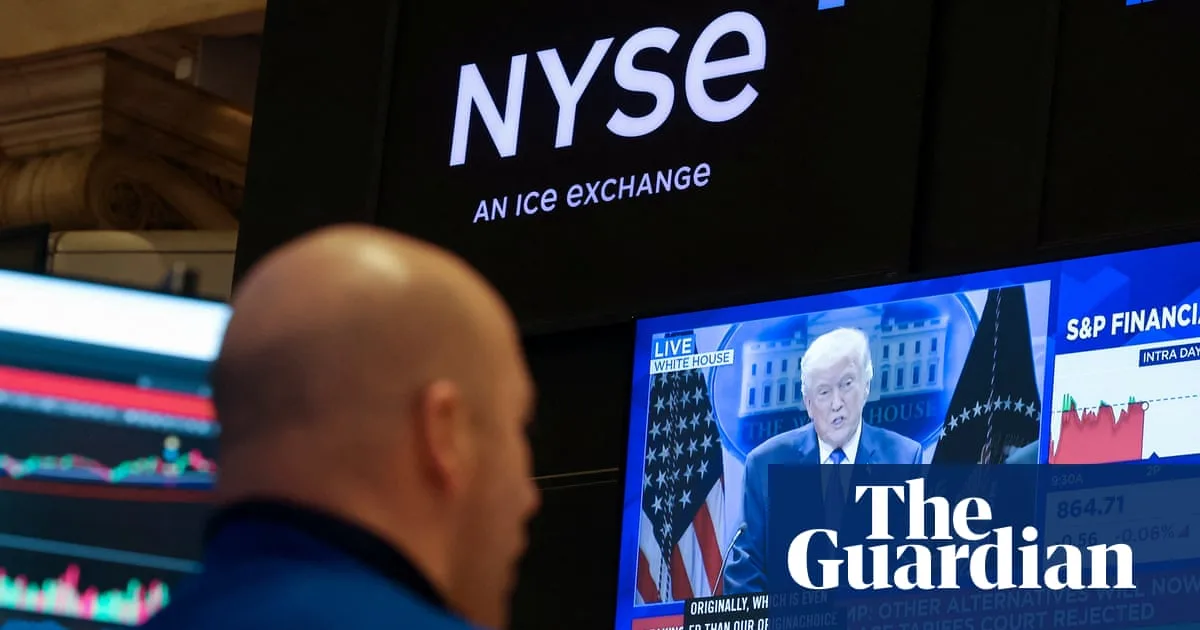
US Supreme Court Declares Trump's Emergency Tariffs Illegal, Administration Halts Collection
Supreme Court Rules Trump's Emergency Tariffs Illegal, US Stops Collection

The Supreme Court of the United States delivered a landmark ruling on Friday, declaring that former President Donald Trump's sweeping emergency tariffs imposed on most US trading partners were illegal. This decision has sent shockwaves through financial markets and trade policies, as the US Customs and Border Protection agency announced it will stop collecting these tariffs effective Tuesday at midnight.

Market Turmoil and Economic Fallout

Following the court's verdict, the US dollar slumped by 0.4% against a basket of other currencies on Monday. Investors scrambled to safe-haven assets, with gold jumping 0.6% to $5,135 an ounce, marking its highest level since late January. In contrast, bitcoin experienced a sharp drop, falling as much as 4.8% to $64,300 before partially recovering to $65,734. Futures tracking the US S&P 500 stock market also slipped 0.5% on Monday morning, reflecting heightened uncertainty.

Legal and Political Ramifications

The Supreme Court determined that Trump overstepped his legal authority by invoking emergency powers to implement the tariffs last year. This ruling has plunged financial markets into a new phase of instability, with over $175 billion in previous US Treasury revenue now subject to potential refunds, according to estimates from Penn Wharton Budget Model economists. Despite this, the Customs and Border Protection agency has provided no new information regarding possible refunds for importers, stating only that additional guidance will be issued as appropriate.

Wide Pickt banner — collaborative shopping lists app for Telegram, phone mockup with grocery list

Trump's Retaliatory Measures

In response to the court's decision, Donald Trump announced over the weekend a new flat-rate global tariff of 15% under a separate legal authority. These replacement levies are set to come into force on Tuesday and could last for up to 150 days. ING economists noted, "Announcements since the Supreme Court's ruling strongly confirm that Trump has no intention of removing his 'most beautiful word' from the English dictionary," highlighting the ongoing trade tensions and risk of escalation with European leaders.

International Reactions and Trade Deals

US officials hurriedly attempted to reassure other countries that recent trade agreements remain intact. US Trade Representative Jamieson Greer stated, "We want them to understand these deals are going to be good deals. We're going to stand by them. We expect our partners to stand by them." This indicates that Trump's deal with Keir Starmer, announced last May, will continue, preventing the UK's tariff from rising from 10% to 15%. However, UK Education Secretary Bridget Phillipson admitted that British businesses face "uncertainty" following these developments.

Global Market Impacts

The FTSE 100, which had been hitting record highs in recent months, fell 0.2% in early trading on Monday. Susannah Streeter, chief investment strategist at Wealth Club, commented, "The rip-roaring performance of the Footsie has been interrupted as fresh trade chaos mars the party. The exuberance that flashed over global markets after the US Supreme Court rejected Trump's tariffs as unconstitutional is evaporating." Meanwhile, China's commerce ministry called on Washington to lift the tariffs and is conducting a comprehensive assessment of the ruling's impact, warning that "there are no winners in a trade war and that protectionism leads nowhere."

This unfolding situation underscores the volatile nature of international trade under the Trump administration's policies, with legal battles and market reactions continuing to shape the global economic landscape.

Pickt after-article banner — collaborative shopping lists app with family illustration




