Supreme Court Strikes Down Trump's Global Tariffs, Offering Potential Relief for American Households
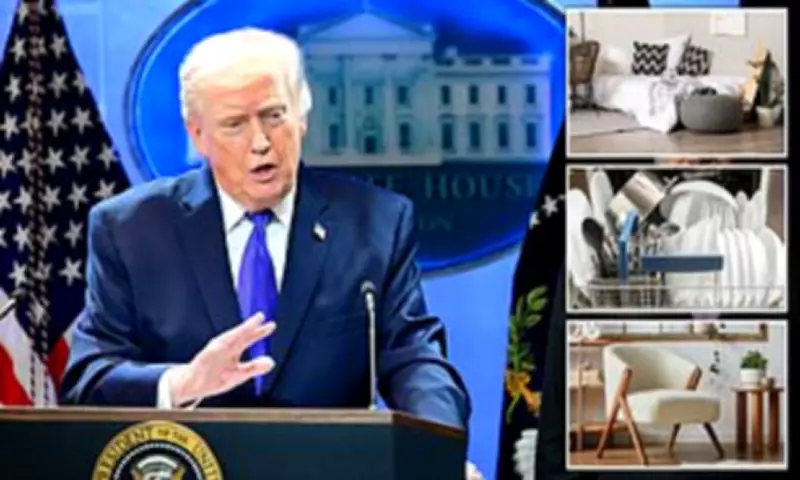
The Supreme Court has delivered a landmark ruling that overturns former President Donald Trump's sweeping global tariffs, a decision that could translate into significant savings for American consumers. This judicial rebuke may lead to lower prices across a range of everyday goods, including household supplies, furniture, bedding, glassware, and tableware, providing a welcome respite from inflationary pressures.
Impact on Consumer Prices and Inflation Trends
According to the Bureau of Labor Statistics' January inflation report, these categories have experienced steady price increases over the past year since Trump took office. Specifically, furniture and bedding prices have risen by four percent during that period, while dishes and flatware saw a five percent increase. The Supreme Court's decision could slash the average household's tariff burden by roughly half this year, reducing it to between $600 and $800, as estimated by the Yale Budget Lab.
Michael Pearce, the chief US economist at Oxford Economics, told USA Today, 'We could see, over the coming months, some reversals of tariff-related price increases we saw last year.' He added, 'Consumers could see a little bit more of a boon to their take-home income.' This ruling is expected to help ease inflation marginally, with electronics and apparel likely benefiting the most from the decision due to their high import content and intense price competition.

Trump's Response and New Tariff Measures
However, the potential savings for consumers may be short-lived. In response to the Supreme Court's ruling, Trump has announced plans to impose a 15 percent global tariff on imports using different, legally tested legislation. Within hours of the decision, he signed an executive order imposing a new 10 percent global tariff effective almost immediately, citing Section 122 of the Trade Act of 1974, though such tariffs can only last for 150 days without congressional approval.
Trump downplayed the impact on everyday Americans, claiming on Truth Social that tariffs were largely paid by foreign countries. However, a February report from the Federal Reserve Bank of New York contradicted this, stating that American consumers and companies had borne about 90 percent of the costs. White House economic adviser Kevin Hassett criticized the report as an 'embarrassment' and called for the authors to be disciplined, labeling it the worst paper in Federal Reserve history.
Legal and Economic Implications
The Supreme Court ruled that Trump's use of the International Emergency Economic Powers Act (IEEPA) to impose tariffs exceeded his presidential authority. Trump countered on Truth Social, stating, 'The Supreme Court did not overrule tariffs. They merely overruled a particular use of IEEPA tariffs.' He later announced an increase to 15 percent, promising new, legally permissible tariffs to continue his agenda.
Investment specialist Rodney Sullivan noted that the decision 'improves the odds that inflation cools at the margin,' but the ultimate savings for consumers will depend on the administration's next steps. Hassett suggested that tariffs could be replaced with other legal tools to achieve similar goals, potentially limiting price reductions. If new measures serve as a workaround, consumers may see few savings, and prices could rise twice as fast if tariffs remain unchanged.
Uncertainty Over Future Savings and Policy Moves
It remains unclear whether Trump's previously proposed $2,000 tariff stimulus checks, funded by tariff revenues, will materialize. He had advocated for rebates excluding high-income individuals, but the feasibility of such plans is now in doubt. As the situation evolves, households await whether the ruling will lead to tangible cost reductions or be offset by new tariff strategies, keeping the economic outlook uncertain.