Oil Prices Decline and Asian Stocks Surge Amid Fresh Iran Peace Talk Optimism
Asian equities climbed to their highest level in six weeks on Wednesday, while oil prices extended their decline below the $100 per barrel mark. This market shift followed comments from former US President Donald Trump, who suggested that peace negotiations between the United States and Iran could resume in Pakistan within the next two days.
Diplomatic Moves Calm Volatile Markets
The prospect of renewed diplomatic engagement has provided a significant boost to investor sentiment, which had been rattled by weeks of conflict-driven volatility in the Middle East. Mr Trump stated that negotiations could restart imminently after weekend talks collapsed, prompting Washington to impose a blockade on Iranian ports. Pakistani and Iranian officials have also indicated that discussions could recommence shortly.
In response, Brent crude futures dropped 0.7 per cent to $94.13 a barrel, having already slumped almost 5 per cent overnight. Stock markets across the Asia-Pacific region rallied positively. MSCI's broadest index of Asia-Pacific shares outside Japan gained approximately 1.5 per cent.

Japan's Nikkei climbed 1.2 per cent to 58,561, closing in on its record high of 59,332 from late February. Hong Kong's Hang Seng index also gained 1.2 per cent, while Chinese blue-chip stocks rose 0.5 per cent.
Analyst Insights and Wall Street Performance
Tony Sycamore, an analyst at IG, told Reuters that "The impressive price action in risk assets suggests markets are keen to look through the immediate impact of the Middle East conflict. There is a growing expectation that the standoff will soon be resolved, allowing the US administration to pivot towards declaring victory, before stimulating the economy ahead of the midterms."
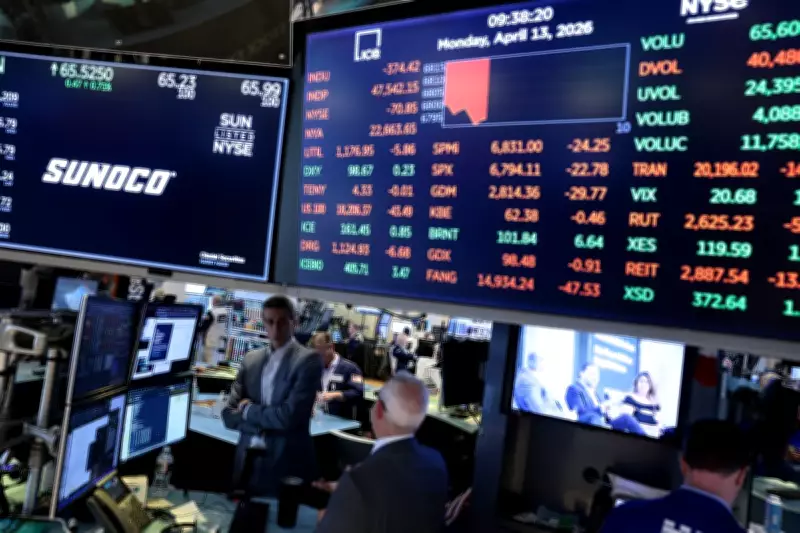
Overnight on Wall Street, the Nasdaq climbed 2 per cent, marking its tenth consecutive day of gains. The S&P 500 flirted with a record closing high. US producer inflation data for March offered some reassurance, with prices rising less than economists had anticipated, helping to ease fears around war-driven inflation.
Currency, Gold, and Treasury Movements
The US dollar steadied after falling for seven consecutive sessions, with the euro holding at $1.1791 after hitting a six-week high of $1.1811 overnight. Gold added 0.1 per cent to $4,846 an ounce. Investor optimism also supported US Treasuries, which had been under pressure from inflation concerns, with the 10-year yield decreasing to 4.2439 per cent.
Ongoing Challenges in the Strait of Hormuz
Despite these positive developments, significant challenges remain. The Strait of Hormuz is still effectively shut to oil traffic. The International Monetary Fund lowered its global growth outlook on Tuesday and warned that the world economy could reach the brink of recession if the conflict worsens.
Data from maritime intelligence firms shows the blockade is in its first full day of active enforcement but has yet to completely halt high-risk vessel activity. According to Kpler, just six vessels crossed the strait on Tuesday, down from 14 the previous day. The firm noted that confidence among shipowners remains weak, with uncertainty around enforcement, insurance constraints, and counterparty exposure continuing to weigh on transit decisions.
Windward, another maritime intelligence firm, reported that sanctioned and falsely flagged vessels are still testing the blockade's limits. Two such tankers were observed crossing the strait on Tuesday despite active enforcement. One vessel went dark after passing through and called at an Iranian port without transmitting its location.
Windward also stated that at least 11 tankers carrying around 20 million barrels of Iranian oil were positioned off Malaysia in a ship-to-ship transfer hub. This suggests Iran is increasingly routing oil flows through indirect channels rather than directly through the Strait of Hormuz, indicating adaptive strategies in response to the blockade.