The ongoing conflict in Iran has triggered a sharp increase in fertilizer prices, prompting farmers across the globe to seek alternatives to chemical fertilizers. Since the war began on February 28, fertilizer costs have surged by 50%, according to the World Bank's fertilizer price index. This has raised concerns about food security, as the Gulf region produces 30% of globally traded chemical fertilizer.
Senegal: Turning to Manure and Compost
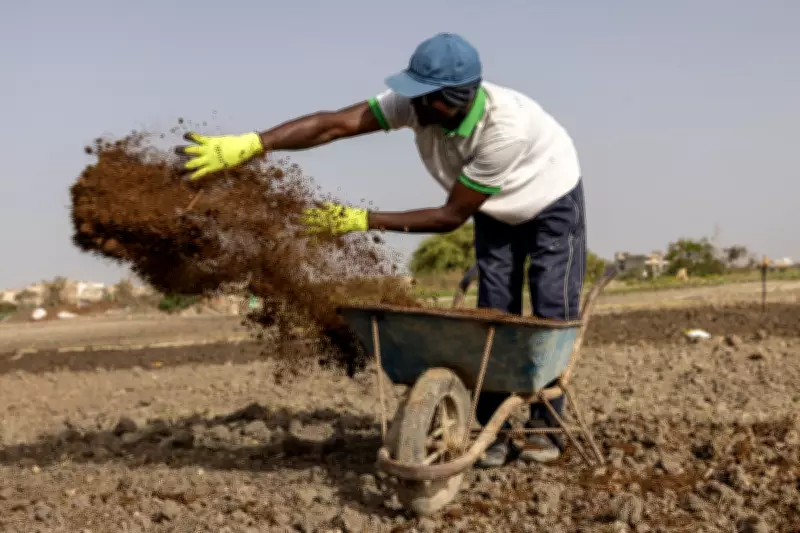
In Senegal, farmer Abou Sow anticipated the crisis eight years ago when he abandoned chemical fertilizers for organic compost. He now encourages fellow farmers to purchase manure from local herders and provides guidance on creating nutrient-rich compost. “We can’t afford to wait for a ceasefire,” Sow said. “It’s risky to depend on chemical fertilizers.” Senegal imports 125,000 tons of fertilizer annually, and despite government assurances of sufficient supply for the current season, farmers report increasing difficulty in sourcing it.
Farmer Aliou Fall blamed U.S. President Donald Trump for the soaring costs. “He brings war to the world and he doesn’t even think about it. Now farmers are suffering,” Fall said. Sow applies six tons of compost annually, benefiting from proximity to a town where sheep manure is abundant due to religious practices. However, rural farmers face challenges in sourcing and transporting large quantities of manure, raising fears of land abandonment.

Biofertilizers: A Growing Industry
Biofertilizers, which contain microorganisms that help plants absorb nitrogen, are emerging as a viable alternative. In Africa, companies are producing industrial compost from municipal waste. Senegal’s government announced in April it would subsidize and distribute 30,000 tons of organic fertilizer, but Sow deemed it insufficient. Globally, governments spend $700 billion annually on agricultural subsidies, much of it on chemical fertilizers, making alternatives less competitive. Susan Chomba, a member of the International Panel of Experts on Sustainable Food Systems, said, “You’re incentivizing the wrong sort of products.”
Brazil: Biofertilizers Gain Traction
Brazil, a leading exporter of soybeans, coffee, and beef, imports over 80% of its fertilizer. Since the Iran war began, fertilizer prices have risen by 50%, according to Luis Barbieri of the Folio Institute. “Whenever we have a war, farmers’ use of biofertilizers is turbocharged,” Barbieri said. The biofertilizer sector grew 15% from 2023 to 2024, per Embrapa, the state-run agricultural research corporation. Patent laws allow farmers to produce their own biofertilizers at lower cost, aiding adoption.
Mexico: Slow Progress Amid Subsidies
In Mexico, progress toward organic fertilizers has been limited due to government subsidies for chemical fertilizers and lack of funding for alternatives, said Gerardo Noriega of the Autonomous University of Chapingo. However, he noted the crisis “may force (farmers) to adopt organic fertilizers more quickly than they had imagined.”
India: Natural Farming on the Rise
In India’s Telangana state, farmer Manohara Chari uses jivamrita, a mix of cow dung, urine, flour, soil, and sugar, to replace chemical fertilizers. He is among 1.7 million farmers in Telangana and Andhra Pradesh who have adopted natural farming. On May 10, Prime Minister Narendra Modi announced a “national mission” to cut fertilizer use by 50%. India imports 60% of its fertilizer from the Gulf, and the government has subsidized prices to keep them low. Agricultural scientist G.V. Ramanjaneyulu noted increased interest in natural farming since the conflict began. Chari suggested redirecting subsidies to support natural farmers: “If even a fraction of that support is given to natural farmers, more people will shift towards it.”
Experts emphasize that shifting away from chemical fertilizers can reduce greenhouse gas emissions and improve soil health. Natural fertilizers sequester carbon and minimize water pollution, offering long-term environmental benefits.