Indonesia and US Seal Reciprocal Trade Agreement During Washington Summit
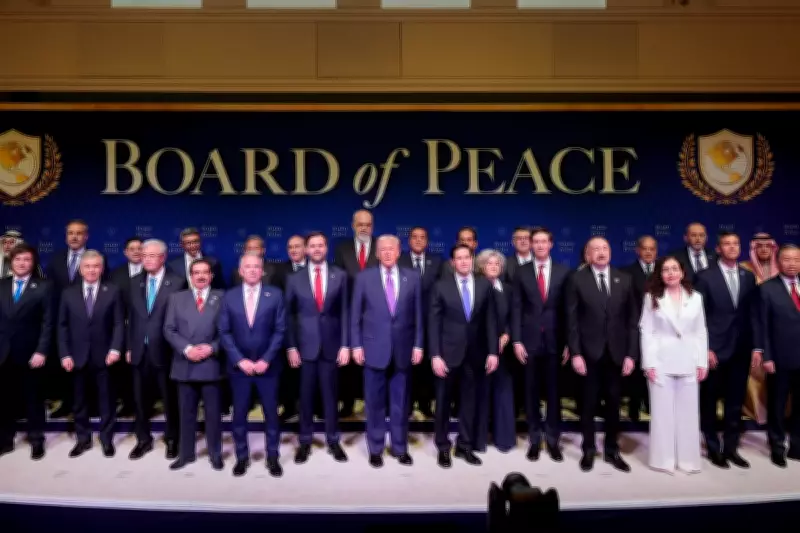
The White House has formally announced a significant reciprocal trade agreement with Indonesia, Southeast Asia's largest economy. The deal was unveiled on Thursday as Indonesian President Prabowo Subianto visited Washington to attend the inaugural meeting of President Donald Trump's newly established Board of Peace.
Key Terms of the Bilateral Trade Pact
Under the newly signed agreement, Indonesia will eliminate tariffs for an impressive 99% of American goods entering its market. In return, the United States will maintain its existing tariffs on most Indonesian products at a rate of 19%. This tariff level aligns precisely with the rates the US has previously set for other Southeast Asian nations, including Cambodia and Malaysia.
Indonesia has also committed to addressing non-tariff barriers that have historically hindered US exports. Furthermore, Jakarta agreed to remove specific restrictions on exports to the United States concerning critical minerals and various other industrial commodities. These concessions are viewed as crucial for enhancing bilateral trade flows and economic cooperation.

Substantial Commercial Deals Announced Concurrently
Alongside the governmental agreement, Indonesian and American companies concluded eleven major commercial deals this week, with a combined value of $38.4 billion. These agreements encompass substantial purchases of US agricultural products, including soybeans, corn, cotton, and wheat.
The deals also feature cooperation in the strategically vital sectors of critical minerals and oil field recovery technologies. Additionally, several joint ventures were established focusing on the production of computer chips, highlighting the growing technological partnership between the two nations.
"We have negotiated very intensively over the last few months, and I think we have reached solid understandings on many issues," President Prabowo stated during an address to business executives at the US Chamber of Commerce on Wednesday.
White House Hails the Agreement as a Landmark Achievement
A formal White House statement praised the pact as a "great deal" that "will help both countries to strengthen economic security, promote economic growth, and thereby continuously lead to global prosperity." The agreement was subsequently signed by representatives from Indonesia and US Trade Representative Jamieson Greer, following the initial announcement by the presidents.
Indonesia's Pledge for Gaza Stabilisation Force
The trade announcement coincided with President Prabowo reiterating a significant pledge at the Board of Peace meeting. As the leader of the world's most populous Muslim nation, he committed to sending 8,000 Indonesian troops—or "more if necessary"—to serve in an international stabilisation force for Gaza.
This commitment positions Indonesia among the first nations to firmly support a critical component of President Trump's postwar Gaza reconstruction plan. Trump expressed his gratitude during the meeting, stating, "President Prabowo of Indonesia, thank you very much. It's a big country you have, and you do a great job."
In response, Prabowo praised Trump's leadership, expressing optimism that "this vision of real peace will be achieved. There will be problems, but we will prevail."
Strategic Focus on Critical Minerals and Supply Chains
A central element of the trade deal involves cooperation on critical minerals, though specific operational details were not immediately disclosed. The Trump administration has actively sought Indonesia's agreement to lift export restrictions on these minerals, arguing that such a move is essential to safeguard US manufacturers from potential supply-chain disruptions.
This strategy forms part of a broader US effort to counter China's dominant position in supplying key elements required for advanced technologies, ranging from fighter jets to smartphones. At the Chamber of Commerce event, President Prabowo positioned Indonesia as a potential "bridge" and "honest broker" between great powers, an apparent reference to the ongoing strategic competition between the United States and China.

Regional Context and Vietnam's Diplomatic Shift
The Board of Peace meeting also included leaders from Cambodia and Vietnam, the two other Southeast Asian nations participating in the initiative. Originally envisioned to oversee the Gaza ceasefire, the board has evolved with broader ambitions to mediate other global conflicts.
Cambodia has already finalised a trade deal with the US, while Vietnam has reached a framework agreement. Notably, Vietnamese leader To Lam's current visit to Washington marks his first trip to the US since being reelected as head of Vietnam's ruling Communist Party last month.
Analysts observe that Lam's decision to visit the United States before traveling to Beijing represents a notable shift in diplomatic sequencing. Traditionally, Vietnam's leaders make China an initial stop, acknowledging ideological ties and Beijing's status as Vietnam's largest trading partner. Hanoi describes its foreign policy as independent and balanced among major powers.
Trade negotiations between Vietnam and the United States continue, following the Trump administration's imposition of 20% tariffs on Vietnamese exports. The latest round of talks concluded in early February.
This report includes contributions from correspondents in Jakarta, Indonesia, and Hanoi, Vietnam.