German Chancellor's High-Stakes China Visit Amid Global Tensions
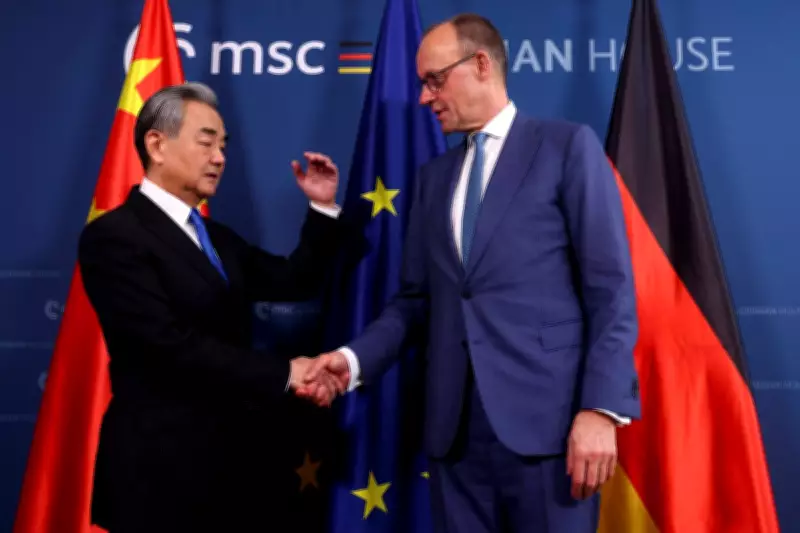
German Chancellor Friedrich Merz is embarking on his first official trip to China this week, a pivotal diplomatic mission set against a backdrop of escalating economic competition and profound geopolitical shifts. The two-day visit, commencing on Wednesday, underscores Germany's mounting anxieties over its trade relationship with China and Beijing's ambiguous position on the ongoing war in Ukraine.
Navigating Economic Imbalances and Strategic Rivalry
The timing of Chancellor Merz's journey is particularly significant, occurring as German manufacturers grapple with intensifying pressure from Chinese rivals. This challenge is especially acute in the automotive sector, where emerging Chinese electric vehicle manufacturers are directly competing with established German brands like Volkswagen. The economic data from the previous year paints a stark picture: German imports from China surged by 8.8% to 170.6 billion euros, while exports to China declined by 9.7% to 81.3 billion euros, highlighting a worrying trade deficit.
This growing imbalance has amplified longstanding German calls for China to dismantle trade barriers and foster a more open market for foreign competitors. Chancellor Merz is leading a delegation of business executives keen on expanding sales, yet the visit is also a platform to address deeper strategic concerns. Germany, while still recognizing China as a crucial economic partner, increasingly views it as a formidable competitor, prompting a policy of de-risking to reduce dependency on Chinese exports and critical materials like rare earths.

Geopolitical Dialogues: Ukraine and the New World Order
Beyond trade, the agenda is expected to feature robust discussions on the Ukraine crisis. China maintains it holds an objective and impartial stance, a position that diverges sharply from Germany and much of Europe. Chancellor Merz is anticipated to raise concerns over Chinese support for Russia's position, though significant policy shifts from Beijing are not anticipated. This diplomatic tightrope reflects broader tensions as the global order undergoes transformation, partly driven by U.S. President Donald Trump's disruptive policies.
In a recent address to the German parliament, Chancellor Merz emphasized that Europe must master the language of power politics to assert itself in this evolving landscape. He cautioned against illusions regarding China's ambitions, noting its intent to shape a new multilateral order according to its own rules. This visit follows a series of high-profile trips by world leaders to Beijing, including French President Emmanuel Macron and leaders from Ireland, South Korea, Canada, Finland, and Britain, all navigating similar complexities.
Schedule and Symbolic Engagements
Chancellor Merz's itinerary includes high-level meetings with Chinese Premier Li Qiang and top leader Xi Jinping on Wednesday, underscoring the importance of direct dialogue given Xi's reduced international travel. On Thursday, he will visit a Mercedes-Benz facility and travel to Hangzhou, a hub of technological innovation home to Alibaba and Unitree Robotics. These engagements symbolize the dual nature of the relationship: collaboration in technology and industry amidst strategic competition.
As the world's second and third largest economies, both nations acknowledge that sound bilateral relations serve mutual interests. However, the path forward involves finding small avenues for cooperation while managing substantial disagreements on major issues like trade practices and geopolitical alignments. Following this China trip, Chancellor Merz plans a subsequent visit to Washington, highlighting Germany's delicate balancing act in a multipolar world.
Ultimately, Germany's goal is to sustain a relationship that has grown increasingly intricate, navigating between economic partnership and strategic rivalry. The outcomes of this visit may hinge on incremental progress rather than sweeping breakthroughs, as both sides recalibrate their positions in a rapidly changing global arena.