Cuba's Precarious Position as US Economic Pressure Intensifies
In the heart of Havana's Vedado neighbourhood, a scene of growing desperation unfolds daily. Javier Peña and Ysil Ribas have been stationed outside a petrol station on Linea road since dawn, their 1955 Mercury serving as both transport and temporary workshop. They represent countless Cubans facing an unprecedented fuel crisis that threatens to paralyse the nation.
The station they wait at accepts only US dollars, placing its services beyond the reach of most citizens. "There is no gas in the national pesos," Peña explains with a resigned shrug. This difficult reality may soon become impossible as the United States moves to completely sever Cuba's fuel supply lines.
Trump Administration Escalates Economic Warfare
President Donald Trump has signed an executive order authorising additional tariffs against any nation supplying oil to Cuba. The White House justification cites protection of American interests from what it describes as a regime providing "a safe haven for transnational terrorist groups." No evidence supporting these allegations has been presented publicly.

"Cuba will be failing pretty soon," Trump declared earlier this week, making explicit his administration's objective to dismantle the communist government that has ruled for sixty-seven years. This represents a significant escalation beyond the longstanding US embargo that has constrained Cuba's economy for decades.
Imminent Fuel Exhaustion Looms
According to data from consultancy Kpler, Cuba has received just one oil shipment this year - 84,900 barrels from Mexico. Current reserves are so depleted that without immediate new supplies, the nation could exhaust its fuel completely within three weeks. The Financial Times reported this alarming timeline on Thursday, highlighting the immediacy of the crisis.
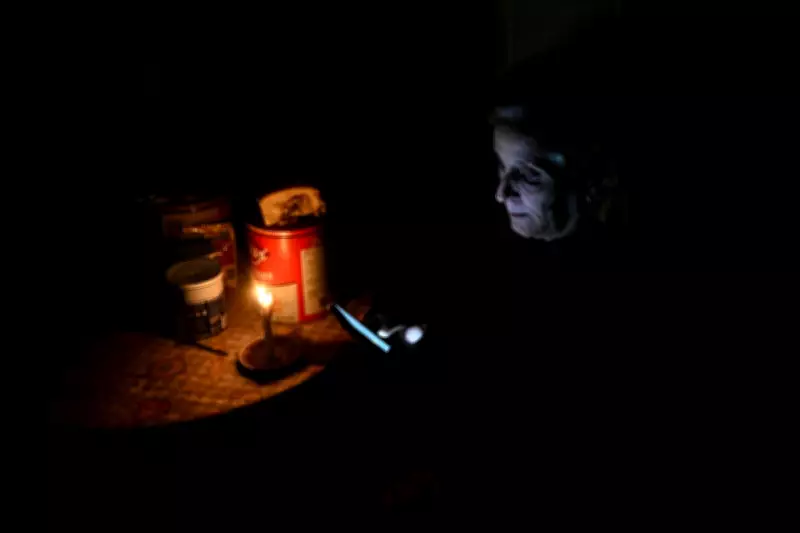
Energy expert Jorge Piñón from the University of Texas outlines the catastrophic consequences of diesel depletion: "The impact would be catastrophic as diesel fuels transportation – both passenger and commercial, the railroad, agriculture, industry, water distribution and sugarcane." Perhaps most critically, diesel powers an electricity system already failing so severely that many areas experience daily blackouts exceeding twelve hours.
International Response and Diminishing Options
Mexico's president has warned that Trump's tariffs "could trigger a far-reaching humanitarian crisis, directly affecting hospitals, food supplies and other basic services for the Cuban people." Despite this concern, a scheduled Mexican oil shipment has been cancelled, described as a "sovereign decision" by President Claudia Sheinbaum, though clearly influenced by Washington's pressure.
Traditional allies have proven unreliable. Venezuela, another historical supplier, has sent no oil since the US removed President Nicolás Maduro in early January. Russia and Algeria last shipped fuel in October and February respectively. While China has expressed "deep concern and opposition" to US actions, its practical assistance remains uncertain.
Cuban President Miguel Díaz-Canel has accused Trump of attempting to "suffocate the Cuban economy by imposing tariffs on countries that sovereignly trade oil with Cuba." The government has released videos showing soldiers training for potential invasion, but the response has been notably restrained compared to Venezuela's confrontational stance before its crisis.
Economic Collapse and Social Consequences
Official figures reveal an economy contracting by 11% between 2019 and 2024, with a further 5% decline through September 2025. Hyperinflation has devastated those dependent on state wages or pensions, forcing professionals into alternative livelihoods.
Eddy Marrero, a trained doctor now working as a moto-taxi driver, explains the economic reality: "Doing this, I make in one day what I'd make in a month as a doctor." His motorcycle represents both survival and vulnerability in a nation where fuel availability determines economic possibility.

Washington's Strategic Calculations
The US embassy in Havana recently celebrated the 250th anniversary of American independence, with Chargé d'Affaires Mike Hammer delivering a pointed message to Cuban officials: "The Cubans have complained for years about 'the blockade'. But now there is going to be a real blockade."
Reports suggest Washington is actively seeking Cuban government members willing to "cut a deal," mirroring tactics used before Maduro's removal in Venezuela. While some officials have discussed a full naval blockade, European diplomats believe economic pressure alone may suffice to isolate Cuba completely.
As queues lengthen at petrol stations and blackouts become routine, uncertainty prevails. One man waiting beside his yellow Lada captures the national mood: "It's been a downward spiral for 20 years." When asked about responsibility, he offers the cautious response of someone living under constant pressure: "I don't get involved in politics."
The coming weeks will determine whether Cuba can secure essential fuel supplies or faces complete infrastructure collapse, with humanitarian consequences that could reverberate throughout the Caribbean region.