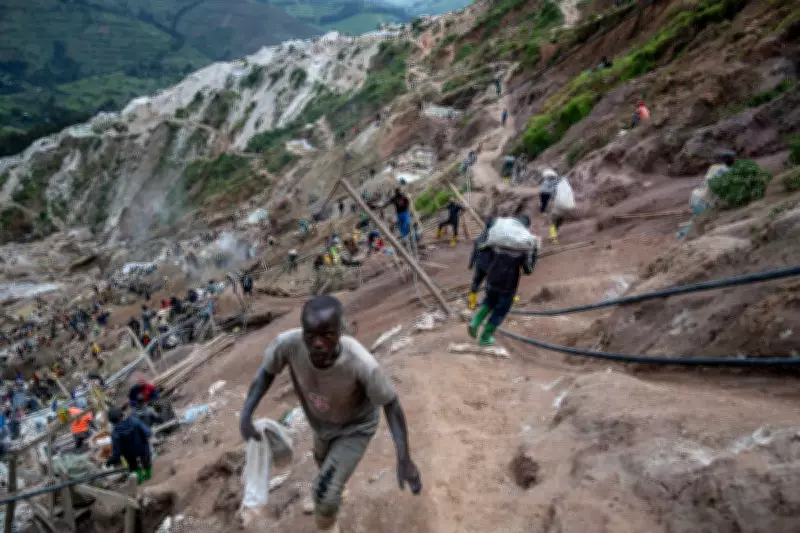
The Democratic Republic of Congo announced on Monday the creation of a paramilitary guard to secure its expansive mining operations, supported by investments from the United States and the United Arab Emirates. This move comes as Washington seeks to secure access to critical minerals amid a fragile peace process in the country's troubled eastern region.
Deployment and Funding
The General Inspectorate of Mines stated that the new unit will be deployed gradually, with an initial force of 2,500 to 3,000 personnel expected to be operational by December after six months of joint military training. The paramilitary force is projected to expand to over 20,000 personnel across all 22 mining provinces by the end of 2028. The $100 million program is funded through partnerships with the United States and the UAE.
Objectives
The guard aims to boost investor confidence and strengthen state oversight of mineral production. It will take over security duties currently performed by conventional military forces, including securing mine sites, escorting mineral shipments to processing facilities and border crossings, and protecting foreign investments.

Congo is a major supplier of coltan, which contains tantalum, a key component in smartphones, computers, and aircraft engines. The country has long struggled with illicit mineral trafficking and chronic insecurity, particularly in its eastern provinces, where fighting between government forces and Rwanda-backed rebels has killed thousands and displaced hundreds of thousands.
Inspector General of Mines Rafael Kabengele said the president aims to “clean up the entire mining sector, by eliminating practices that run counter to good governance, transparency and the traceability of minerals.”
Geopolitical Context
Washington is trying to reduce China’s dominance over critical mineral supply chains. Congo and the U.S. signed a minerals partnership last year, under which American firm Virtus Minerals took over copper-cobalt miner Chemaf. Other Western companies have expressed interest, including in assets located in rebel-held territory.
Congo produced about 40% of the world’s coltan in 2023, according to the U.S. Geological Survey. More than 15% of the world’s tantalum comes from the rebel-controlled Rubaya mines in the east.
Eastern Congo has experienced decades of crisis, with dozens of armed groups active. Last year, the Congolese and Rwandan governments signed a peace deal brokered by the U.S., which also opened access to critical minerals for American companies. However, negotiations with M23 rebels continue, and fighting persists on several fronts.