Canada's Prime Minister Firmly Rejects US Dictation of Trade Terms
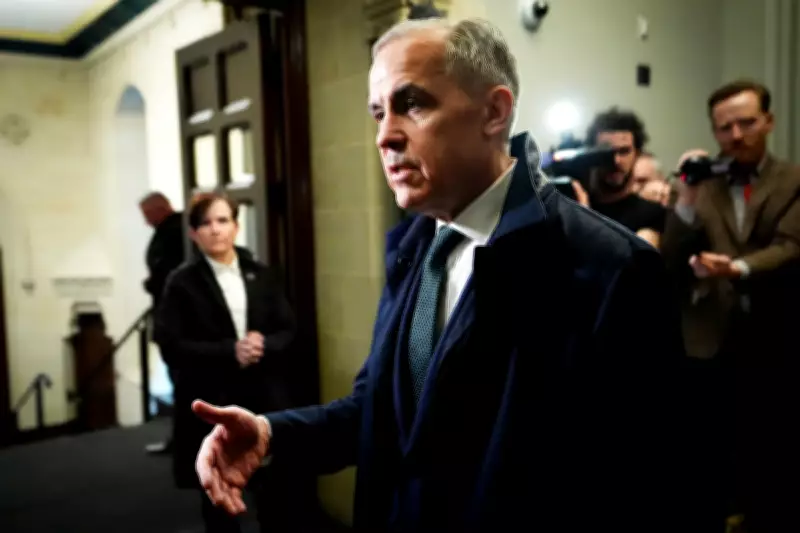
Canadian Prime Minister Mark Carney has emphatically stated that Washington does not possess the authority to dictate the terms of the continental trade agreement known as the United States-Mexico-Canada Agreement (USMCA). Speaking to reporters in Ottawa on Wednesday, Carney addressed the significant obstacles looming ahead of the accord's scheduled review in July, underscoring the necessity for collaborative negotiations rather than unilateral demands.
Historical Context and Current Challenges
The USMCA, which traces its origins back to the early 1990s, has deeply intertwined the economies of the three North American nations. However, the agreement has encountered considerable turbulence, largely due to the constantly shifting tariff policies implemented by former U.S. President Donald Trump. These fluctuations have created an environment of uncertainty and friction, complicating the path forward for all parties involved.
Carney acknowledged that fine-tuning the latest iteration of the agreement will require substantial time and effort. He remarked, "We understand what some of the Americans would call trade irritants or trade issues are." Trade irritants refer to policies that generate disputes and friction in international trade. Carney added, "We have some on our side as well. We will sit down and work through those issues with the broader approach in the negotiations."

Asserting Canadian Sovereignty in Negotiations
Prime Minister Carney was unequivocal in his stance against American dominance in the negotiation process. He asserted, "It’s not a case of the United States dictates the terms. We have the negotiations. We can come to a mutually successful outcome. It will take some time." This declaration followed a report by Radio-Canada, the French-language service of the Canadian Broadcasting Corp., which indicated that American officials are imposing an "entry free" on trade talks with Canada and are demanding concessions before negotiations even commence.
When questioned about this radio report, Carney responded, "In any negotiations people ask for concessions. We have strengths, we have options. We’re diversifying our options." This statement highlights Canada's strategic approach to bolstering its negotiating position by exploring alternative avenues and partnerships.
Specific Trade Irritants and US Criticisms
The trade tensions are further exacerbated by specific issues cited in a recent report from the Office of the United States Trade Representative. Key irritants include the refusal by certain Canadian provinces to stock American alcohol and the imposition of high tariffs on some American dairy products. Additionally, the U.S. is challenging Canada's "Buy Canadian" policy, which prioritizes Canadian products and workers on projects valued at over 25 million Canadian dollars (approximately $18 million).
Last week, U.S. Commerce Secretary Howard Lutnick launched a critique of Canada's approach to the trade talks. Lutnick accused Canada of leaning excessively on the U.S. economy and labeled it "outrageous" for Canadian provinces to exclude American liquor from their shelves. He also criticized Carney for negotiating a deal with China to reduce tariffs on Chinese-made electric vehicles from 100% to 6.1%, with an annual cap of 49,000 vehicles. In exchange, China is expected to lower retaliatory tariffs on Canadian agricultural products.
Carney's Vision for Economic Resilience
In a ten-minute video released on Sunday, Prime Minister Carney elaborated on his government's economic strategy. He noted that while Canada's strong economic ties to the United States were historically a strength, they have now become a vulnerability that must be addressed. Carney pointed out that Trump's tariffs have adversely impacted workers in the auto and steel industries, underscoring the urgent need for corrective measures.

Carney has pledged to protect Canada's dairy, poultry, and egg production sectors during the free trade negotiations with the U.S. Furthermore, he emphasized his administration's concerted efforts to strengthen the Canadian economy by attracting new investments and forging trade agreements with other nations. This multifaceted approach aims to reduce dependency on the U.S. and enhance Canada's economic sovereignty and resilience in the face of global trade uncertainties.