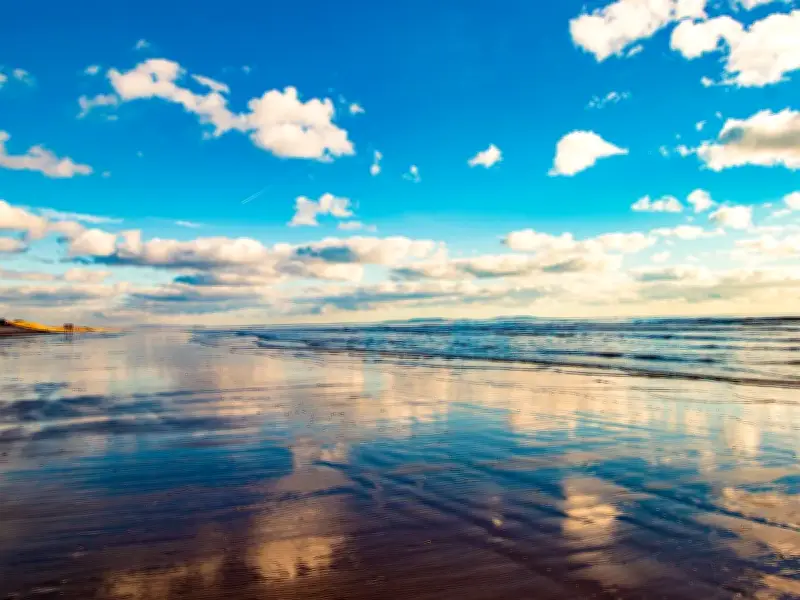
Pendine, a small village in Carmarthenshire, is best visited in winter, when its seven-mile stretch of sandy beach offers quieter paths, crisp air, and dramatic seascapes that make it feel like the coast is all to yourself. The village is renowned for its spectacular beach, with each end offering a unique coastal experience. To the west, near Gilman Point, dramatic cliffs overlook rock pools and picturesque trails that form part of the 870-mile Wales Coast Path. In contrast, the eastern expanse, known as Laugharne Sands, features flat, golden sands famous for hosting historic land-speed record attempts and remains a hub for thrill-seekers.
A budget-friendly seaside stay
In peak season the village attracts hordes of visitors, so a winter break brings fewer crowds and affordable accommodation. One recommended stay is Caban Pendine, a modern hotel perched right on the beach. Caban has 14 rooms, including spacious family rooms (some with bunk beds), mobility-accessible rooms, and dog-friendly rooms. A sea-view room is recommended for long sunset strolls, even in winter. The hotel currently has a winter offer in January and February: book direct and get two nights for the price of one.
The hotel is ideally positioned to explore Carmarthenshire and Pendine Sands, a seven-mile stretch of firm, golden sand along Carmarthen Bay, one of Wales’ most distinctive coastal features with a unique racing history. In the 1920s these sands became a proving ground for record-breaking land speed attempts, earning Pendine a reputation that still resonates with motoring enthusiasts. The vast beach has firm sand and is dog-friendly in the off-season, making it ideal for a long winter walk in Wales.
Land speed record history
Starting at the western end near Gilman Point, you’ll find rugged cliffs and rock pools worth exploring. Heading east, the sands stretch seemingly endlessly, offering uninterrupted sea views. This part of the coast also serves as a Ministry of Defence firing range, so parts may be inaccessible at certain times, a detail worth checking ahead of your visit.
For more than 100 years, famous Pendine Sands have been synonymous with land speed records. Its unique terrain, a natural runway of compacted sand, offered an ideal proving ground for early 20th-century speed pioneers. By the 1920s, Pendine had become the go-to location for land speed record attempts, pushing racing boundaries to exhilarating new heights.
In 1924, racing legend Sir Malcolm Campbell brought his Sunbeam 350HP car, aptly named Blue Bird, to Pendine. With the sands as his canvas, Sir Malcolm made history, setting a new world land speed record of 146.16 mph. The following year, his thirst for speed led him to return and break his own record at a remarkable 150.76 mph. These feats cemented Pendine's reputation as the ultimate stage for motoring glory.
Exploring the Museum of Land Speed
Not to be outdone, Welsh-born engineer and driver JG Parry-Thomas rose to the challenge. In 1926 he piloted his custom-built car, Babs, to a new record of 169.3 mph, showcasing innovative engineering and daring driving. Tragically, Parry-Thomas' pursuit of speed ended in 1927 when he was fatally injured attempting to reclaim the title. After the accident, his car was buried in the sands, later recovered and restored, symbolising the danger and determination that defined this era of racing.
Pendine Sands’ legacy fell quiet for much of the 20th century until modern speed enthusiasts brought it back into the spotlight. In 2015, actor Idris Elba honoured the sands’ rich heritage by setting a new Flying Mile record, reaching 180.361 mph in a Bentley Continental GT Speed. His achievement was a poignant nod to the daring pioneers who had blazed the trail almost a century before.
Today Pendine Sands is celebrated as a historic hub of motorsport and engineering brilliance, and the Museum of Land Speed preserves its racing legacy. This modern museum showcases the history of land speed record attempts on Pendine Beach’s famous sands and is packed with artefacts, memorabilia, and stories of the daring speed feats achieved on this flat stretch of coastline. One of the museum’s highlights is its display of vehicles that have set land speed records on Pendine Beach over the years. From the Blue Bird to Babs, you can get up close to engineering marvels and technological innovations that propelled these vehicles to record-breaking speeds. Interactive exhibits also let you delve into the stories of these speed pioneers, making it a must-see for motorsport or engineering fans.
Winter walks on the Wales Coast Path
Pendine is more than its famous sands. It’s also a gateway to the Wales Coast Path, stretching 870 miles around the country’s coastline. The section near Pendine offers dramatic clifftop views and a chance to spot local wildlife. The trail leads west to the picturesque cove of Amroth while the eastward route promises sweeping views of the Gower Peninsula and Carmarthen Bay.
Walking here in winter is an entirely different experience. The quieter paths, crisp air, and dramatic seascapes make it feel like the coast is all to yourself. Pack sturdy boots, as parts of the path can be muddy after rain, but the effort is well worth it for the epic coastal scenery.
Winter is the best time to visit the glorious Welsh coast, with cheaper places to stay, quieter beaches, and coastal paths where you can plod along and hardly see another soul. If you need a hard reset, a winter break in Wales does the job nicely. Bring a coat, book a sea-view room, and enjoy the luxury of having the coastline almost entirely to yourself, especially if you are up at the crack of dawn.
Travel tips for Pendine and Carmarthenshire
Parking: A large car park sits next to Pendine Sands, making it convenient for beach access and exploring the village. Parking is generally easier to find off-season, but it can fill up on peak summer days.
Beach access for dogs: Dogs are welcome on most of Pendine Sands during autumn and winter. However, restrictions apply between the slipways from May to the end of September, so check signage if visiting in summer.
Wales Coast Path: The coastal path around Pendine offers stunning clifftop views and is well-signposted. Wear sturdy footwear, especially after rain, as some sections can get muddy. If hiking in winter, pack warm layers and be mindful of shorter daylight hours.
Nearby amenities: Public toilets are available near the beach and the village has several cafes and small shops within walking distance. These are perfect for warming up after a chilly day outdoors.
Military firing range: Parts of Pendine Sands are occasionally used as a Ministry of Defence firing range, which may limit access. Check for notices or restrictions before heading out.
Best times to visit: Winter is ideal for quieter walks and uninterrupted views while summer brings a livelier atmosphere with more local events. Spring and autumn strike a nice balance with milder weather and fewer visitors.
Local wildlife and tides: Check tide times if exploring rock pools or walking further along the sands. The area is home to various seabirds and marine life so it’s a great spot for nature lovers.