

June is rapidly emerging as the premier month for sophisticated travellers seeking a more tranquil holiday experience. With dependable sunshine, significantly reduced crowds, and optimal conditions for outdoor activities like hiking, this early summer period presents an ideal window for exploration before the peak season frenzy begins. This shift in travel patterns makes diverse destinations from Eastern Europe to South America particularly attractive for those planning an early summer getaway.
The Rise of the "Cool-cation"
Tom Barber, co-founder of Original Travel, identifies a substantial movement toward what he terms "cool-cations." He elaborates, "A very significant trend currently is 'cool-cations,' which involves recognising that visiting the Mediterranean during July and August has become unbearable due to extreme heat." Barber strongly recommends Europe during this timeframe, stating, "Europe, in my opinion, is absolutely at its best throughout May and June. Any rural area featuring meadowland will be abundant with wildflowers." He further notes that June provides perfect hiking conditions, as "temperatures are not excessively hot and the sea is just beginning to warm up."
Five Unexpected June Destinations
Romania: A Journey Through Time
History enthusiasts will be captivated by central Romania's Transylvania region, renowned for its exceptionally preserved medieval towns. Visitors can discover the largest Gothic church in Eastern Europe located in Brasov, explore Sibiu for its remarkable Baroque architecture and charming cobblestone streets, or visit Sighisoara to experience a hilltop citadel featuring a clock tower dating back to the 14th century. The iconic castles of Bran and Corvin are essential sights not to be missed.

"Transylvania essentially provides an experience akin to time travel," Barber observes. "It genuinely feels as though you have stepped back several centuries; picturesque traditional villages where residents still utilise horses and carts, and you can observe herdsmen at work. It resembles a scene directly from medieval times. There are very few roads or automobiles – it is authentically old-school."
The rural landscapes are home to diverse wildlife including wolves and bears, with Romania hosting the largest brown bear population in Europe outside of Russia.
Menorca, Spain: Natural Beauty and Coastal Trails
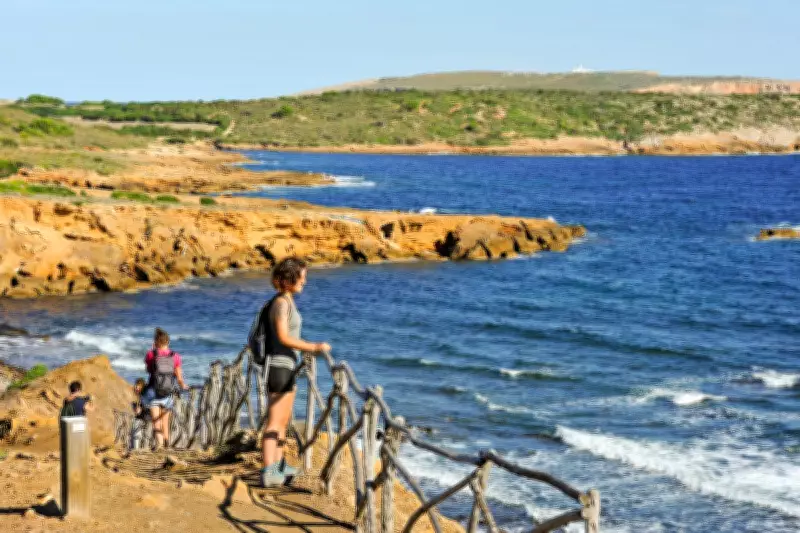
"Menorca ranks among the most beautiful locations I have ever visited; I travelled there last June," Barber remarks. This Spanish island, the second largest of the Balearic archipelago in the western Mediterranean Sea northeast of Mallorca, seamlessly blends archaeological and cultural monuments with stunning natural scenery. It features pristine beaches, dramatic cliffs, and deep ravines, earning designation as a UNESCO Biosphere Reserve.
The 185-kilometre coastal path known as Camí de Cavalls encircles the entire island. "It is an extraordinary footpath that has now been fully connected, allowing you to walk completely around the entire island," Barber explains. "Completing the full circuit might require approximately two weeks, but you can select individual sections for a morning or full day of walking, always with the sea visible on one side."
"During this season, you will walk past fields containing enormous hay bales prepared for harvest. The culinary offerings are absolutely sensational," he adds. "I believe it stands among my all-time favourite destinations." Signature dishes include rich lobster stew (caldereta de langosta), pastries filled with sweet pumpkin jam (ensaimadas), and distinctive Mahón-Menorca cheese.
Lisbon, Portugal: Festivals and Cultural Celebrations
The Portuguese capital has not yet reached its peak summer temperatures in June, creating excellent conditions for exploring its hilly, character-rich streets. Lisbon "truly comes alive during June with Santos Populares," notes Pippa O'Keefe, travel designer at Asmallworld. This is "essentially a month-long festival where streets become decorated and host arraiais (open-air concerts) with street barbecues. The most notable celebrations occur around June 12–13 honouring Santo Antonio."

The Santo Antonio parade features dozens of low-income couples marrying without cost at Igreja de Santo António and Sé Cathedral, with complete wedding receptions sponsored by the city. "This heartwarming tradition began in 1958 and perfectly embodies the saint's role as protector of marriages," O'Keefe explains.
June also hosts Pride celebrations, with Lisbon commemorating it in grand style through Arraial Lisboa Pride during the middle of the month. Additionally, June marks the commencement of sardine season in Portugal – "which the Portuguese absolutely adore," says O'Keefe. "Fresh sardines can only be fished between June and September. You will find barbecued sardines in every Lisbon neighbourhood throughout Santos Populares, which explains why a basil plant serves as one of the festival's primary symbols – traditionally used to mask the scent of barbecued fish."
Travelling in June offers the advantage of quieter beaches as well. O'Keefe adds: "The lesser-known beaches of Caparica are not as crowded as they become during July and especially August."
Peru: Ideal Conditions for Exploration
"Most individuals consider visiting Latin America during our winter months, but actually Peru is spectacular in June," Barber states. "Weather conditions are truly excellent without being excessively hot. While Machu Picchu experiences considerable visitor numbers currently, there remains abundant incredible walking opportunities in and around the Sacred Valley."
Elsewhere in the country, Colca Canyon – with depths reaching up to 3,500 meters – presents a challenging descent-and-ascent hike while providing extraordinary opportunities to observe Andean condors soaring overhead. Rainbow Mountain (Vinicunca) represents another famous hiking destination celebrated for its vibrant striped mineral layers. No visit to Peru would be complete without exploring the islands of Lake Titicaca.
"Temperatures are precisely right, there is an abundance of incredible cuisine, but most people incorrectly assume the Christmas period represents the optimal time to visit," Barber concludes.
Malaysian Borneo: Wildlife and Indigenous Culture
Borneo, the world's third largest island, is divided among three nations: Indonesia, Malaysia, and Brunei. The Malaysian portion – comprising the states of Sabah and Sarawak – is famous for its ancient rainforests and rich indigenous cultural heritage.
"Borneo is absolutely brilliant, a remarkable island boasting incredible wildlife," Barber notes. Beyond pygmy elephants and distinctive proboscis monkeys, "You can observe orangutans in their natural wild habitat. You can also embark on a boat journey upriver and spend a night with a traditional tribe, learning about their unique way of life. It is simply a remarkable destination that has not achieved the popularity it truly deserves."





