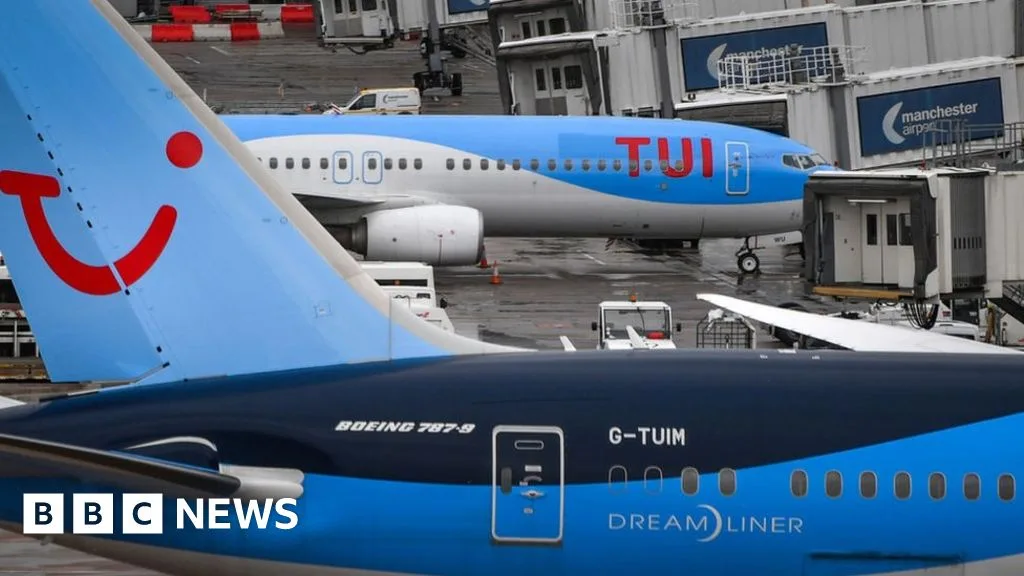
Tui, one of the world's largest travel firms, has announced it is considering leaving the London Stock Exchange in favour of a primary listing in Frankfurt. The holiday giant said some shareholders had questioned whether its UK listing was 'optimal and advantageous'. The move would deal another blow to London's attractiveness as a base for big firms, following several high-profile departures in recent years.
Tui, which has had its main listing in London since 2014, already has a secondary listing in Frankfurt. Bosses said they would consider an 'upgrade' to Germany's main stock exchange at the group's annual general meeting in February, but added that delisting from London would require the backing of at least 75% of shareholders. Chief executive Sebastian Ebel said the announcement had 'no political background', suggesting any potential delisting would not be due to Brexit, and added that the British travel market was still the 'most important'.
Such a move would add to concerns over London's ability to attract big businesses after Britain's biggest chip company, Arm Holdings, listed its shares in New York earlier this year. Building supplies firm CRH and plumbing equipment company Ferguson also shifted listings to the US. Tui Group has a market value of £3.2bn and owns 400 hotels, 16 cruise ships, five airlines with 130 aeroplanes and 1,200 travel agencies.
The company said in its full-year results that it was looking at whether simplifying its listing structure would benefit the firm following changes and mergers within the group. It added there had been 'a notable liquidity migration' from the UK to German stock markets in the past four years and that the move could 'potentially enhance' the profile of Tui's shares. The travel giant also said it could help the company deal with European Union regulations on airline ownership and cut costs.
Mathias Kiep, Tui's chief financial officer, said the main reason for considering delisting was that 75% of the company's shares were traded in Germany. Russ Mould, investment director at AJ Bell, said 'you can see the company's reasoning' due to more trade being struck through Frankfurt. However, he added that supporters of London would note it still had around 1,860 listed firms and that 'losing TUI's £3bn cap, while unfortunate, is not terminal for a market with a valuation well above £2 trillion'.
On Wednesday, Tui said it expected its full-year earnings to increase by at least 25% after posting bumper profits, helped by increased sales and higher prices. It reported pre-tax earnings of €551.2m (£471.9m) for the year to September, against losses of €145.9m (£124.9m) the previous year.