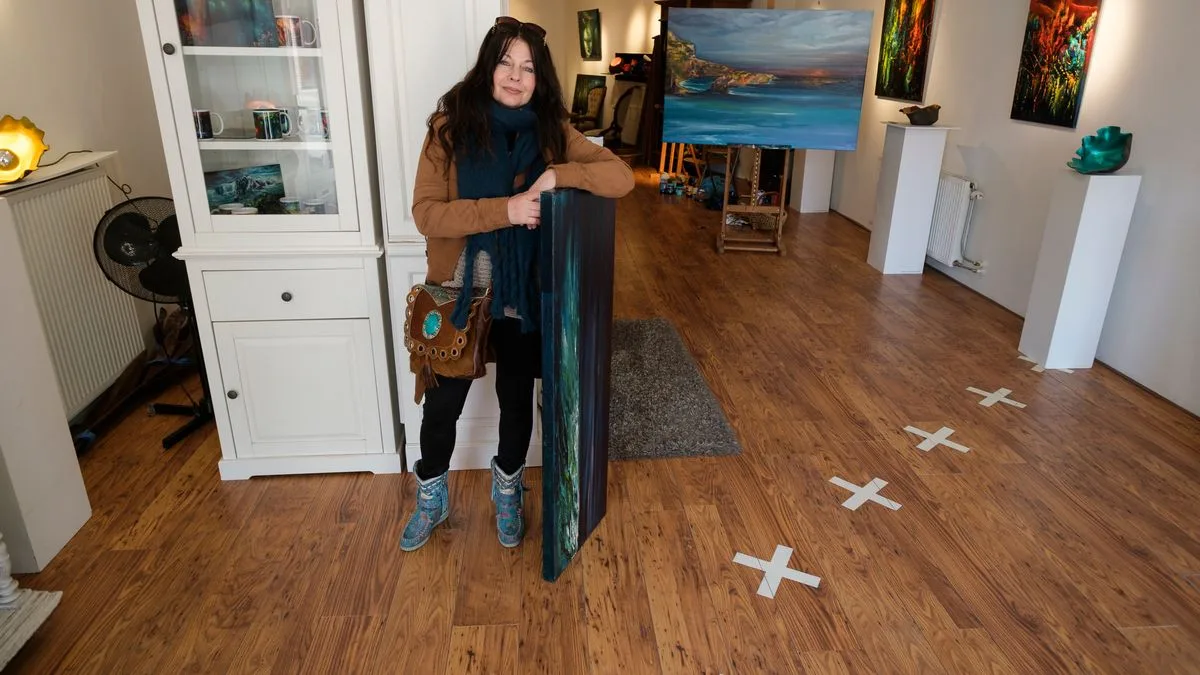
In the small town of Baarle-Hertog, a Belgian enclave within the Netherlands, residents face a unique daily routine: crossing international borders just to go to the shops. The town is a patchwork of 24 tiny annexes of land, with borders marked by crosses on the ground, sometimes running straight through houses.
Under the 'front door' policy, a home's nationality is determined by which country its front door opens into. However, in rare cases, the border falls directly on the door, leaving the house's country ambiguous. This leads to peculiar situations, such as cooking in one country and eating in another.
The town has two governments, councils, mayors, and schools, with residents speaking both Flemish and Dutch. During the COVID-19 pandemic, this created confusion as Belgium and the Netherlands had different rules. For instance, masks were mandatory in Belgian shops but not in Dutch ones, and restaurants moved tables to comply with varying curfews.
Other contradictions include fireworks laws: banned for public sale in the Netherlands but more relaxed in Belgium, leading to many fireworks shops. Dutch teenagers also take advantage of Belgium's lower drinking age. The town's history dates back to 1198, with the current borders finalised in 1995, and it now attracts tourists keen to hop between countries.