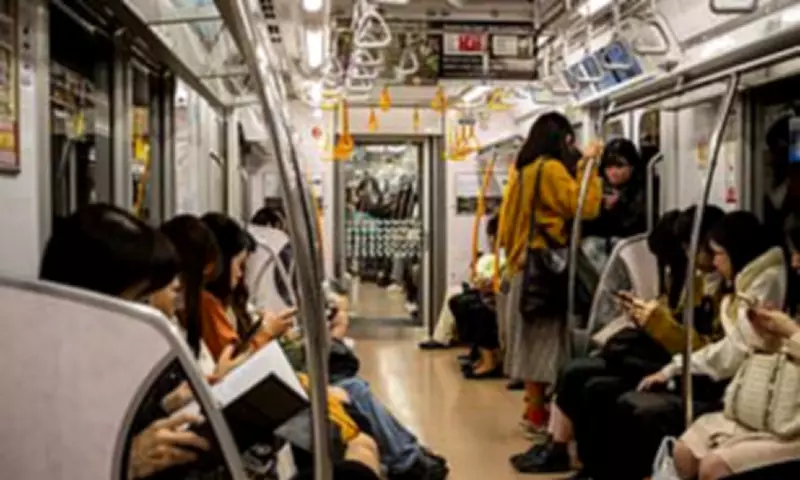
Japanese Train Etiquette: Locals Detail Tourist Behaviours That Grind Their Gears
Japan, renowned globally for its cutting-edge technology and legendary bullet trains, remains a bucket-list destination for countless international travellers. The country's rail network is celebrated not only for its remarkable efficiency and punctuality but also for its impeccable safety standards. It is little wonder that visitors are eager to experience this world-class transport system firsthand during their holidays. However, a recent comprehensive survey has uncovered a significant point of friction: the conduct of tourists on board Japan's trains often leaves local commuters less than impressed.
Noisy Conversations Top the List of Irritations
The research, conducted by the Japan Private Railway Association—a consortium of 72 private railway companies across the nation—surveyed 5,202 local residents to identify which passenger habits are most aggravating, particularly when exhibited by foreign visitors. According to reports from Sora News 24, the findings are strikingly clear.
The most irritating behaviour, cited by a substantial 69.1 per cent of respondents, is noisy conversations and passengers messing around. In Japanese culture, trains are considered indoor public spaces where maintaining a quiet atmosphere is a deeply ingrained social norm. Loud talking and disruptive antics are therefore viewed as a serious breach of etiquette, causing considerable annoyance to regular commuters who value the tranquillity of their journey.

Large Luggage and Inconsiderate Seating Follow Close Behind
Securing the second spot on the list is the habit of carrying oversized items on board and placing them in inconvenient locations. For 41.9 per cent of locals, large suitcases and bags that obstruct aisles or doorways are a major source of frustration, especially when they impede the movement of other passengers trying to navigate the often crowded carriages.
In third place, annoying 26.2 per cent of survey participants, is passengers demonstrating a 'sitting style that encroaches on others'. This includes behaviours such as spreading legs widely or crossing them in a manner that invades neighbouring seating space, violating the unspoken rules of personal boundaries that are highly respected in Japanese society.
Strong Scents and Doorway Blocking Round Out the Top Five
The fourth most common grievance, highlighted by 24.8 per cent of travellers, involves strong scents emanating from perfumes, detergents, fabric softeners, or cosmetics. In the confined environment of a train carriage, overpowering fragrances can be particularly bothersome and are considered inconsiderate.
Completing the top five is passengers standing near the doors without moving, a habit that irritates 24.1 per cent of locals. This behaviour can create significant inconvenience for others attempting to board or alight from the train, disrupting the smooth flow of passenger traffic that Japanese rail systems are designed to facilitate.
Further Annoying Behaviours Detailed in the Survey
The survey enumerated several additional behaviours that test the patience of Japanese train users:

- Bad manners when boarding and alighting, including running onto trains and pushing in queues, which bothers 16.4 per cent of locals.
- Ignoring priority seating etiquette, such as not vacating a designated seat for elderly, disabled, or pregnant passengers, annoys 10.7 per cent.
- General 'other' inconsiderate behaviours, a category encompassing miscellaneous gripes like standing in the way while others navigate stations.
- Leaving behind trash, including plastic bottles, which is frowned upon by 8.6 per cent of respondents. Littering is broadly disapproved of in Japan, and this extends firmly to its pristine train environments.
- Coughing or sneezing without consideration for surrounding people, which rounds out the top ten by irritating 7.6 per cent of local passengers.
This detailed survey underscores a cultural clash between the enthusiastic exploration of tourists and the reserved, orderly expectations of Japanese commuters. As Japan continues to welcome millions of visitors each year, understanding and adhering to these local norms of train etiquette becomes increasingly important for ensuring harmonious travel experiences for all.