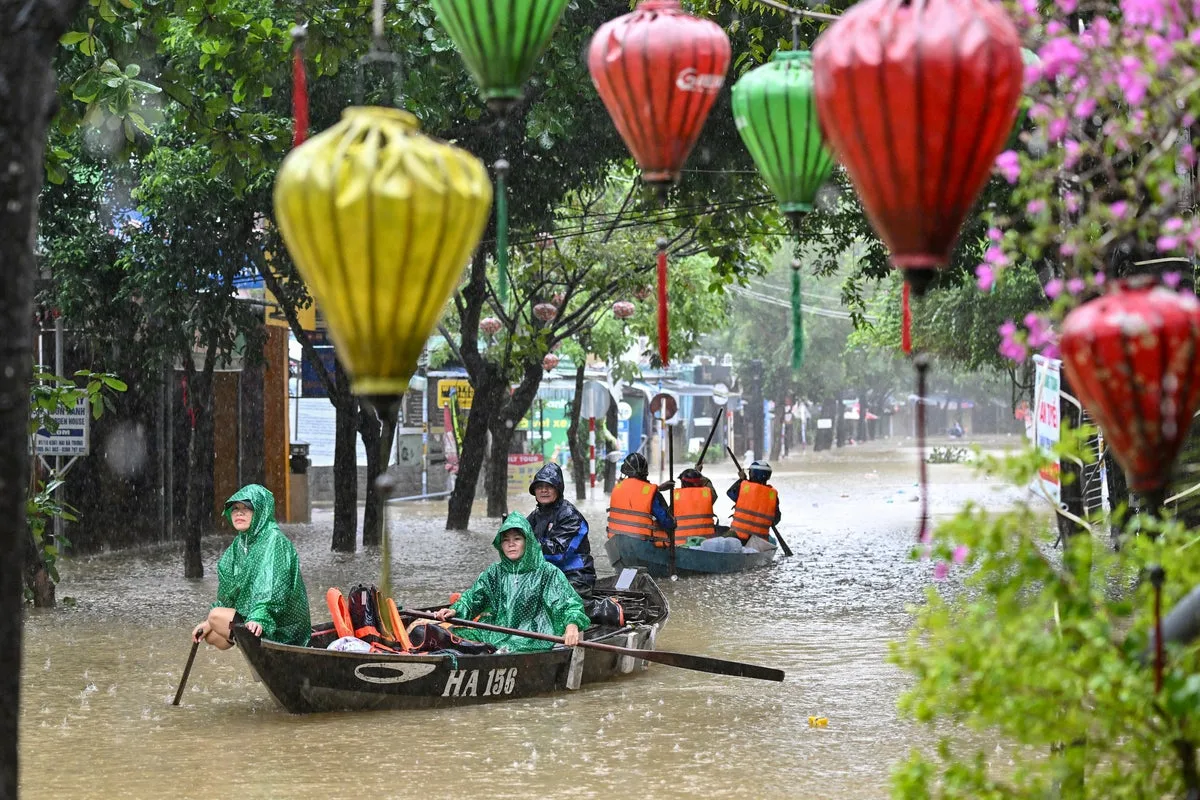
Tourists are trickling back to Vietnam's historic town of Hoi An, a UNESCO World Heritage site, as residents labour to clear mud and debris left by devastating floods that have claimed at least 35 lives in the central region.
The town's economy relies heavily on tourism, with accommodation, dining and ticket sales accounting for nearly two-thirds of regional income last year. In that period, Hoi An welcomed over 4.4 million visitors, including 3.6 million from abroad. Since Saturday, both domestic and international visitors have been seen strolling along the riverfront and exploring heritage landmarks, even as many hotels, lantern shops and restaurants undergo extensive cleaning to prepare for a full reopening ahead of the peak travel season.
The historic floods last week submerged Hoi An's lantern-lit streets and centuries-old wooden houses, forcing hundreds of businesses to close temporarily. While no official financial damage estimates have been released, small shop owners reported losses in the hundreds of millions of Vietnamese dong, equivalent to thousands of US dollars.
Nearby, the city of Thua Thien Hue, also affected by the heavy rains, reopened its iconic citadel to tourists on Friday. However, authorities continue to warn of rising river levels and potential renewed flooding as prolonged rains are expected in the coming days.
The floods have left five people missing and inundated more than 16,000 houses and 5,300 hectares of crops. Around 75,000 people are still experiencing power shortages, according to the government's disaster agency. Vietnam, prone to severe storms and flooding, frequently suffers widespread property damage during its storm season, which typically lasts from June to October.