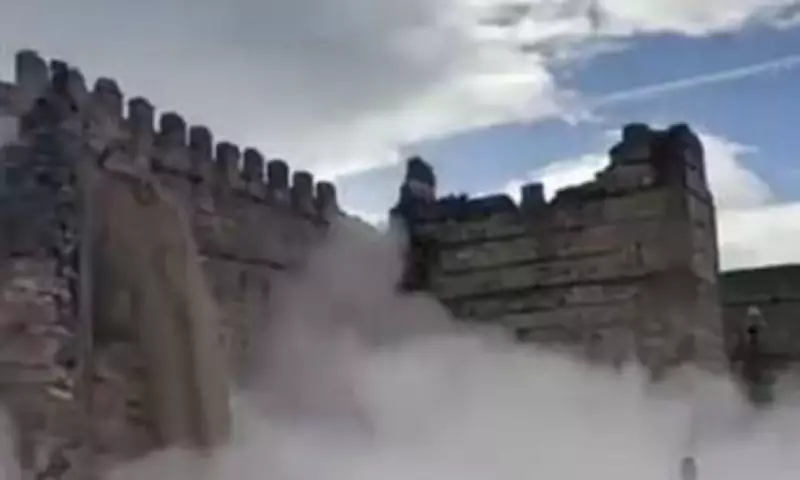
Tourists and bystanders witnessed a terrifying scene as part of the historic Escalona Castle crumbled to the ground, sending a massive cloud of dust and debris across the surrounding area. The dramatic collapse occurred on Saturday morning at the 15th-century fortress and palace in Toledo, Spain, leaving onlookers shocked and scrambling for safety.
Dramatic Footage Captures the Moment
Video footage from the scene vividly captures the terrifying moment when sections of the castle's exterior walls gave way. Chunks of stone and other debris can be seen flying through the air before crashing down near stunned tourists who had gathered at the popular site. The sound of collapsing masonry mixes with screams and shouts from distressed visitors, many of whom can be seen quickly moving away from the danger zone with children in tow.
Structural Damage and Immediate Aftermath
The cascading debris from the collapsing tower damaged several vehicles parked nearby, with clouds of dust settling around the affected cars. Remarkably, despite the scale of the collapse and the proximity of tourists, no injuries were reported. Civil Guard officers and Town Hall officials promptly arrived at the scene, cordoning off the area for examination and safety assessment.

Authorities suspect that recent heavy rainfall in the region may have exacerbated existing structural weaknesses at the historic site. The castle, originally built in the 15th century on the site of an older Medieval fortress, has long shown signs of deterioration. As a result of the incident, all tourist activities at Escalona Castle have been temporarily postponed while investigations continue.
Historical Significance and Visitor Perspectives
Escalona Castle represents an important piece of Spanish history, having served as a strategic point during Castilian conflicts. The structure is a large fortified palace that includes a church within its walls. Visitor reviews on platforms like Tripadvisor reveal mixed perspectives on the site's condition, with one recent reviewer noting that without private acquisition and reconstruction in the 1970s, "there would surely be nothing to visit today."
Another visitor described the castle as "very deteriorated" but appreciated the remaining structures that hint at its former grandeur, while a third simply called it a "beautiful ruin." These comments highlight the delicate balance between preserving historic monuments and ensuring public safety at aging structures.
Broader Context of Historic Monument Collapses
This incident at Escalona Castle is not an isolated event in recent times. Just last November, a medieval tower undergoing renovation in central Rome collapsed near the Colosseum, leaving one builder seriously injured and another trapped under rubble. Dramatic footage from that incident similarly showed tourists backing away as clouds of dust engulfed the area.
In the Roman case, the 95-foot Torre dei Conti tower suffered at least two separate collapses, with the second occurring while firefighters were attempting rescue operations using aerial ladders. Regional President Francesco Rocca reported that while one worker required hospital treatment, their condition was not life-threatening, with two others sustaining minor injuries.
These incidents raise important questions about the preservation and maintenance of aging historic structures across Europe, particularly as they continue to attract tourists while showing signs of structural vulnerability. The Escalona Castle collapse serves as a stark reminder of the challenges facing heritage conservation efforts amid changing environmental conditions and the wear of time.