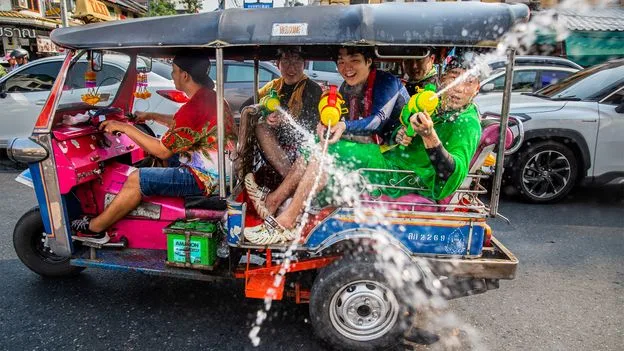
Every year from 13-15 April, Thailand celebrates Songkran, the Thai New Year, with what has become known as the world's largest water fight. Yet beneath the surface of this raucous, country-wide splash fest lies an ancient tradition of purification and renewal.
The festival marks the close of the annual rice harvest and the beginning of the Thai New Year. 'The most famous part of the festival is the massive water fights,' said Worapa Angkhasirisap, director of the Tourism Authority of Thailand. 'People of all ages take to the streets armed with water guns and buckets.' The recent season of The White Lotus depicted unaware travellers being drenched by water gun-wielding children before seeking refuge in a shop, but the water fights are generally friendly and joyous events open to visitors.
Songkran, meaning 'to enter' in Sanskrit, occurs when the Sun moves into Aries. Some scholars believe it originates from the Hindu festival Makar Sankranti, adopted by the Khmer Empire in the 11th Century. 'Since most Thai people practice Buddhism, Songkran is also a spiritual time,' explained Kharitthakorn Sakulsupapong of Tropical Vacation travel agency. During the festival, scented water is poured over Buddha images to symbolise renewal, and Thais wash the hands of their elders as a sign of respect, asking for blessings.
April is Thailand's hottest month, so cooling foods are traditional. 'Since April is the peak of mango season, you'll find plenty of mango sticky rice,' said Angkhasirisap. Another favourite is khao chae, rice soaked in jasmine-scented iced water served with savoury side dishes. While Bangkok and Chiang Mai host the biggest celebrations, the Tourism Authority has promoted festivities in lesser-known provinces, encouraging travellers to explore beyond the main tourist hotspots.
Visitors are welcome to join the water fights, but should observe cultural boundaries. 'Avoid throwing water on monks or elders and try not to spray water directly in anyone's face,' cautioned Jurairat Mongkolwongsiri of Centara Hotels & Resorts. With respect and an open mind, both locals and tourists can enjoy this unique blend of fun and tradition.