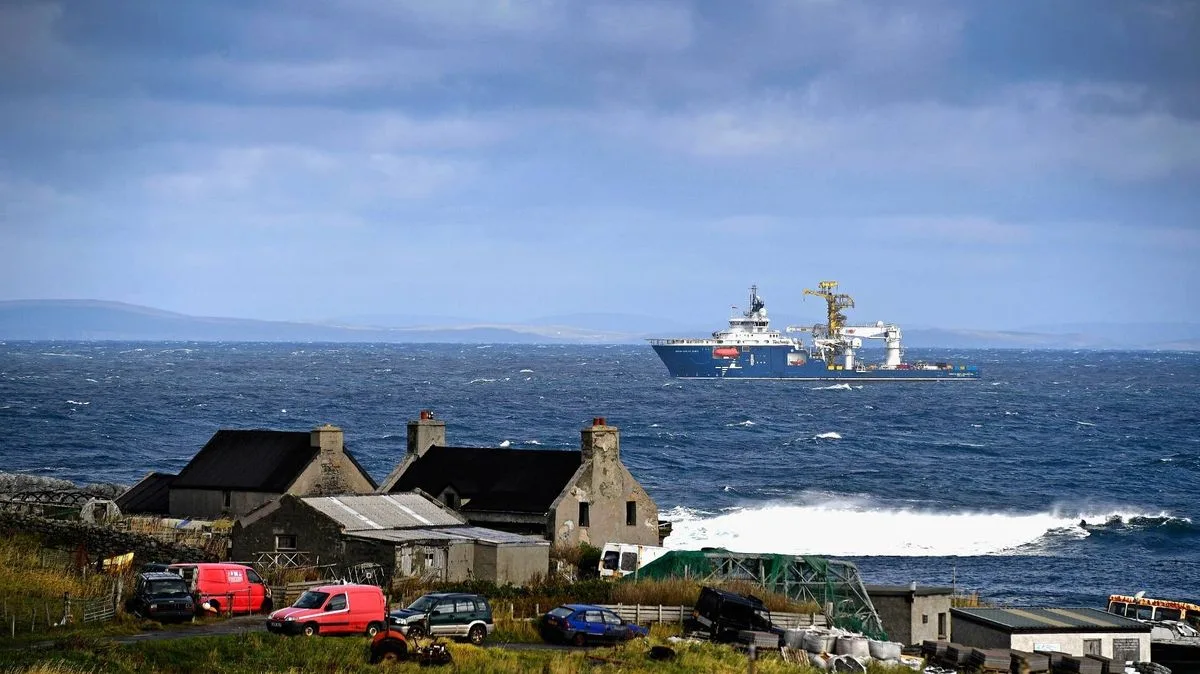
While the rest of Britain has already packed away the mince pies, the remote Shetland island of Foula is only just gearing up for Christmas. The island's 30 residents follow the Julian calendar, meaning Christmas Day falls on 7 January, with New Year celebrated a week later.
Foula, which measures three-and-a-half miles long by two-and-a-half miles wide, is one of the UK's most isolated inhabited islands. At one point its population stood at 287, but today just a small community remains, preserving strong Norse traditions of folklore and music.
The island was not equipped with running water until 1982, and full electricity only arrived in 1984 via a diesel generator. Today, it operates on a renewable energy system, primarily photovoltaic, with diesel backup.
Foula translates as 'bird island' in Old Norse, and its dramatic landscape served as the filming location for the 1937 film The Edge of the World. The island's remote location also proved treacherous for the RMS Oceanic, which was wrecked on the nearby Shaalds of Foula.
The use of the Julian calendar sets Foula apart from the rest of the UK, which adopted the Gregorian calendar centuries ago. The Berbers of the Maghreb also still use a form of the Julian calendar. In a recent divergence from tradition, Ukrainian Orthodox Christians on the island celebrated Christmas on 25 December in 2023, aligning with the Western calendar.
Access to Foula is limited. Visitors can take a ferry from Walls on Shetland's west mainland, a journey of around two hours, or fly from Tingwall – a much quicker 15-minute flight.