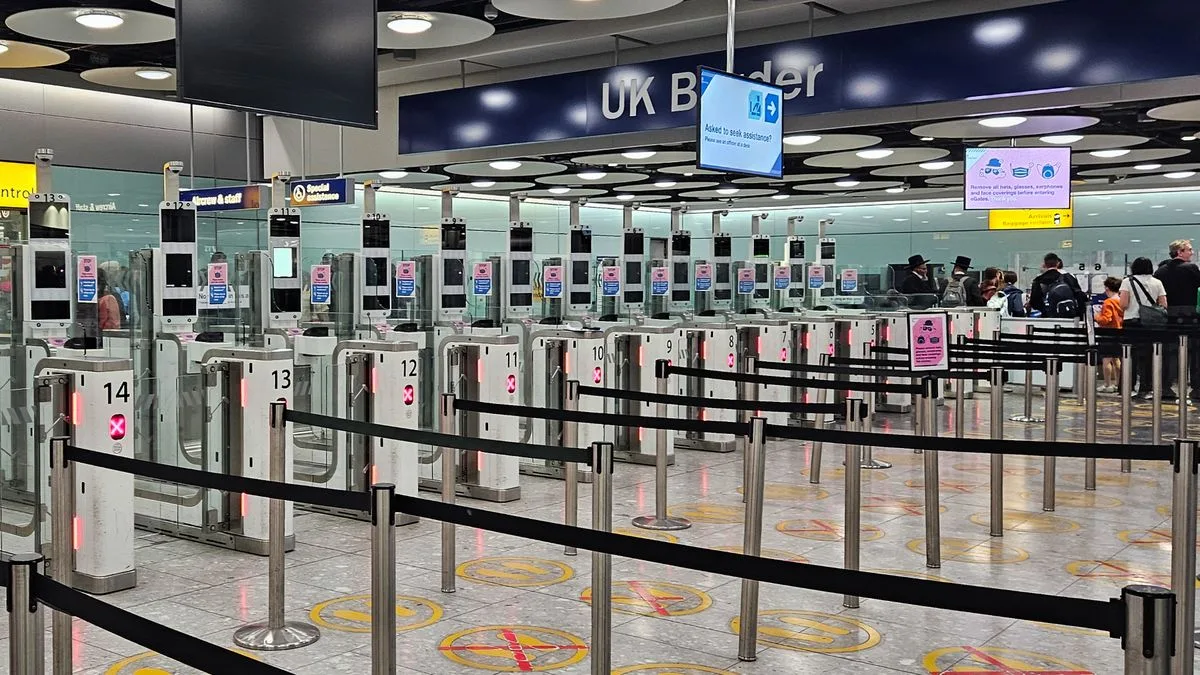
The European Union has once again postponed the launch of its Entry/Exit System (EES), which would require fingerprint and facial scans from non-EU citizens, including British travellers, at all EU borders. The system was due to start on November 10, but Germany, France and the Netherlands said their systems were not ready. EU Home Affairs Commissioner Ylva Johansson said there was no new timetable, but the system would be phased in gradually.
It is now highly unlikely that EES will be operational by the end of 2024, with one source suggesting it will be well into 2025 before it has a significant effect on British travellers. The system will apply to inbound passengers from non-EU countries at airports, land borders and ports in the Schengen Area, both on arrival and departure.
When first registering, travellers must provide fingerprints and a facial biometric. On subsequent visits within three years, only the facial scan will be required. Each new visit resets the three-year validity, until the passport expires. The EU says the system will provide precise information on authorised stay durations and reduce waiting times through automated border controls.

However, travel firms and EU countries have raised concerns about lengthy queues. EasyJet boss Johan Lundgren warned of potential congestion at airports, saying: 'In the worst case you actually can’t disembark, you hold people on the plane.' P&O Ferries and the Port of Dover highlighted difficulties at ports, where biometric checks would require passengers to leave their vehicles, which is 'fundamentally unsafe' according to port head Tim Reardon.
A UK Department for Transport survey found that 15% of British adults would be less likely to travel to the EU once EES launches, with queue concerns a major factor. Another 20% said they would cancel ferry trips if delays exceeded one hour. The changes stem from Brexit, which made British travellers 'third-country nationals' subject to EU restrictions.
Julia Lo Bue-Said, CEO of The Advantage Travel Partnership, said the delay gives the travel industry 'a huge sigh of relief' due to concerns about preparedness across the EU. She added that there was 'very limited' readiness for the system's original launch date.