Nepal Implements Strict New Regulations to Curb Everest's Extreme Tourism Crisis
In a decisive move to address mounting safety and environmental concerns, Nepal has passed groundbreaking legislation that will effectively ban amateur climbers and social media influencers from attempting to scale Mount Everest. The new law, which has received unanimous approval from Nepal's upper house, mandates that all prospective climbers must provide documented proof of having successfully summited at least one mountain exceeding 7,000 metres within Nepal before being granted a permit for Everest.
Combating Overcrowding and Inexperienced Thrill-Seekers
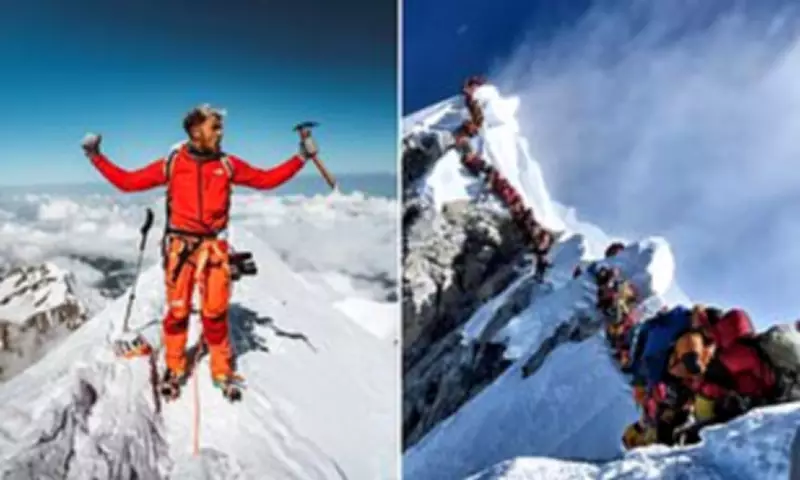
The legislation comes as a direct response to years of escalating problems on the world's highest peak. Official figures from Geographical UK reveal that 2024 witnessed a record-breaking 1,263 attempts on the 8,849-metre mountain that straddles the Nepal-China border. This unprecedented volume has created dangerous bottlenecks on the mountainside, with climbers forming perilous queues in the oxygen-deprived "death zone" above 8,000 metres.
Himal Gautam, Director of Nepal's Tourism Department, confirmed to The Telegraph that under the new regulations, "climbers shall be issued a permit only after an applicant provides proof of having previously summited at least one mountain higher than 7,000 metres in Nepal." The government hopes these stringent measures will not only enhance safety but also promote Nepal's 462 other commercially viable mountains for climbing expeditions.

The Influencer Phenomenon and Dangerous Stunts
The problem has been significantly exacerbated by what authorities describe as "underprepared thrill seekers" pursuing extreme tourism for social media content. Several high-profile incidents have highlighted the dangers of this trend. In one particularly concerning case, Singaporean couple Rakcent Wong and Carol Tan required emergency helicopter rescue after attempting to bring their four-year-old son, Atlas, to Everest base camp. The child suffered acute altitude sickness during their documented online adventure.
Similarly, 22-year-old French YouTube influencer Inoxtag faced widespread criticism after climbing Everest following just one year of training and publishing his €1 million expedition in an online documentary. Critics accused him of advertising the perilous climb to his young followers. American influencer Devon Levesque further raised safety concerns by performing a backflip on Everest's summit in 2024.
Mounting Death Toll and Environmental Damage
The consequences of inadequate preparation and overcrowding have proven fatal on numerous occasions. During the 2025 Spring climbing season alone, five climbers lost their lives on Everest. The mountain still bears the remains of over 200 climbers, some of whom have become macabre landmarks like the famous "Green Boots" body that was only moved several years ago.
One tragic case involved 44-year-old inexperienced British climber Robin Haynes Fisher, who died during his descent in May 2019 due to altitude sickness. That same week, photographs circulated showing extensive queues of climbers snaking along ridges above 8,000 metres. Fisher had previously expressed concerns about overcrowding dangers before his fatal attempt, becoming one of 11 deaths that season.
Another heartbreaking incident occurred in 2023 when 59-year-old Indian schoolteacher Suzanne Leopoldina Jesus died just a few hundred feet above base camp while attempting to become the first Asian person to summit Everest with a pacemaker, against her team's advice.
Comprehensive Legislative Package
The new legislation represents a comprehensive approach to mountaineering regulation. Beyond the experience requirement, the bill introduces mandatory insurance coverage, establishes age and experience thresholds for climbers, and creates an environmental protection fund specifically designed to remove decades of accumulated rubbish and discarded gear from the Himalayas.
Additionally, the law provides authorities with the power to declare missing climbers legally deceased after one year, addressing administrative challenges that have plagued previous rescue and recovery operations.

Controversy and Criticism from Experienced Climbers
Despite widespread support for addressing safety concerns, the legislation has faced criticism from some within the mountaineering community. British climber Adriana Brownlee, who became the youngest woman to summit all 14 of the world's 26,247-foot mountains in 2022 at age 23, expressed reservations about the new requirements.
"It's a very significant bill and will definitely bring down the number of climbers a lot, but may not improve safety," Brownlee cautioned. "It will only cause overcrowding on other peaks now." She suggested that Nepal should include peaks like Ama Dablam (6,812 metres) in Nepal and Mount Aconcagua (6,981 metres) in Argentina as acceptable training mountains for Everest preparation, arguing that her own experience demonstrates that 6,500 metres provides sufficient preparation.
While acknowledging that Everest remains "extremely overcrowded and there are a lot of inexperienced mountaineers," Brownlee believes the 7,000-metre requirement "may go beyond what's necessary" for ensuring climber safety.
Legislative Timeline and Implementation
The bill now moves to Nepal's House of Representatives (lower house) for final approval before a scheduled March 5 election. Following anticipated passage, the legislation is expected to come into full force within three months, fundamentally transforming access to one of the world's most iconic and dangerous climbing destinations.
This represents Nepal's most significant regulatory intervention in Everest climbing since commercial expeditions began, marking a decisive shift away from the era of extreme tourism and toward a more controlled, safety-focused approach to high-altitude mountaineering.