The Cosy Allure of Micro-Restaurants
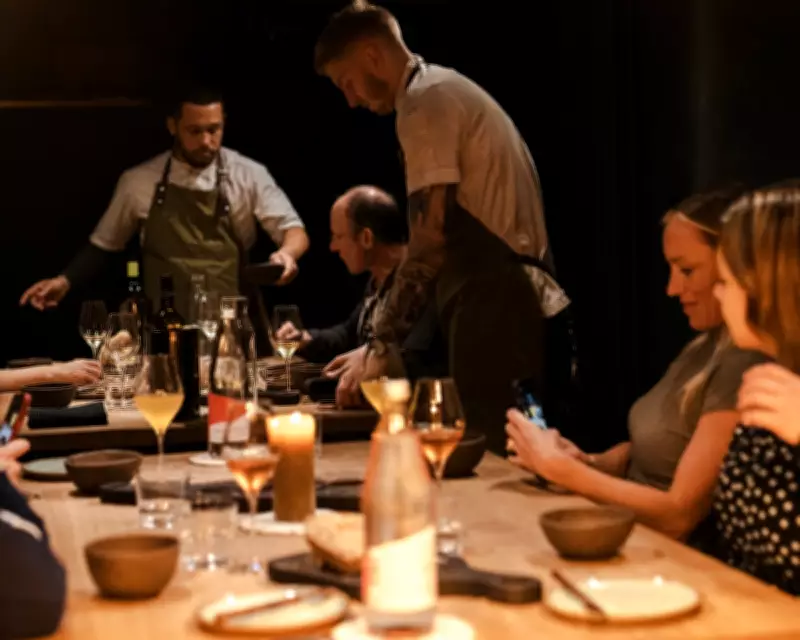
The UK's restaurant landscape is undergoing a significant transformation as establishments continue to downscale. Following the trend towards smaller portion sizes and condensed menus, a new wave of micro-restaurants – typically seating fewer than twenty patrons – is gradually spreading across the nation. These intimate venues are redefining the dining experience through close-knit communal settings and unprecedented chef-customer interaction.
Communal Connections and Solo Dining
At the heart of the micro-restaurant phenomenon lies the communal table, where strangers frequently depart as friends. Gwen restaurant in Machynlleth, Wales exemplifies this trend perfectly. With just eight seats arranged around a single table, this award-winning establishment has witnessed remarkable social connections forming between diners.
"We've had people come as two couples and book four seats, then leave with people they just met," explains Jake Nutt, owner of Gwen, named best restaurant in Wales in the Harden's guide 2025. "We've had people who ended up booking holidays together after dining with us."

This intimate setup particularly appeals to solo diners. At The Table in Edinburgh, which accommodates ten customers along a seven-metre-long table, single seats represent the most popular booking option. Owner Sean Clark notes: "We've had six single dinners in an evening – that's over half the restaurant. We attract numerous solo diners because we provide an inclusive, convenient atmosphere."
Intimate Chef-Customer Interaction
The minimal distance between kitchen and dining area creates uniquely involved atmospheres in these compact establishments. "In a typical restaurant, there's a barrier between chef and customer," observes Nutt. "For us, that barrier disappears completely – we're literally just a metre away from you."
This proximity allows chefs to witness customer reactions firsthand, providing immediate feedback rarely experienced in larger venues. "It's almost like a cheat code for us," Nutt continues. "I imagine that in normal restaurants, chefs send out plates of food and never hear about them again."
Exclusivity and Operational Challenges
While many micro-restaurants originated from limited available space, their size has evolved into a distinctive selling point. Clark confirms: "The compact dimensions have transformed into one of our most unique selling points. It creates a feeling of people being included in something truly special and exclusive."
However, operating within such confined spaces presents significant challenges. "It can resemble a micro pressure cooker at times," admits Nutt. "There's absolutely nowhere to hide. If a glass breaks or you drop a plate, everyone immediately knows. You simply have to take it on the chin."
Financial pressures further complicate operations for these small establishments. Sam Betts, owner of The Small Canteen in Sandyford, Newcastle – a fifteen-seater measuring just seven by three metres – highlights increasing business rates compared to five years ago. "When I started, staff costs and rates were lower, rent was quite reasonable," Betts explains. "Now everything has become increasingly expensive."
Economic Realities and Premium Pricing
With fewer people dining out according to recent surveys, micro-restaurants face particular revenue challenges. Clark acknowledges: "In larger venues, you can always attempt to attract more customers, but here we simply cannot do that."
Consequently, maintaining full occupancy every night becomes crucial for survival. Most micro-restaurants require pre-paid bookings to minimise cancellation losses. "The risk is significant," notes Nutt. "If we receive a cancellation for two people, that represents twenty-five percent of our restaurant – we've essentially lost that night's revenue."

These operational realities translate into premium pricing. Gwen charges £135 for its ten-course tasting menu, while The Table offers a seven-course experience at £110 per person. At Sugo82 in London Fields, Hackney – an Italian "family kitchen" seating just five customers – prices reach up to £75 per head.
Compensating Size with Exceptional Service
What micro-restaurants lack in physical space, they compensate for through meticulous attention and personalised service. Stefano Pianese, owner of Sugo82 and originally from Naples, emphasises: "For me, this establishment resembles my own home – if you enter my house, you receive identical treatment."
Pianese continues: "If you dine in a large restaurant, you simply arrive, consume your meal, then depart. When you visit here, we explain every plate – its history, its origins, everything."
From Wales to Scotland and across England, these miniature dining establishments are creating memorable experiences that transcend conventional restaurant visits, proving that sometimes the most remarkable culinary adventures occur in the smallest spaces.