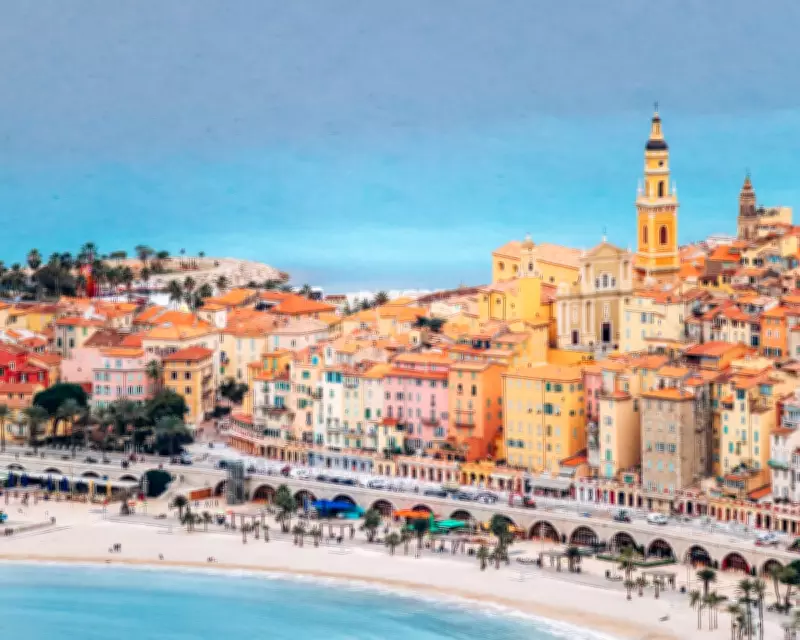
Menton: The Lemon-Scented Border Town on the French Riviera
Nestled on the French Riviera near the Italian border, Menton is a seaside town celebrated for its warm winters and famous lemons. It has long drawn artists and writers from across the globe, offering a unique cultural fusion that defies simple national labels.
A Town of Many Identities
Menton's history is a tapestry of changing allegiances. It was the only French town fully annexed by Italy during World War II, but has also been under the rule of Monaco's Grimaldi family, part of the Kingdom of Sardinia, and only became French after a public vote in 1860. Today, the town's identity is painted in shades of yellow, honoring its reliance on the beloved lemon.
Chef Mauro Colagreco of the renowned Mirazur restaurant, located steps from the border, highlights the uniqueness of Menton lemons. "You can eat the peel; it has a thick, sweet rind. The whole fruit is organic and juicy," he explains. The town's microclimate, with warm winters, terraced hills, and sandy soil, creates ideal conditions for citrus cultivation. Colagreco notes the lemon's distinctive "smile," a small curvy fold, and experiments with other citrus like Star Ruby grapefruits and yuzu in his dishes.

Yellow Time and Festive Celebrations
Late February to March is known as "yellow time" in Menton, marked by lemons, daffodils, and mimosa blooms. This period hosts the Fête du Citron, a two-week festival featuring parades and giant floats adorned with citrus fruit. Recent displays included a whale, 12-meter-high parrots, and entwined storks. Now in its 92nd year, the festival uses 123 tonnes of oranges and lemons sourced mainly from Spain and Portugal, as Menton lemons are too rare and costly.
Cultural Fusion and Daily Life
Luciano Fondrieschi, owner of R Bike Menton on the promenade, embodies the town's dual personality. "Menton is a French town with an Italian regard," he says, noting Italian boats in the harbor but French cars on the streets. His shop attracts cyclists from both nations, along with visitors like a British couple who biked to Sanremo and an Italian pensioner who cycled for pizza in Dolceacqua. Fondrieschi seamlessly switches languages, serving brioches and Italian cordials in his cafe, reflecting the lively Franco-Italian rivalry.
Historical Echoes and Artistic Legacies
Menton's street names blend French and Italian influences, with avenues honoring figures like Pasteur and Victor Hugo alongside Italian names such as Cernuschi and Laurenti. Notable international connections include Square Victoria, named after Queen Victoria's 1882 visit, and avenues for Spanish writer Blasco Ibáñez and New Zealand author Katherine Mansfield, linked by rue Webb-Ellis.
William Webb Ellis, credited with inventing rugby, spent his final years in Menton and is buried in the Vieux Château cemetery, his grave adorned with rugby memorabilia. Higher up, Trabuquet cemetery holds the grave of illustrator Aubrey Beardsley, among other young artists drawn to Menton for its health benefits and botanical gardens in the late 19th century.
In the 1950s, French artist Jean Cocteau decorated the Salle des Mariages with murals depicting Orpheus and Eurydice, available for viewing with a key from the town hall. Nearby, Allo Robert offers a nostalgic glimpse into early 20th-century Menton through French and Italian curiosities, from Tabac signs to vintage crockery.
Travel Tips and Local Flavors
For accommodations, the seafront Hôtel Napoléon features a solar-heated pool, with doubles starting from €106. Dining options include Mauro Colagreco's La Pecoranegra, serving pizzas, vitello tonnato, and flavored burrata, showcasing the town's culinary blend.