The Independent's journalism is supported by our readers. When you purchase through links on our site, we may earn commission.
Madeira: The Perfect European Spring Escape
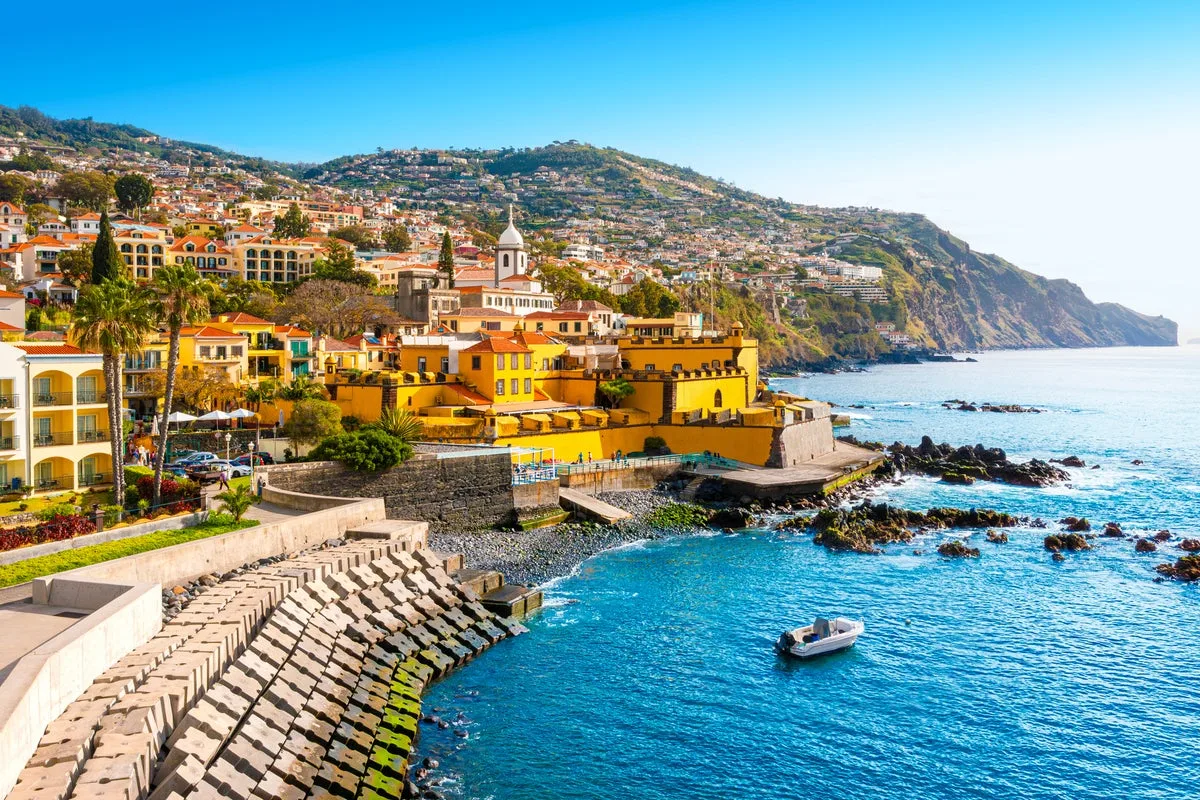
Dubbed the pride of Portugal, Madeira offers mild weather, stunning landscapes, and vibrant culture – as Tessa Dunlop discovers during her springtime visit to this Atlantic archipelago.
An Unexpected Demographic Shift
The small queue at the airport gate for my flight to Funchal initially appeared sedate and elderly, reminding me of a millennial friend's Instagram joke about being the youngest visitor. This seemed appropriate for traveling with my 84-year-old mother from Edinburgh to trace family history. However, a terminal mix-up revealed a different reality at the EasyJet gate: a heaving crowd of young, cosmopolitan travelers braced for adventure.
On board, sandwiched between marathon runners Frances and Kaman, I glimpsed a Madeira transforming from retirement haven to active destination. Frances had optimistically booked wine-tasting before her 26-mile endurance test, while Kaman eyed a new personal best on the island's volcanic terrain. Their enthusiasm highlighted Madeira's emerging appeal beyond traditional demographics.
Historical Allure and Modern Infrastructure
Madeira's restorative qualities have long attracted notable figures. Empress Elizabeth of Austria-Hungary escaped Vienna's harsh seasons here, while Winston Churchill arrived in 1950 with his easel to capture Funchal's iridescent sunsets. Both stayed at Reid's Palace Hotel, the British imperial behemoth where my mother and I enjoyed afternoon tea as a post-colonial treat.
Our family connection to Madeira's wine trade – Britain dominated this after French ports closed in the 1800s – gave our travels an EM Forster overtone. At Holy Trinity Anglican Church, built discreetly without steeple or bell in 1822 to respect Catholic locals, we encountered an enormous coffee morning of guffawing Anglophones who speed-dialed the local British cemetery containing 2,000 graves, including my ancestor's.
Navigating Dual Identities
Driving out of Funchal reveals Madeira's dual character: the capital's mosaic squares and international atmosphere quickly give way to rural Portugal with roadside cafés, crosses, and careworn locals. The extraordinary EU-funded infrastructure – particularly tunnels up to 3km long strapped into steep volcanic landscape – contrasts with traditional ways. When our sat-nav erroneously spit us onto a coastal road where no one understood English, we confronted the island's authentic Portuguese identity.
At Boa Morte viewpoint in Ponta do Pargo, we met a Polish couple and a tourism official who explained Madeira's strategic shift. Lacking sandy beaches that attract traditional bucket-and-spade tourists, the island now markets itself to hikers, adventurers, and athletes while upscaling from its "OAP" reputation.
Authentic Encounters and Value Considerations
Our search for authentic experiences led to Sabor a Fado, where Silvia Sousa welcomed us like family. Her beautiful contralto Fado singing, accompanied by guitar and baritone notes from "Uncle" with his pirate beard, created an unforgettable evening of Portuguese hospitality. The snug restaurant's dramatic black-and-white murals and mottos in both Portuguese and English fostered cross-cultural connections with Dutch, German, and local patrons.
However, Madeira's transformation brings pricing complexities. A €300 bill for dry sandwiches and champagne at a West End-style hotel contrasted sharply with €5 morning coffee and pastel de nata elsewhere. As Romanian digital nomad Andra noted, similar harbor views ringed with rainbows are available freely across the island.
Practical Travel Considerations
Madeira's rainy season generally runs November through March, but its location off northwest Africa ensures clement weather year-round with bold floral colors providing respite from Britain's colder climate. The island's size – slightly larger than the Isle of Wight – makes car rental essential despite challenging hill-starts in Funchal.
Accommodation options now cater to diverse travelers: The Cliff Bay Hotel offers luxury with Michelin-starred dining, Jaca Hostel provides budget-friendly lively atmosphere, and Enotel Lido serves families with kids' clubs and multiple restaurants. EasyJet operates daily flights from several UK airports, making this Portuguese paradise accessible within three-and-a-half hours.
As my mother declared upon arrival, "It's just Heaven!" – a sentiment echoing through generations from Empress Sisi to today's marathon runners, all discovering why Madeira remains Portugal's pride.